25 December 2023
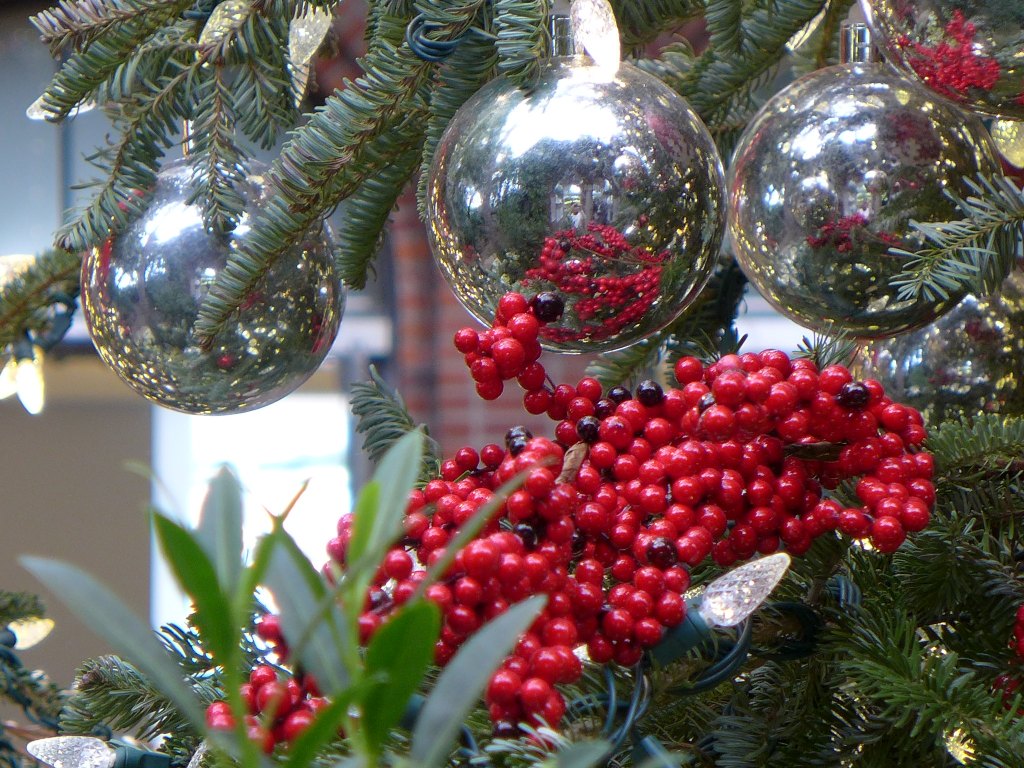
Merry Christmas to all, and to all a good night!
25 December 2023
Merry Christmas to all, and to all a good night!
24 December 2023
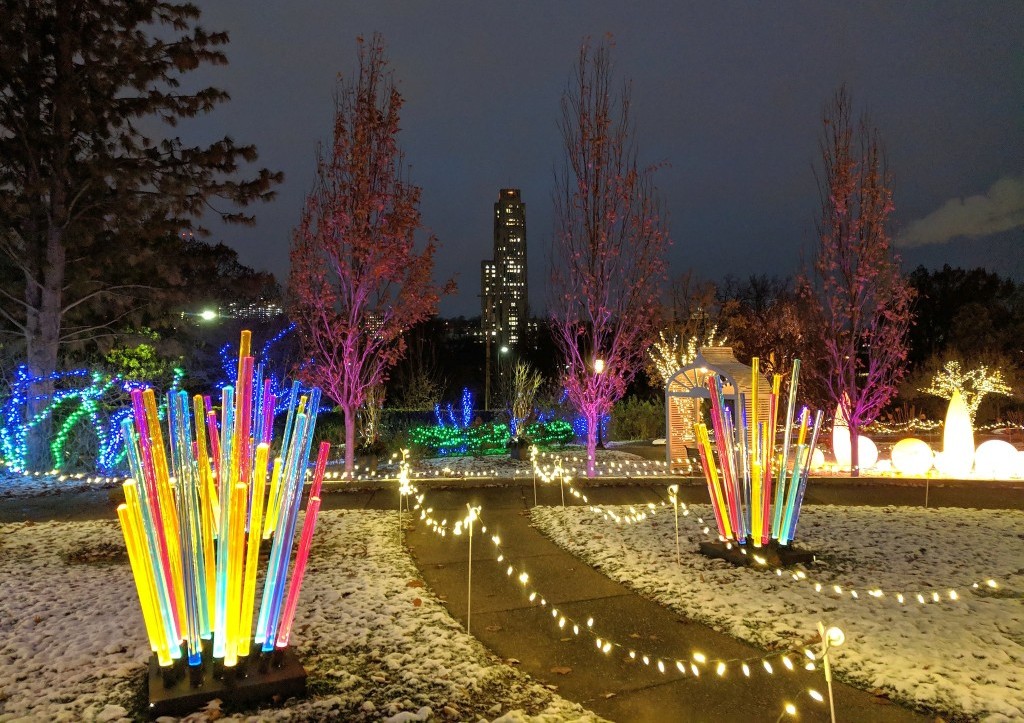
In the run-up to Christmas I was too busy to fit in a trip to Phipps Conservatory’s Holiday Magic but others have done so and provided videos.
See the show in Scott Hirschman’s 12-minute video, created with a wearable panoramic camera.
There’s still time to visit in the next 2+ weeks. The show is open through 7 January 2024.
Order your tickets in advance –> Phipps Conservatory Tickets
21 December 2023
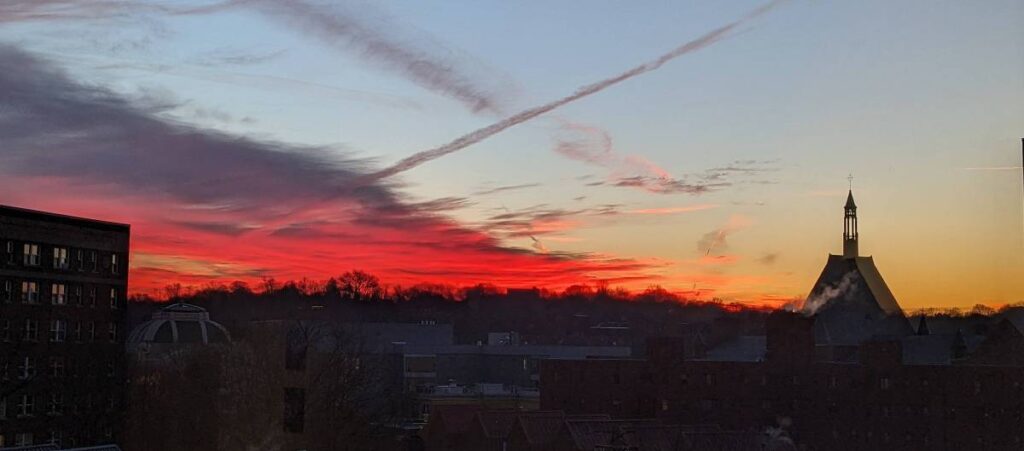
When the sun stands still tonight at 10:27pm Eastern Time we’ll experience the shortest day of the year and begin the shortest season as well.
Regardless of the weather we change seasons four times a year based on astronomical events: December solstice, March equinox, June solstice, September equinox. Since these events occur at the same moment everywhere on Earth, each of the four seasons lasts the same amount of time for everyone. This is easiest to see on the Seasons page at timeanddate.com. A screenshot of Pittsburgh at 6am today is shown below.
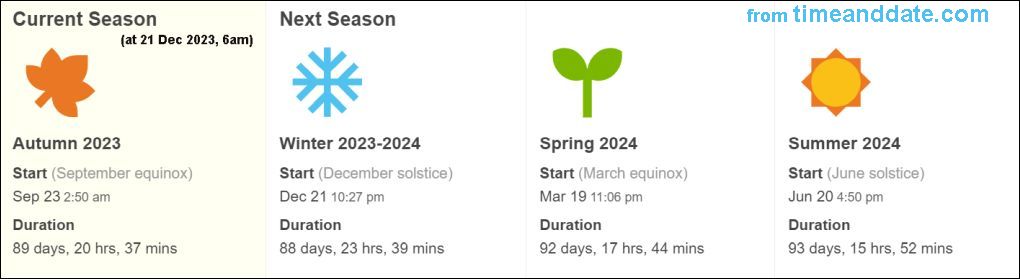
If you don’t like winter, the Northern Hemisphere has the best arrangement. Our astronomical seasons from shortest to longest are:
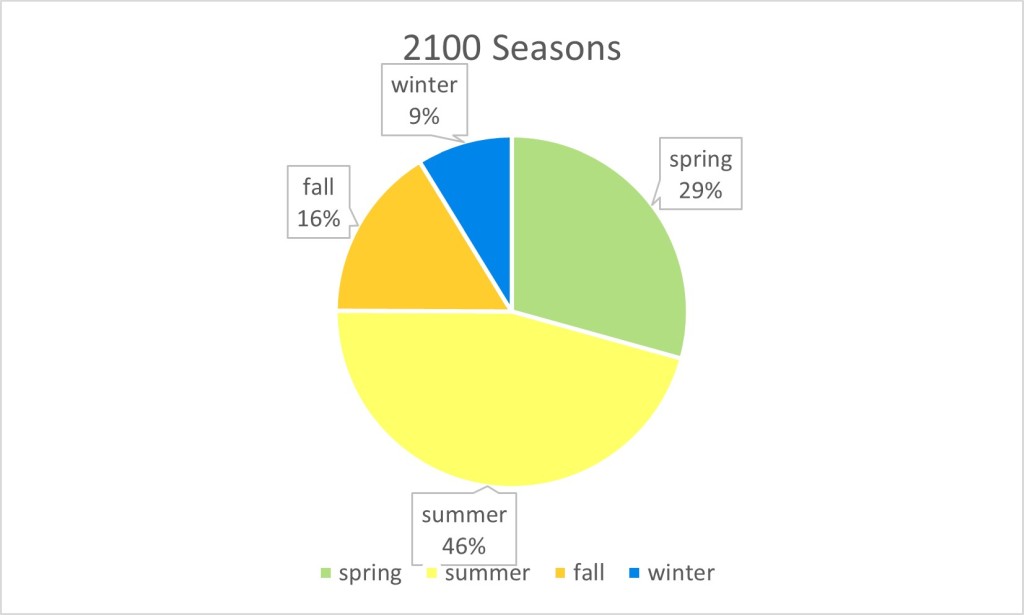
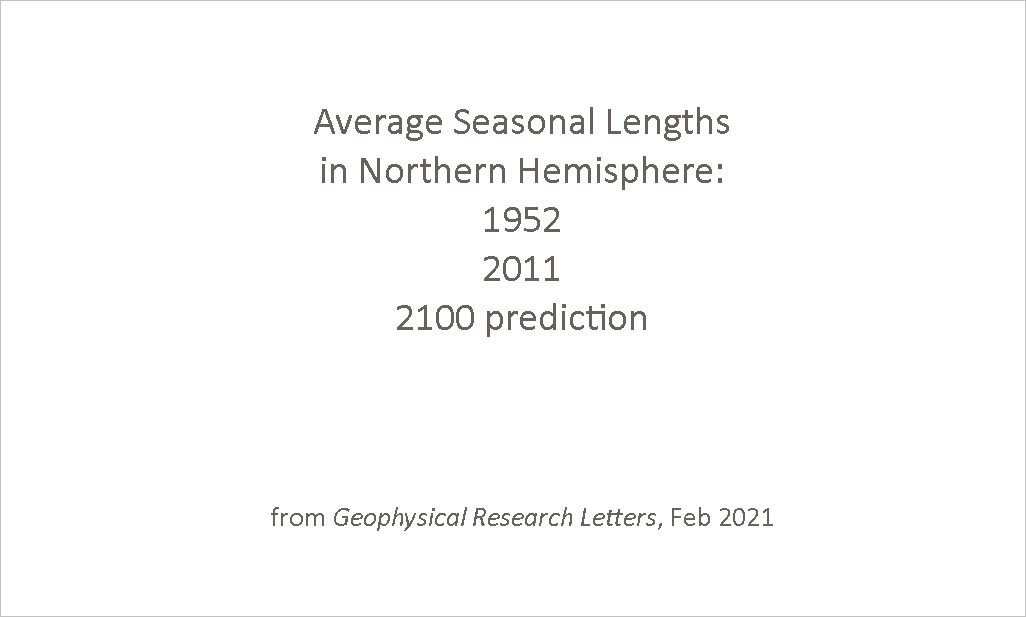
Climate change guarantees that winter is the shortest weather season, too. Winter was 21% of the year in 1952 but will take up only 9% of the year by the end of this century.
Average seasonal lengths in Northern Hemisphere, information from Phys.org
So I’m not counting on a white Christmas.
Read more about the weather-based lengths of the seasons at:
7 December 2023
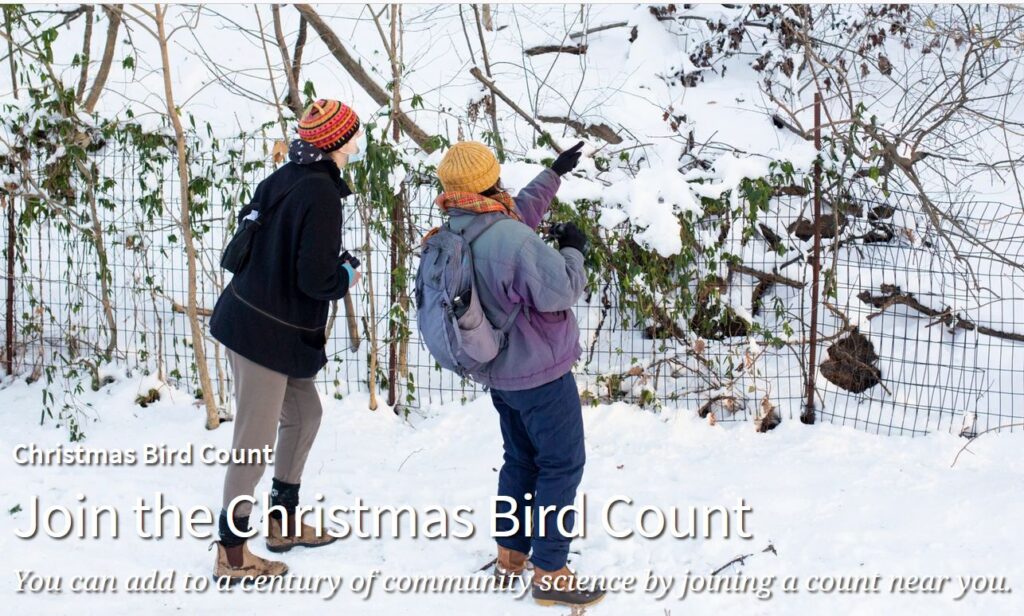
Songbird migration ended last month but there’s birding fun ahead in the coming weeks. Join Audubon’s 124rd annual Christmas Bird Count (CBC) from Dec 14, 2023 to January 5, 2024!
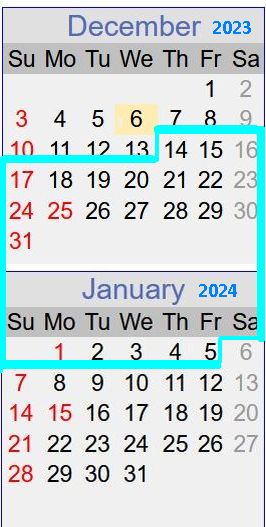
Visit one (or more) of the >2,500 count circles in North America. Each circle has its own compiler who coordinates the count for a single scheduled day within the 15-mile radius. No experience is necessary. The only prerequisite is that you must contact the circle compiler in advance to reserve your place.
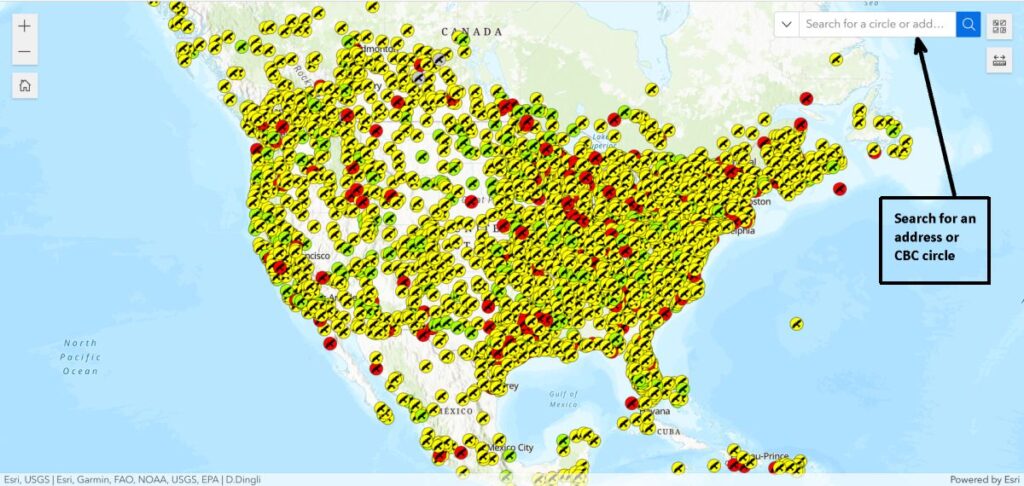
Go birding outdoors or, if you live in a Count Circle, stay home and count birds at your feeder. Click here and enter your home address to find out what circle you’re in. (If you’re within a circle, click on the colored bird icon to see date, time and contact information.)
Follow the instructions here at audubon.org to sign up.
If you live in the Pittsburgh area you may be interested in one of these counts.
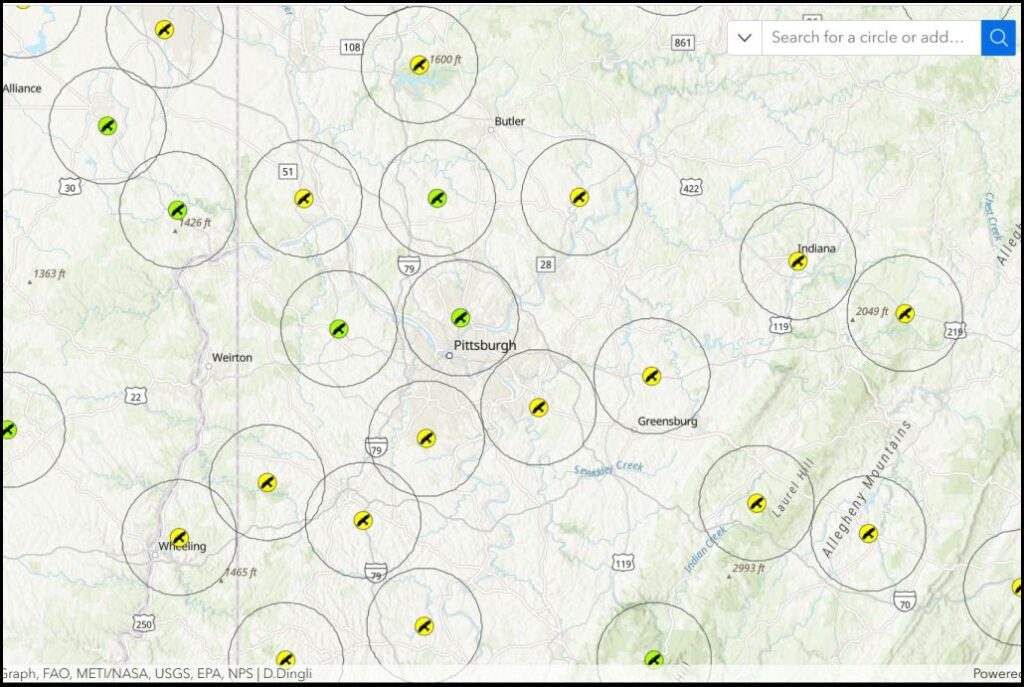
These circles touch Allegheny County:
For more information visit Audubon Society of Western PA’s Christmas Bird Count page or click here for details on National Audubon’s CBC map.
Join the Pittsburgh Christmas Bird Count on 30 December 2023 (map below). To participate contact Brian Shema at the Audubon Society of Western PA at 412-963-6100 or bshema@aswp.org.
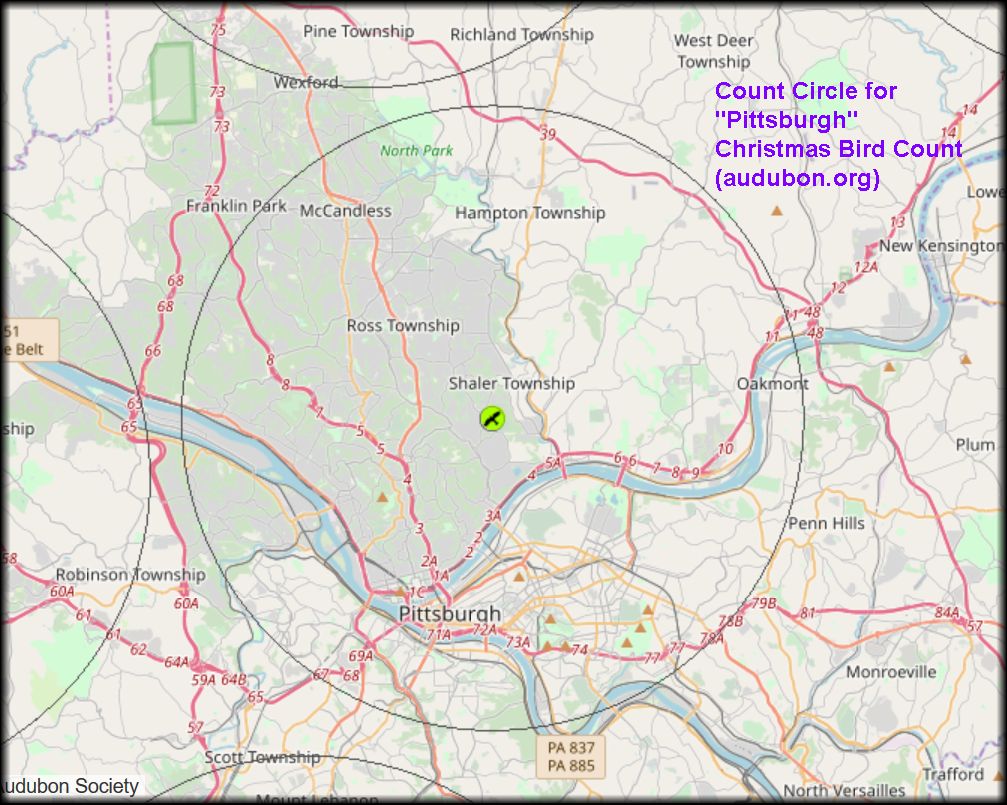
Sign up now! We’ll be counting soon.
(photo from 2024 Audubon Christmas Bird Count webpage, maps from audubon.org; click on the captions to see the originals)
23 November 2023
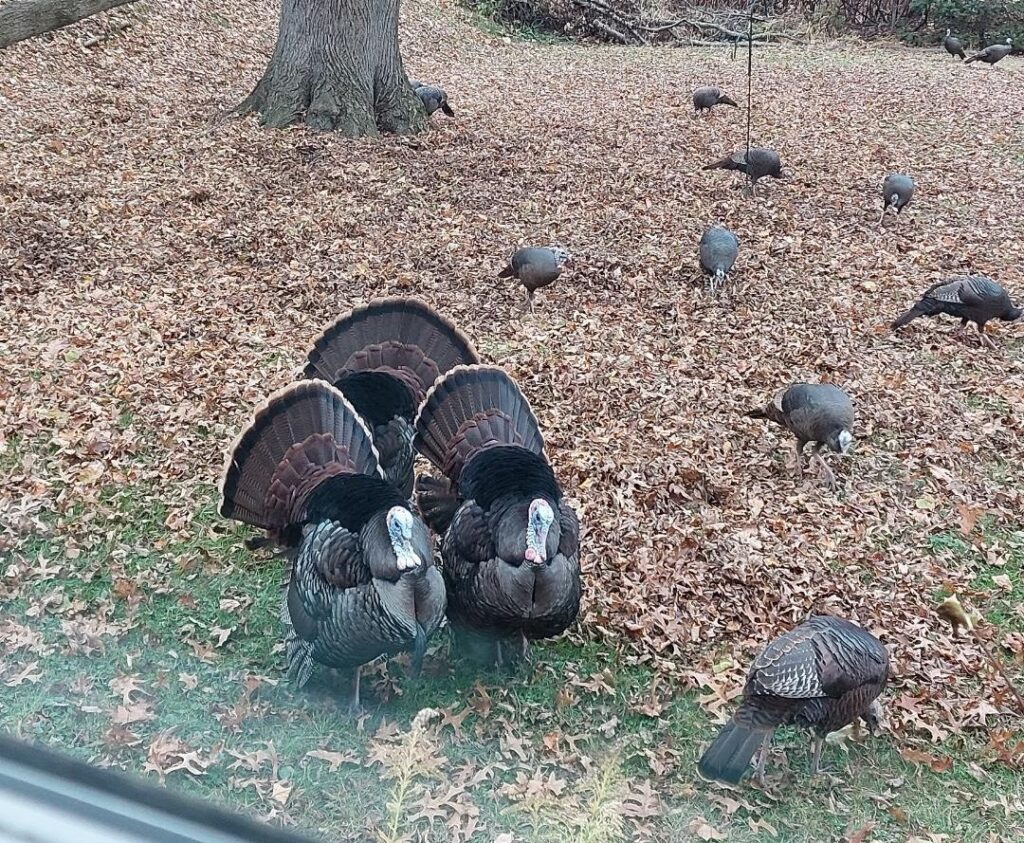
Wild turkeys (Meleagris gallopavo) are thriving in Pittsburgh’s suburbs. This flock of 14 feels right at home in a Kathy Saunders’ backyard.
Meanwhile, where have all the city turkeys gone? A decade ago they were easy to find in Schenley Park and Oakland but I haven’t seen one here in three years. This vintage article describes an impromptu Turkey Day at WQED when six came for a visit in November 2011.
Happy Thanksgiving!
(credits are in the captions)
9 November 2023
Today it’s been 16 years since Outside My Window began on 9 November 2007.
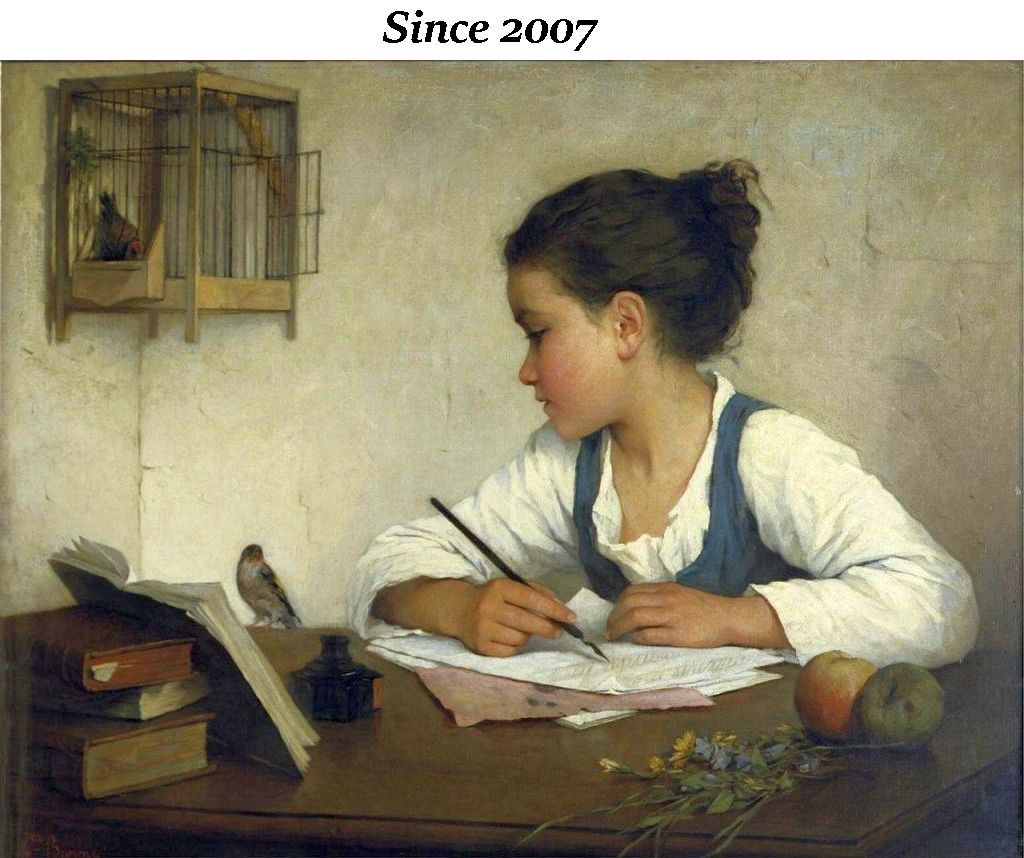
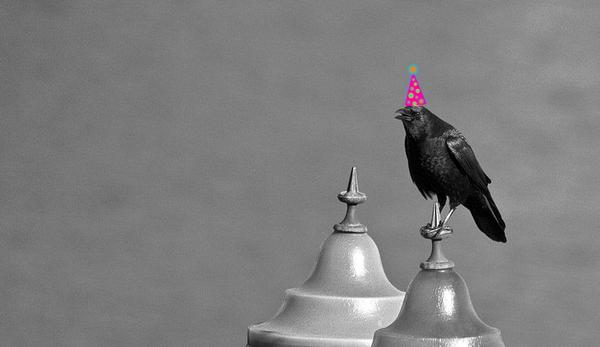
Every day I get up very early to write about birds and nature and am sometimes distracted by the birds themselves. The girl above is distracted by her pet goldfinch. This month, for me, it’s been the crows.
My first blog post was Waiting for Tundra Swans but I didn’t have to wait this year. Last weekend I saw 29 at Yellow Creek State Park including these in Mark McConaughy’s photo.
On anniversaries I look back at the past year’s high points. My highest traffic day is usually when the peregrine eggs hatch at the Cathedral of Learning but there were no eggs this year. Instead, the most popular article was a surprise on Friday 7 April with 10,000 views of…
Top articles in the past 12 months include:
I’ve written a lot and I’m still going at it. 5,913 articles since 2007, and you’ve posted 24,308 comments.
Thank you, my readers, for 16 years together at Outside My Window.
You keep me going every day!
(credits are in the captions)
31 October 2023
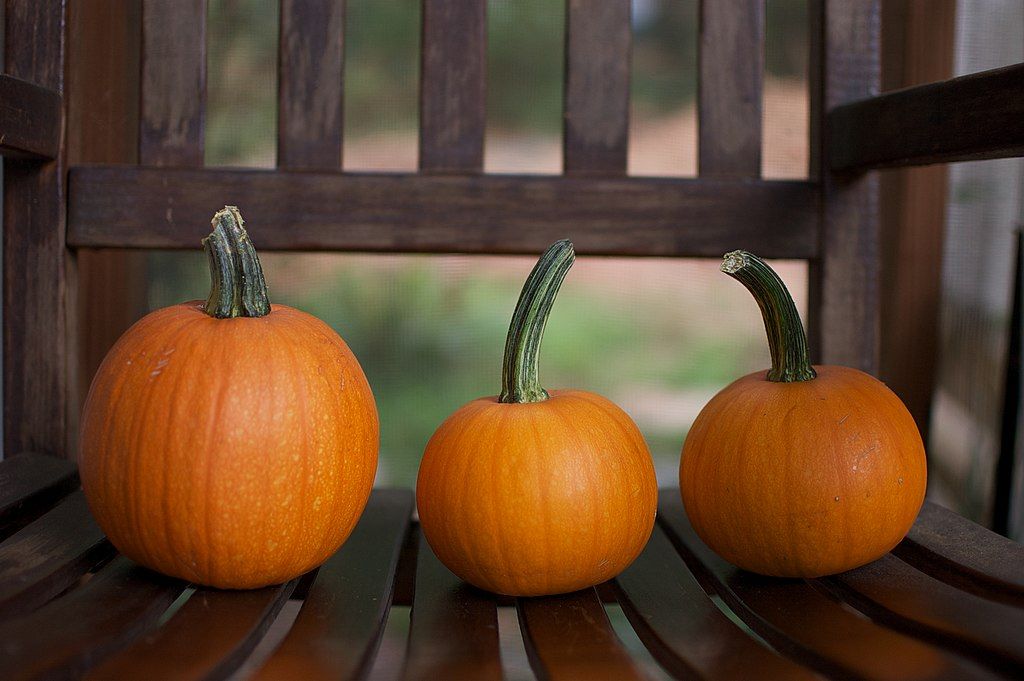
This month we started with new pumpkin gourds …
… carved some into jack o’lanterns …
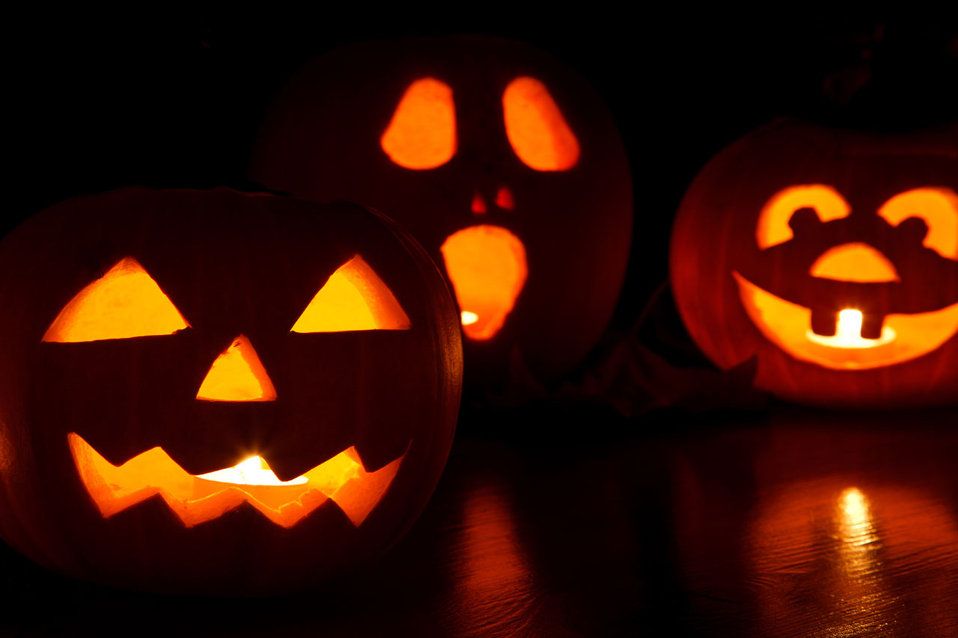
… or applied stickers or paint to make faces.
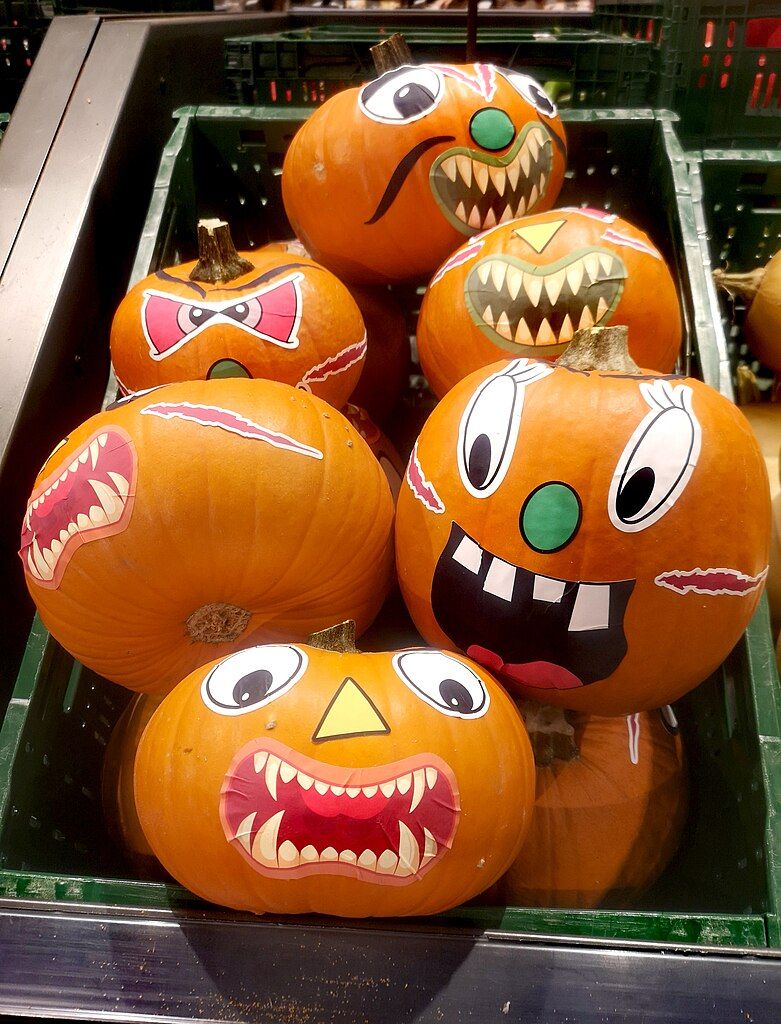
If you used paint or stickers make sure they’re non toxic. When old pumpkins are outdoors …

… someone will eat them. This is where non-toxic paint is important!
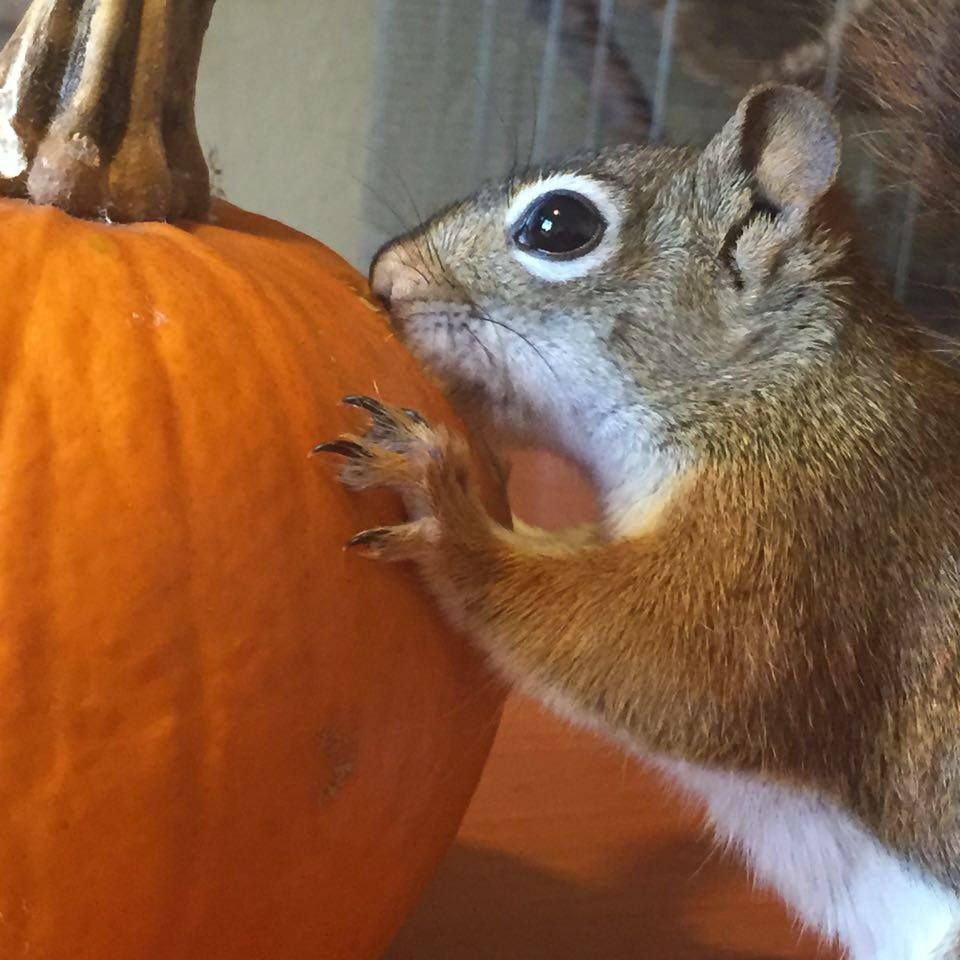
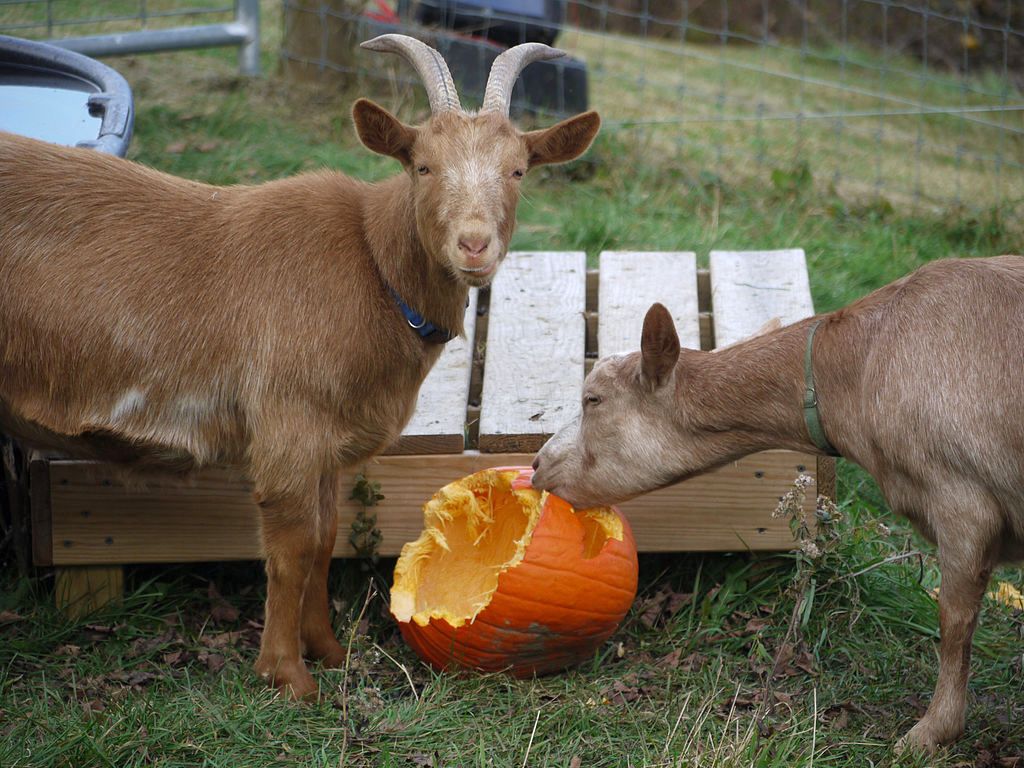
If you’re not sure about your pumpkins, be careful where you dispose of them so that the critters who like to eat them stay healthy.
Happy Halloween!
(photos from Wikimedia and by Kate St. John, credits are in the captions)
Updated on 28 October 2023
Join me on Sunday 12 November 2023, 8:30am to 10:30am, for a bird and nature walk.
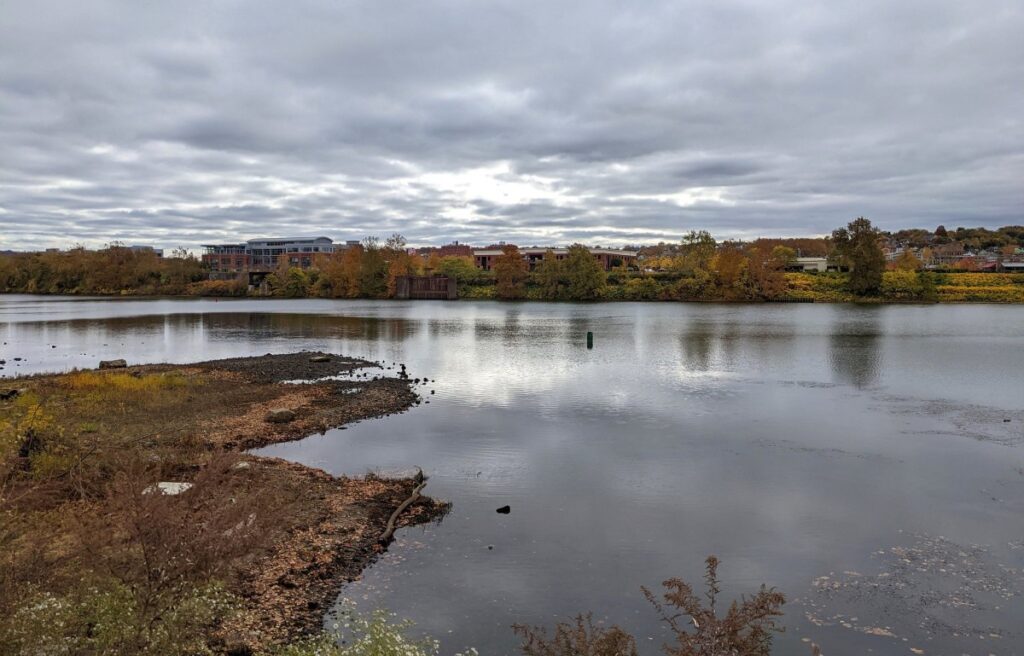
Meet at the Duck Hollow parking lot at the end of Old Browns Hill Road. Dress for the weather and wear comfortable walking shoes. Bring binoculars, field guides and a birding scope if you have them. (Always remember to visit the Events page before you come in case of changes or cancellations.)
We’ll walk the nearby paths seeking birds, interesting plants, and lingering insects. Migrating ducks may be resting on the river. Mallards will attract attention because they’re courting.
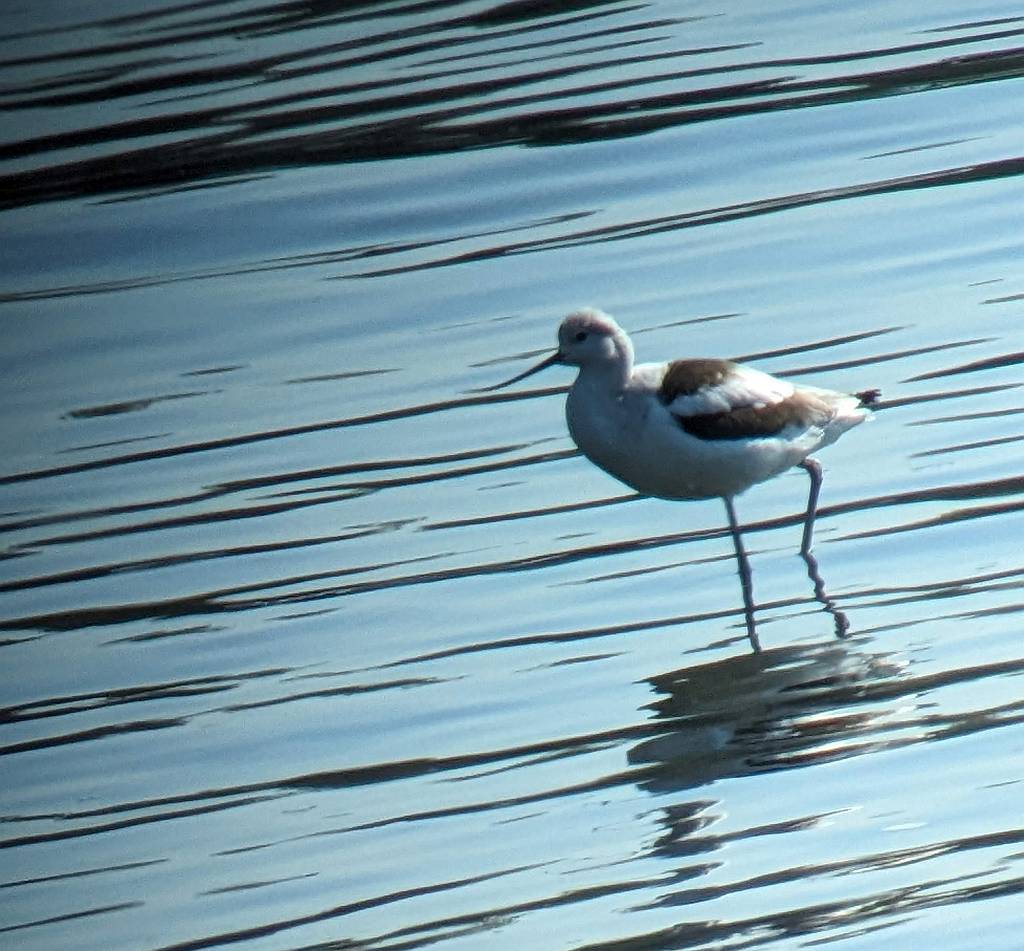
Occasionally a rare bird shows up, so keep your fingers crossed. I can tell you we will not see is this American avocet that stopped by Duck Hollow on 3 October but it was sure fun while it lasted.
(photo by Kate St. John, video by Charity Kheshgi)
4 October 2023
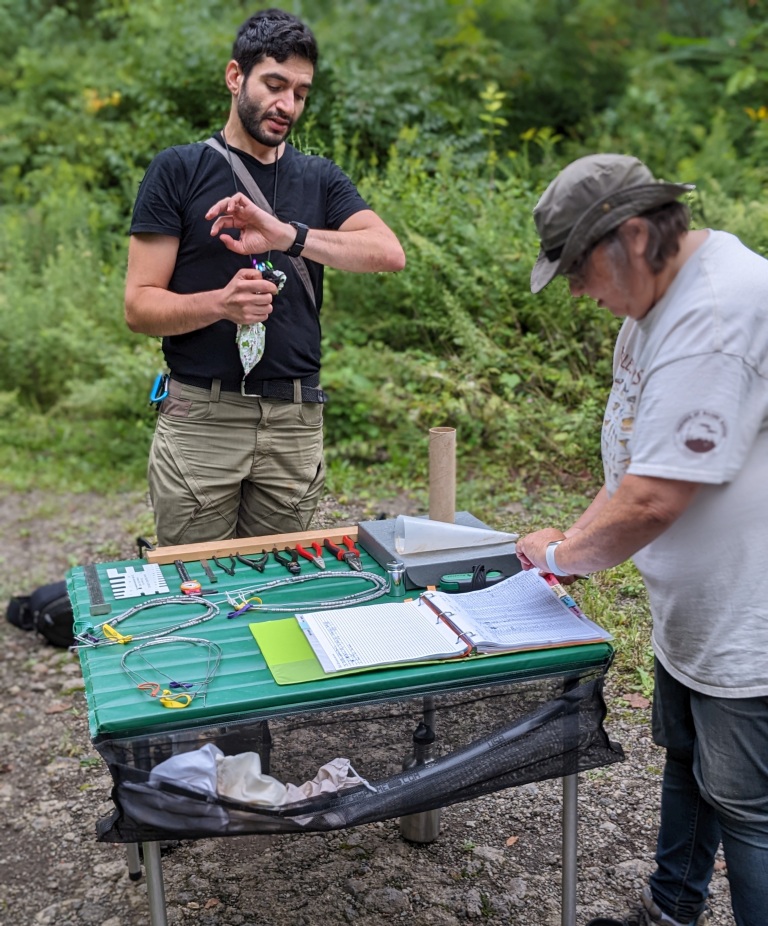
Joe, Sam and Jared joined me yesterday morning on an adventure to see Bird Lab at Hays Woods. The weather was perfect as we walked more than half a mile to the banding station. There we found Nick Liadis and his assistants about to do the second net-check of the day.
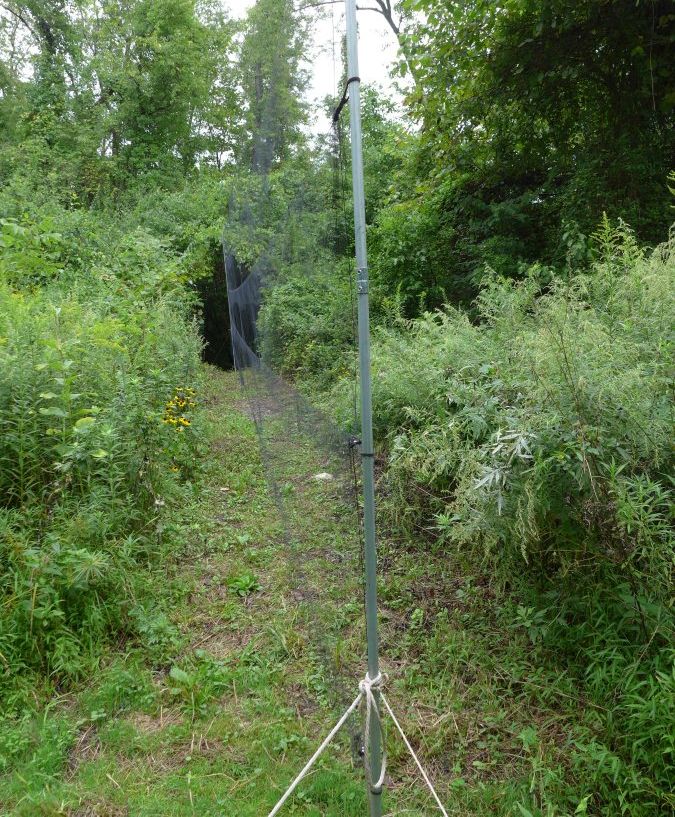
The mist nets that capture songbirds are set up in “alleys” of vegetation where birds might fly across. If a bird doesn’t see the net and tries to fly through, it falls into the pocket of extra netting material where it waits to be retrieved. Banders check the nets every half hour.
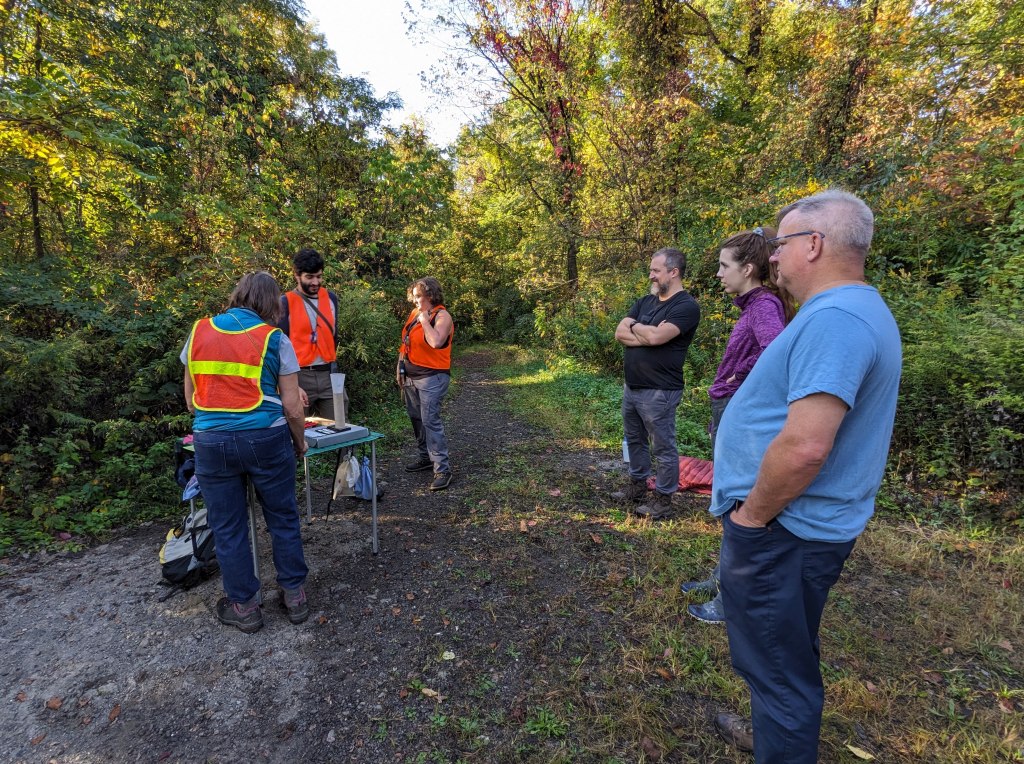
Captured birds are brought back to the banding table in cloth bags to keep them calm. Our group watched as Nick prepared to band three birds from the recent net check.
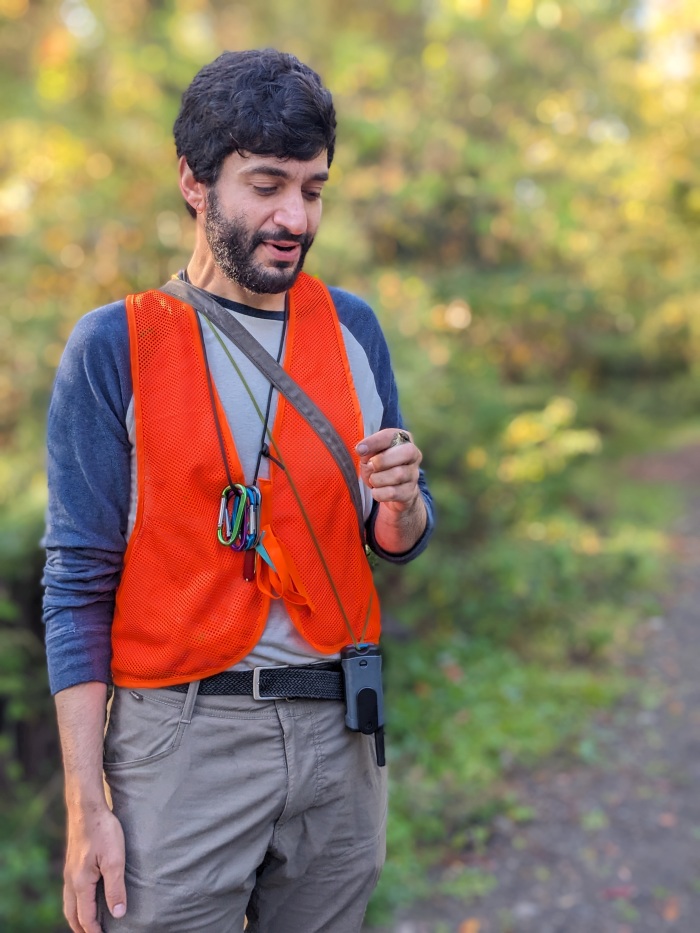
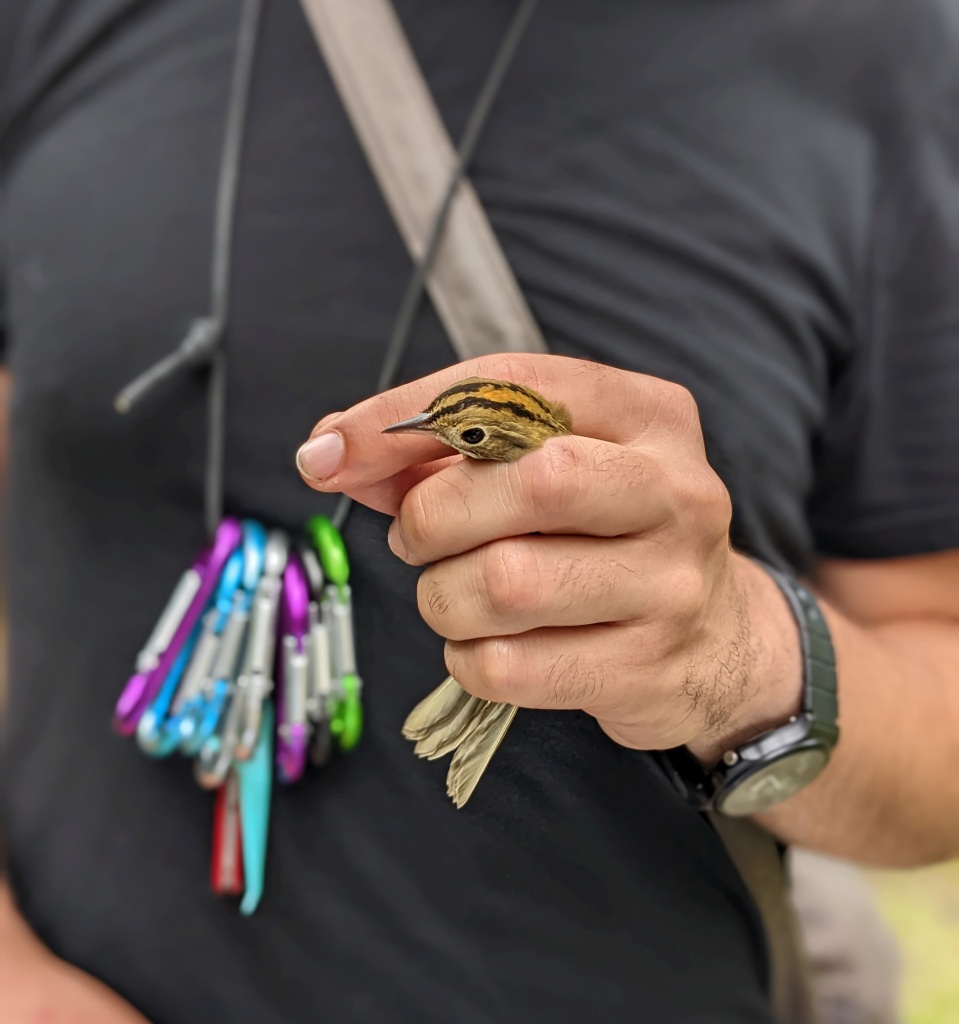
Each bag contains a surprise. The first was a recaptured Cape May warbler (Setophaga tigrina), originally banded on 20 Sep when it weighed 10.9g. Yesterday it weighed 13.8g for a gain equivalent to the weight of a ruby-throated hummingbird. Such a small bird in Nick’s hand, below.
It was the second Cape May warbler recapture this fall. The first one increased its weight by 50% in two weeks. About the first one, Nick wrote:
A cool recapture from my Hays Woods banding station! This Cape May Warbler was banded on 9/13 and we captured her again two weeks later. She originally weighed 11.6g and today weighs 15.4g. Interesting to see how long some of these birds hang around. I’d imagine she’ll be on her way very soon.
— Nick Liadis message, 27 Sep 2023
Next on the agenda was a hatch year (meaning “hatched this year”) male black-throated blue warbler (Setophaga caerulescens). His color was blue, but not vibrantly so, and his throat had tiny white flecks on it. I had seen a dull bird like this in Frick Park last week and didn’t realize that meant he was young.
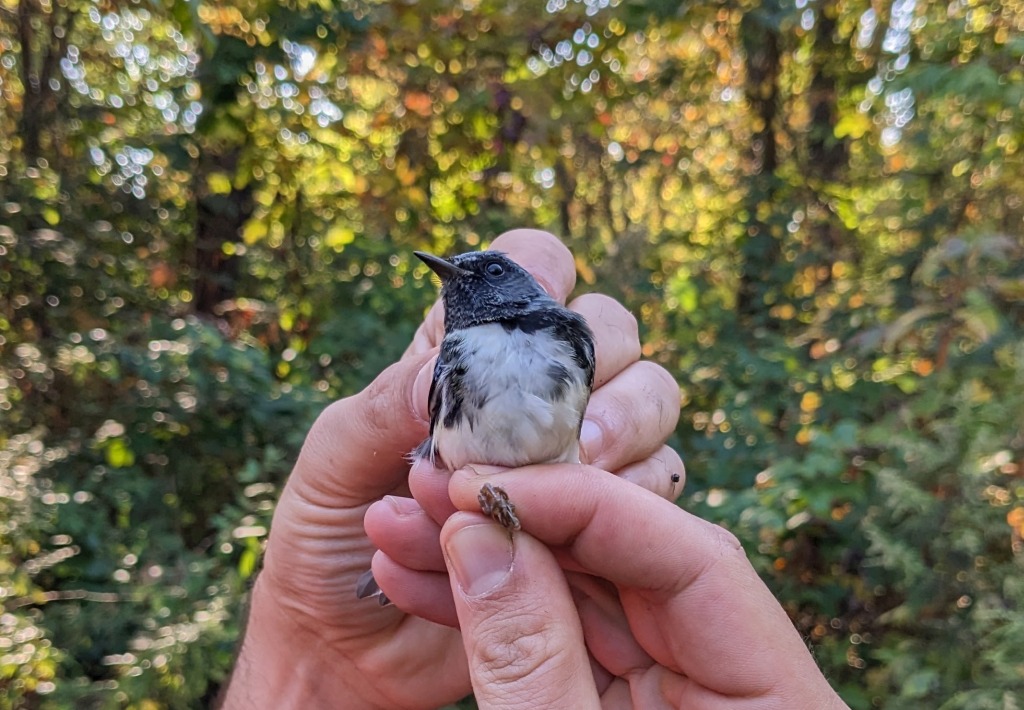
At each successive net check new species showed up.
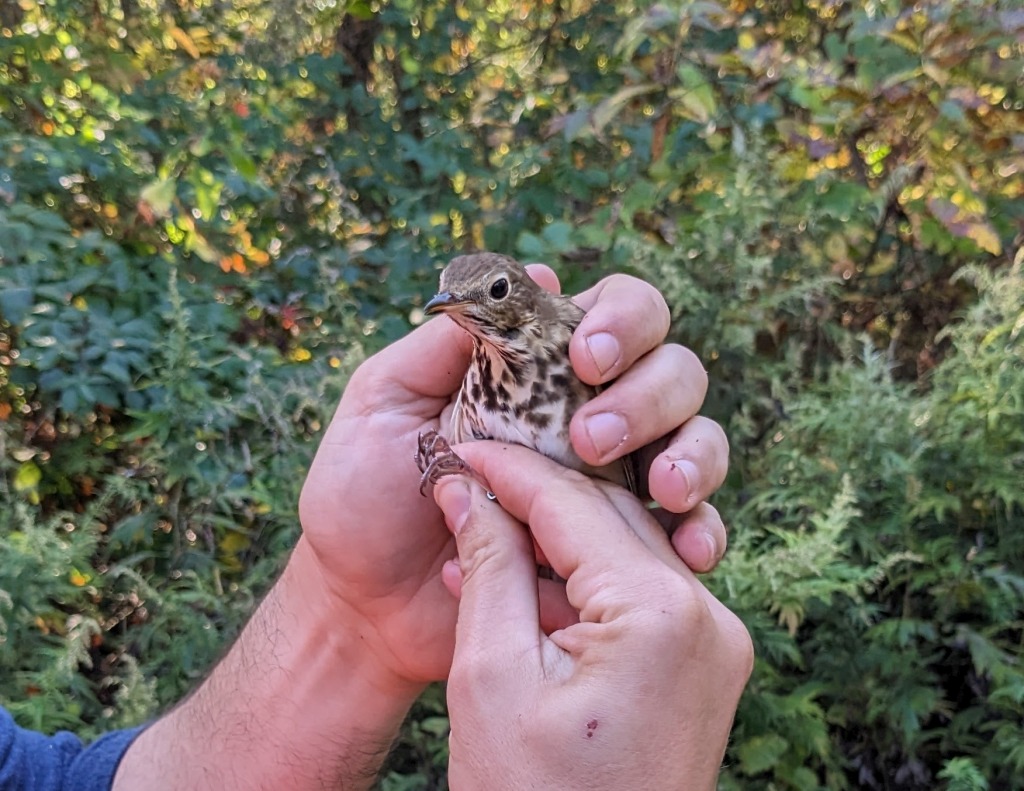
The hatch year hermit thrush (Catharus guttatus) shown at top was a sign that the mix of migrant species is changing. The insect eaters are nearly gone while the fruit and nuts migrants have arrived (*see note).
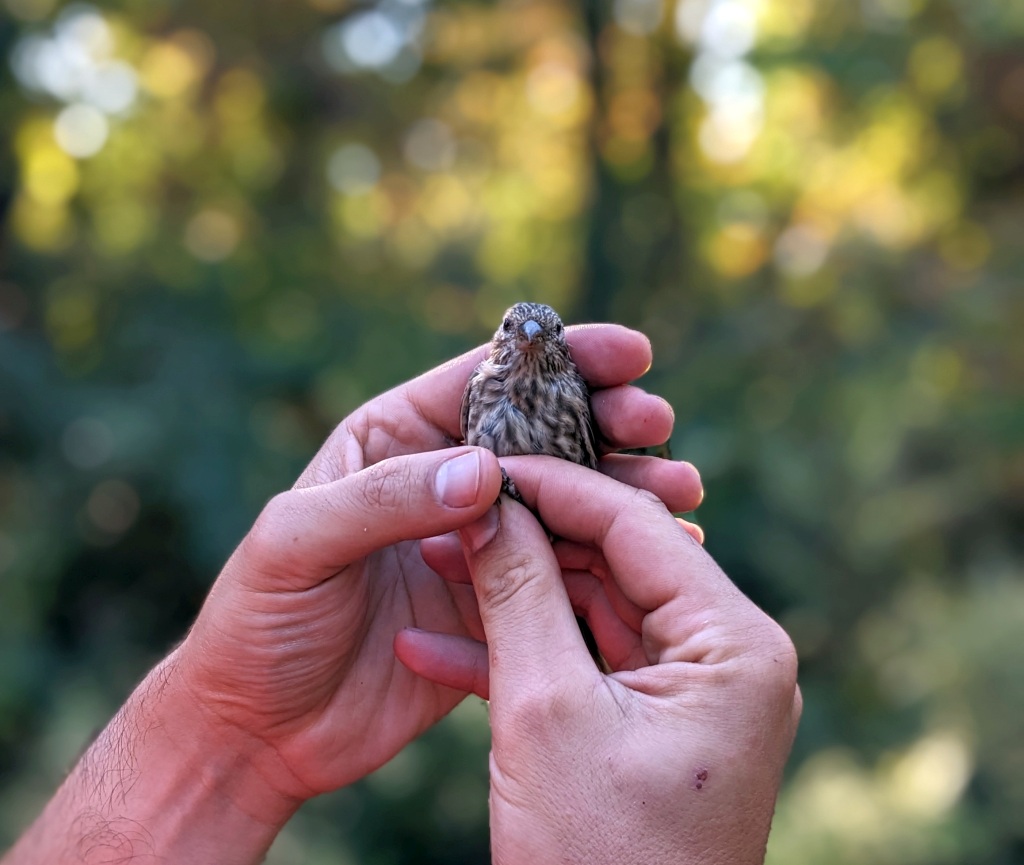
The hatch year female house finch, below, was probably born at Hays Woods. Many house finches in the eastern U.S. are permanent residents. Perhaps she will be, too.
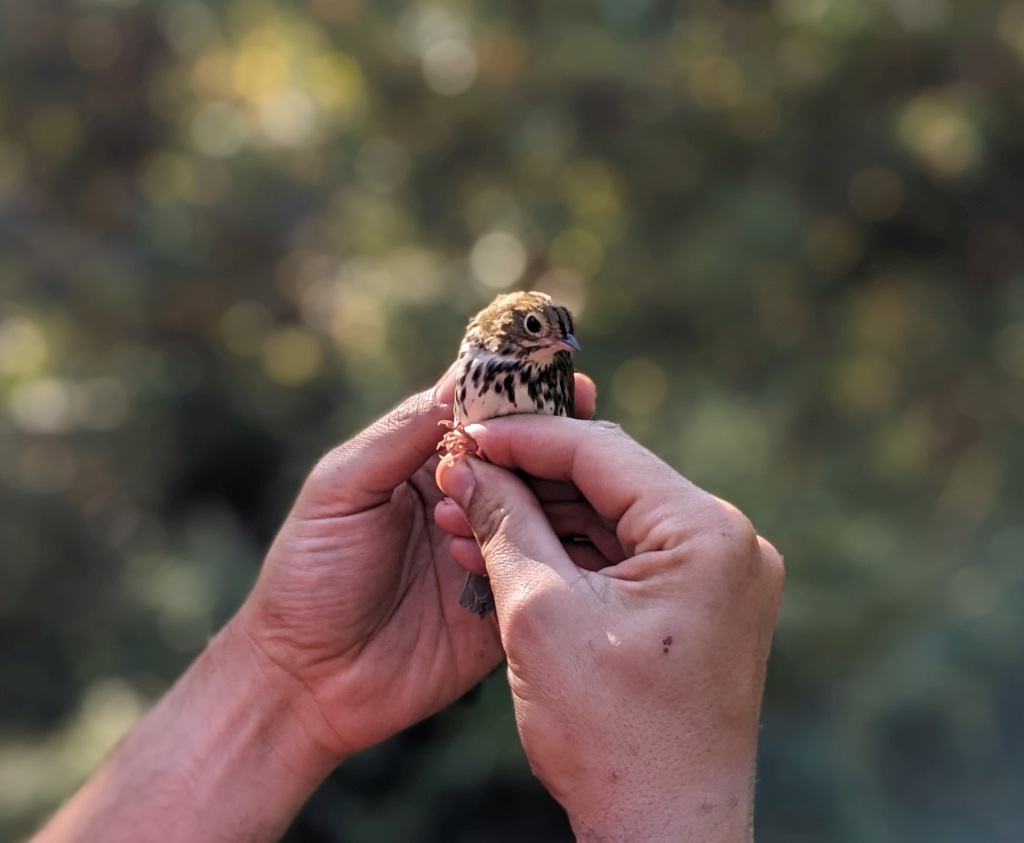
An ovenbird (Seiurus aurocapilla) is always nice to see up close and I had no trouble identifying it because it showed its striped crown. I saw one in the hand at Bird Lab last year.
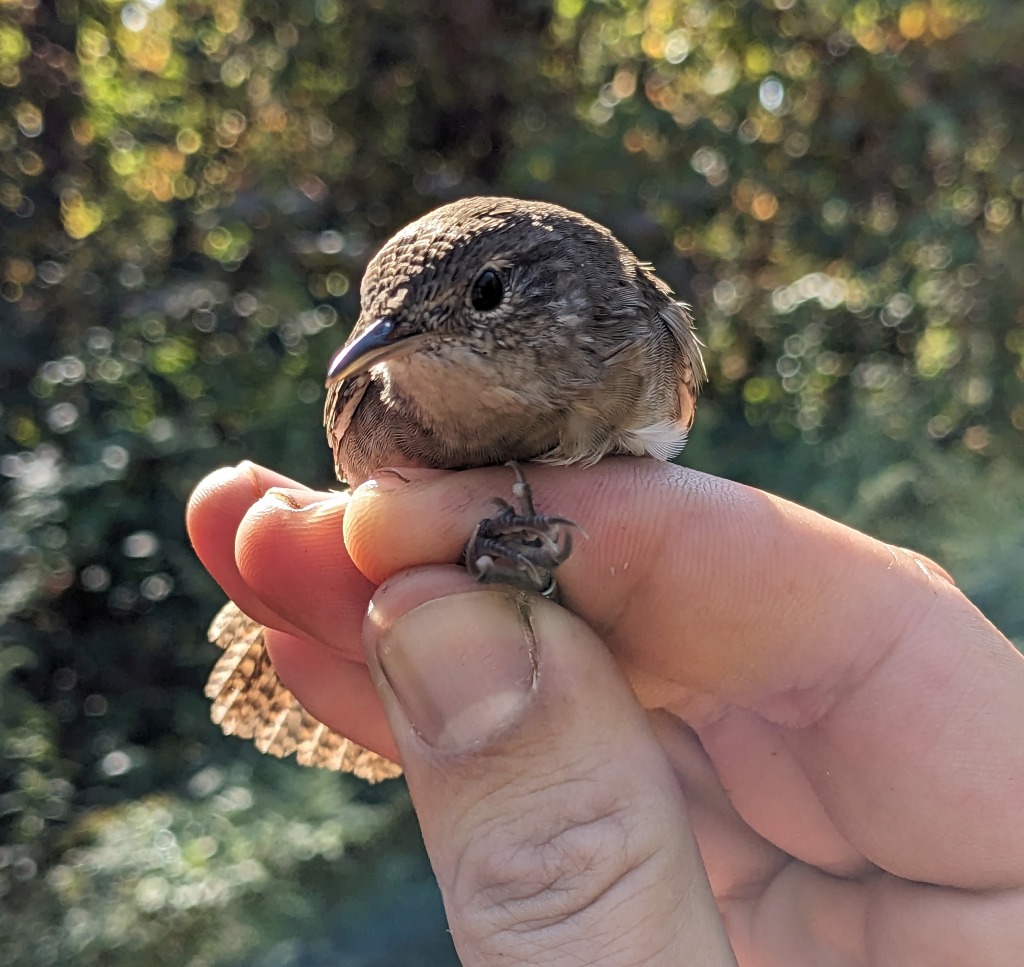
By 10:00am we’d been there an hour, it was getting hot (the high yesterday was 85°F!) and the birds were less active. Three of us hiked to the overlook and returned for one more net-check. This time only one bird was captured, a hatch year house wren (Troglodytes aedon) that Nick had banded on 9 August. This bird has spent the last two months foraging at Hays Woods and soon it will migrate to Central or South America.
We left Bird Lab and headed back to the parking lot where the fleet of enormous dump trucks, seen at 8:30am, were still shuttling dirt to/from Duquesne Light’s dirt road. Duquesne Light is building an access path to the cliff edge where two transmission towers need to be replaced and moved away from the landslide zone.
Thanks to Jared Miller for sharing his photos, shown above.
At 10:30am I received an alert that a migrating American avocet (Recurvirostra americana) was hanging out at Duck Hollow. Avocets in Allegheny County are One Day Wonders. I had never seen one here because I waited a day to go see them. So I made the short trip from Hays Woods to Duck Hollow and digiscoped this lousy picture. The light was too bright to see its faint orange color but you get the idea.
p.s. (*) Two of the phases of fall migration: ** Insect eaters such as warblers, flycatchers, swifts and swallows migrate through in September because the bug population is going to die when cold weather hits. ** Fruit and nut eaters, including thrushes and sparrows, pass through in October.
(photos by Jared Miller and Kate St. John)
27 September 2023
Only 5 people can come on this outing. You must sign up by leaving a comment on the blog form below. First come first served.
Come with me to Pittsburgh’s newest city park on Tuesday Oct 3, at 8:30 am (rain date Wed Oct 4) to see Bird Lab’s Nick Liadis band migratory birds at Hays Woods.
Meet me at the Hays Woods Agnew Rd Trailhead parking lot at 8:30am. From there we will walk through the woods for 20 minutes to get to the banding site. Expect to spend at least an hour on site, then a 20 minute walk to return.
Every day is different during migration. When I visited the banding operation on 7 September 2022 we saw warblers and a female cardinal. Best Bird was the ovenbird pictured at top.
I can’t predict what birds we’ll see but we will certainly see them up close. It’s sure to be good.
For a sneak preview see Linda Roth’s Facebook Live video of the banding on Tues 26 Sept: https://fb.watch/njIOW32rqr/
Some logistics:
Bird Lab is a non-profit supported by donations and grants. For group hikes like ours, a donation to birdlab.org of $15/person is required. (More than $15 is always welcome.) You can also donate online at https://www.gofundme.com/f/help-nick-to-conserve-birds-their-habitats
Learn more about Bird Lab at http://birdlab.org/
If you are one of the lucky 5 participants I will notify you via email. (Comments require that you enter an email address.)
Hays Woods is the City of Pittsburgh’s wildest, least developed park. The trail to the site is flat but don’t expect amenities. The only porta-john is at the parking lot.
(photos by Kate St. John)