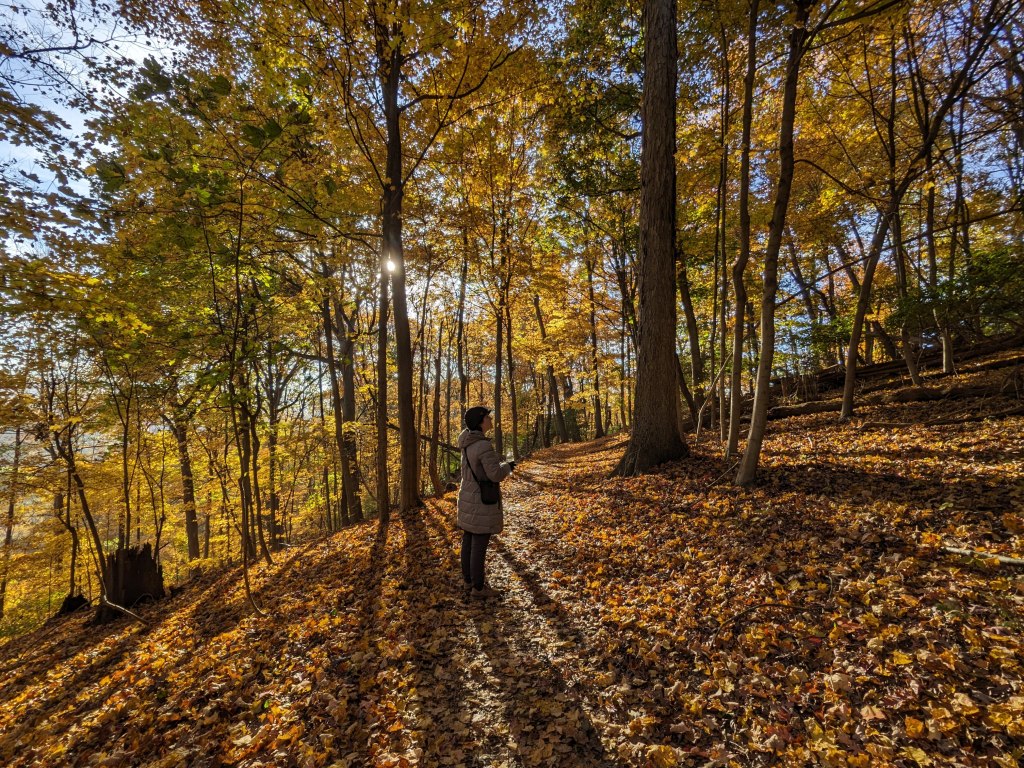
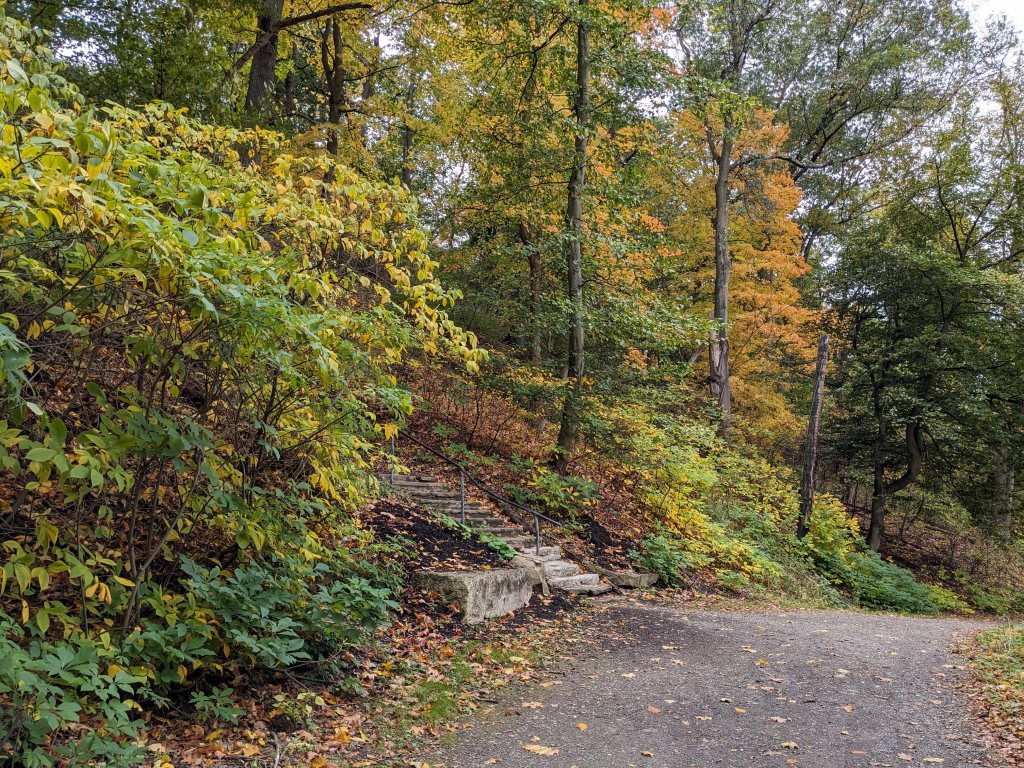
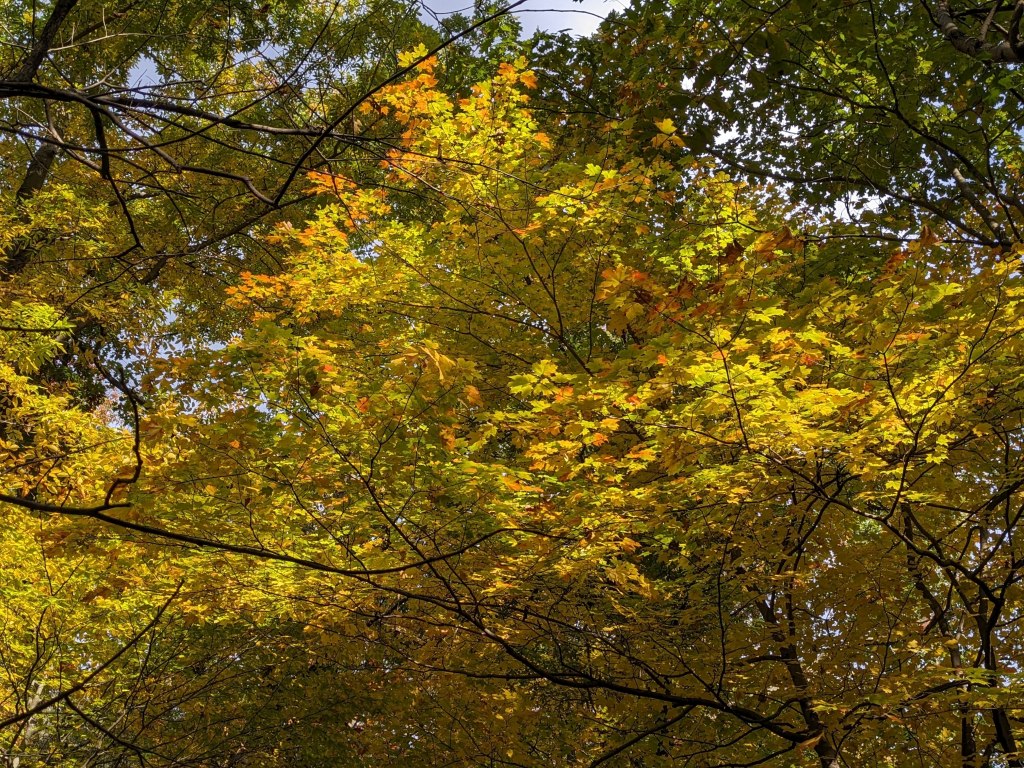
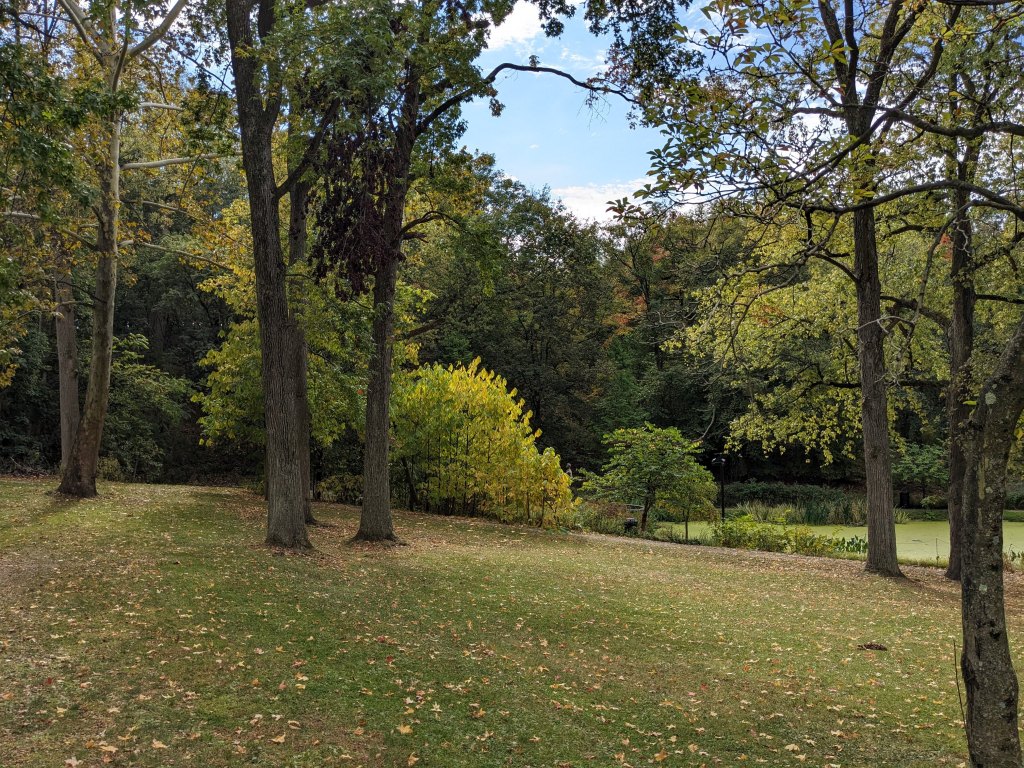
Beautiful autumn in the woods, 26 Oct 2023 (photo by Kate St. John)
28 October 2023
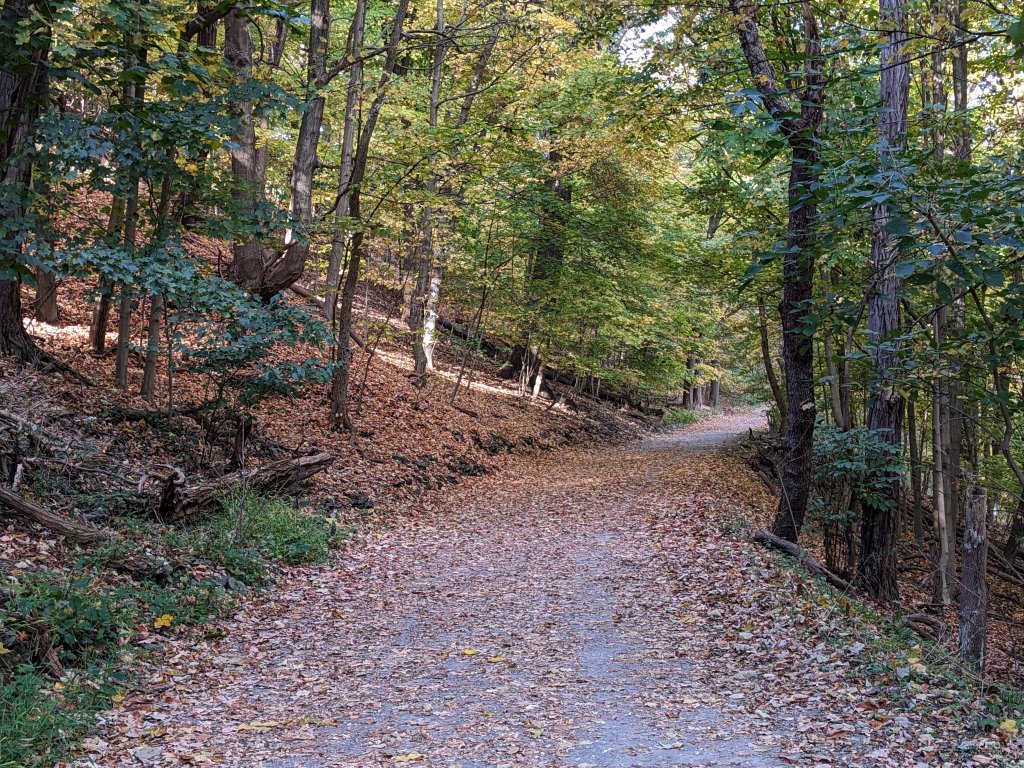
The last full week of October brought beautiful weather and fall foliage to Southwestern Pennsylvania. Early mornings were chilly but warmed up quickly. Here are a few scenes from the week.
Frick Park is beautiful in early morning sunlight on 26 October. With Charity Kheshgi.
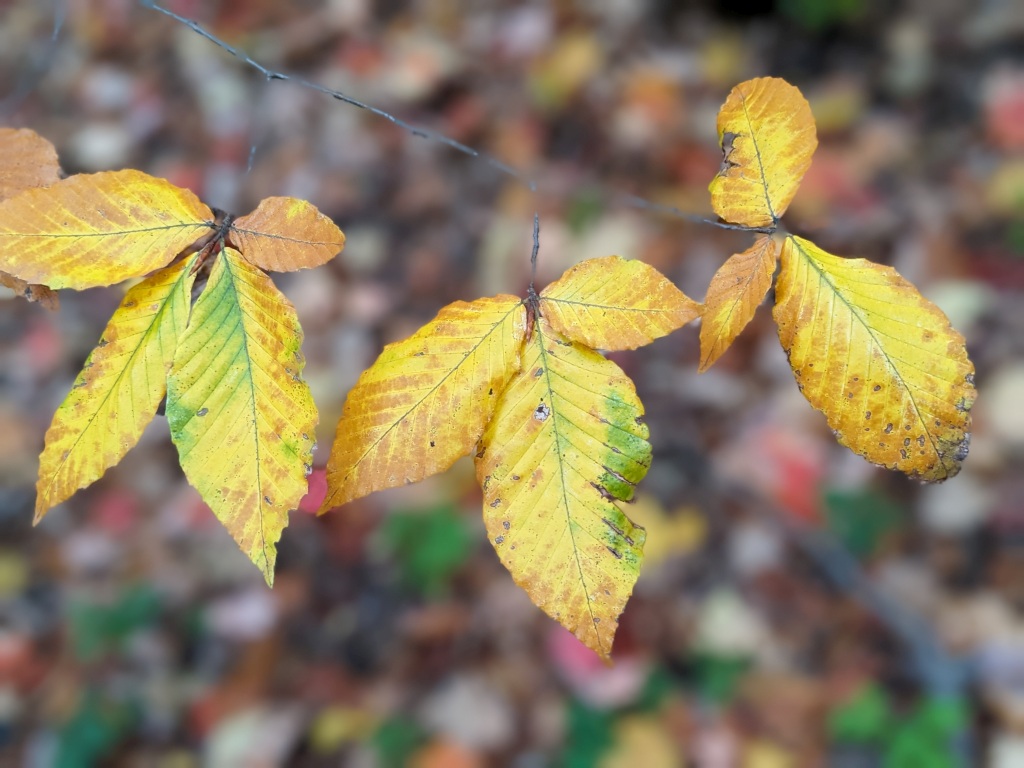
American beech leaves in Schenley Park show three color stages: green, yellow, brown.
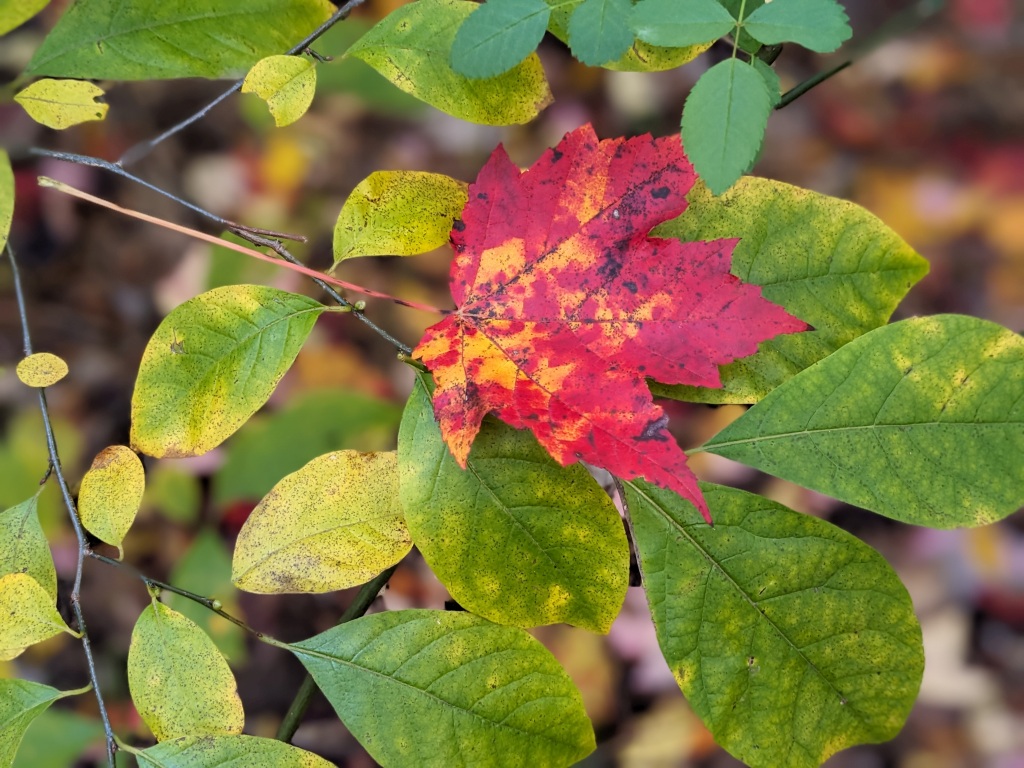
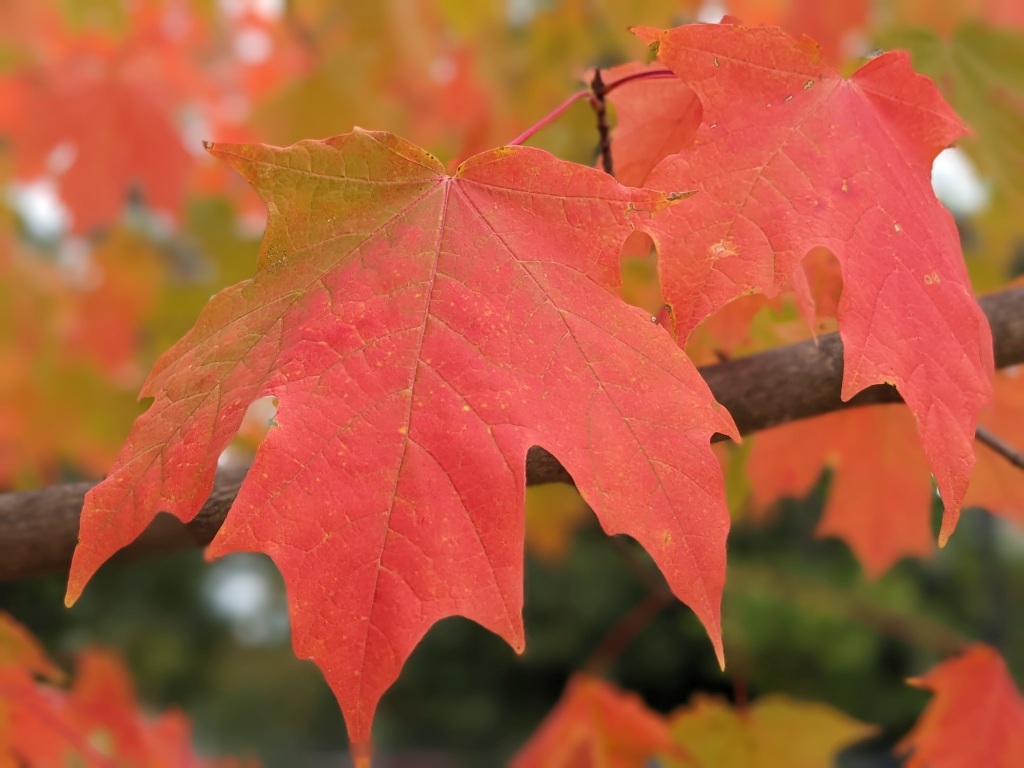
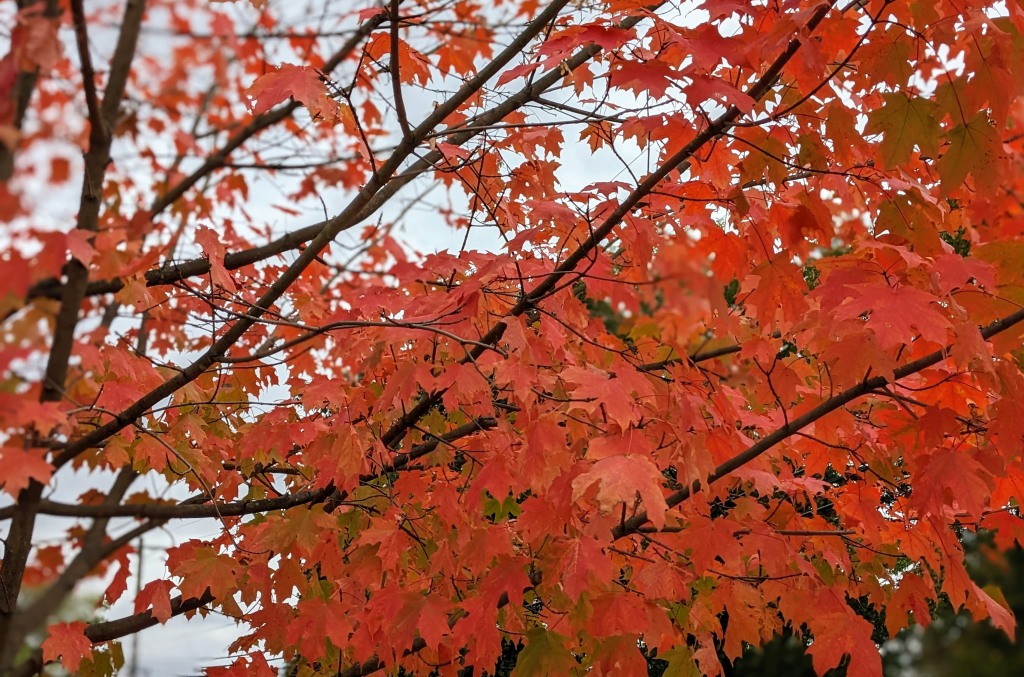
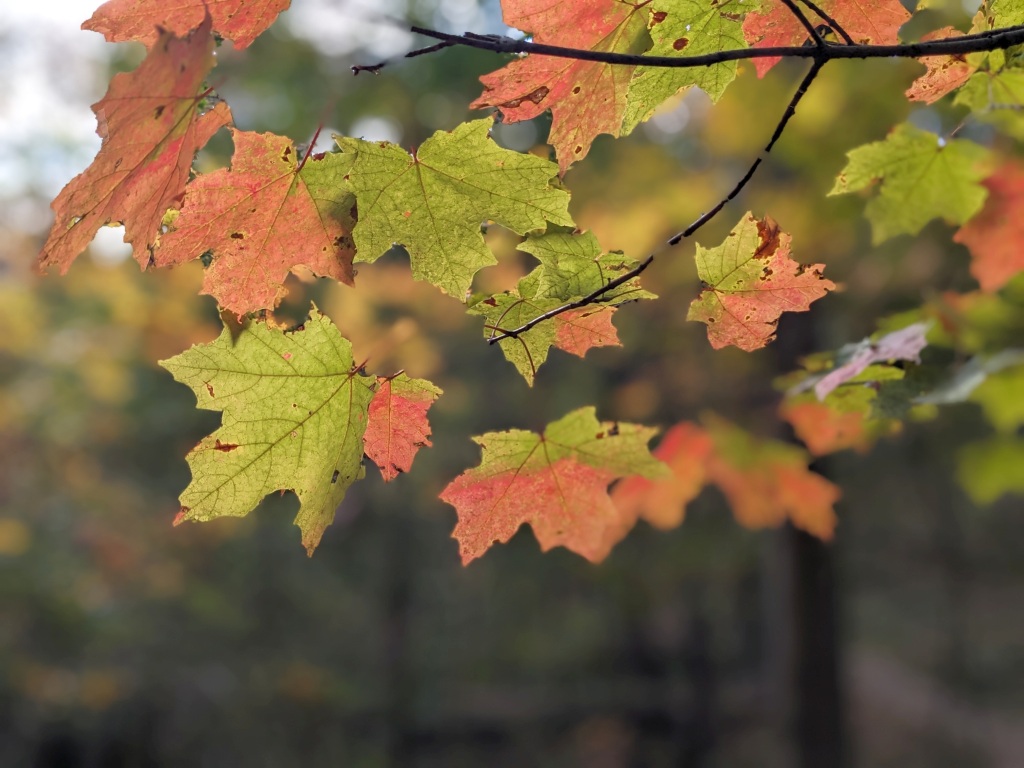
Sugar maple leaf is red at SGL 203, Marshall Twp
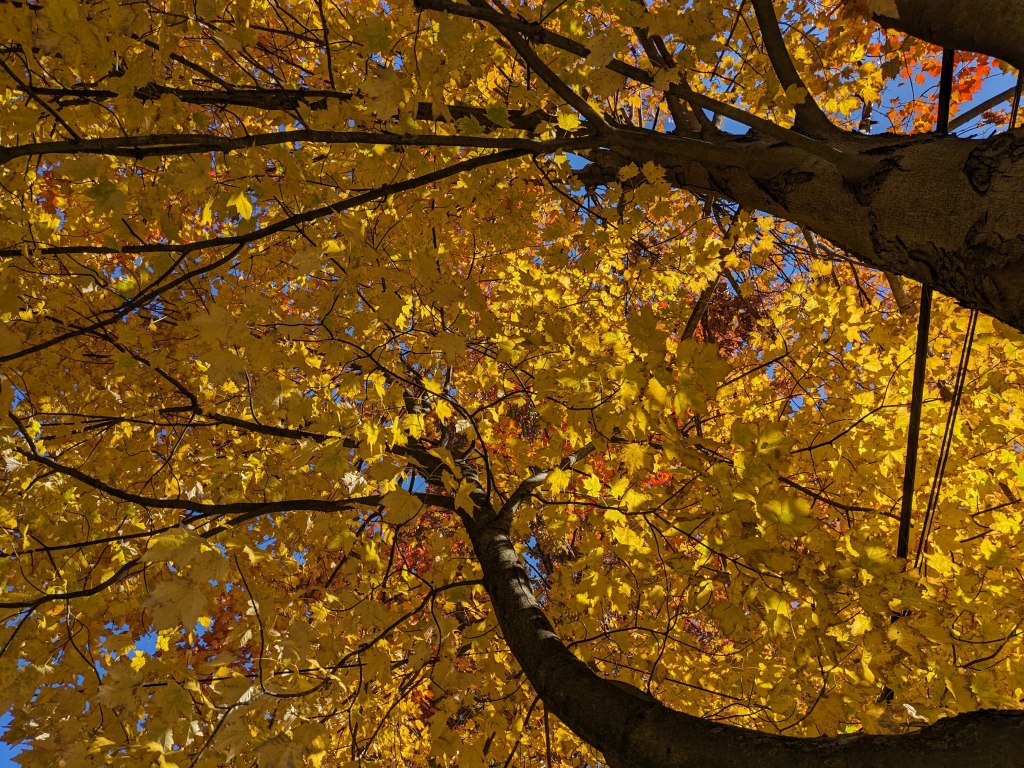
The arching trunks of a mature Norway maple in Shadyside, City of Pittsburgh.
Fall colors reflecting on Lake Arthur at Moraine State Park.
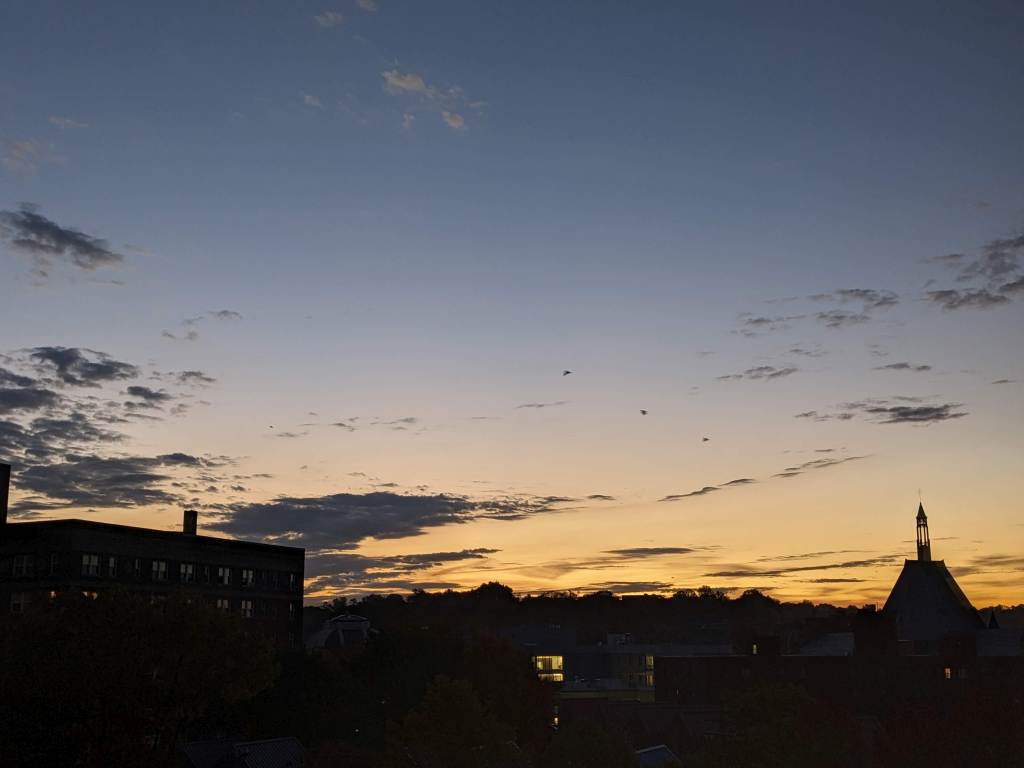
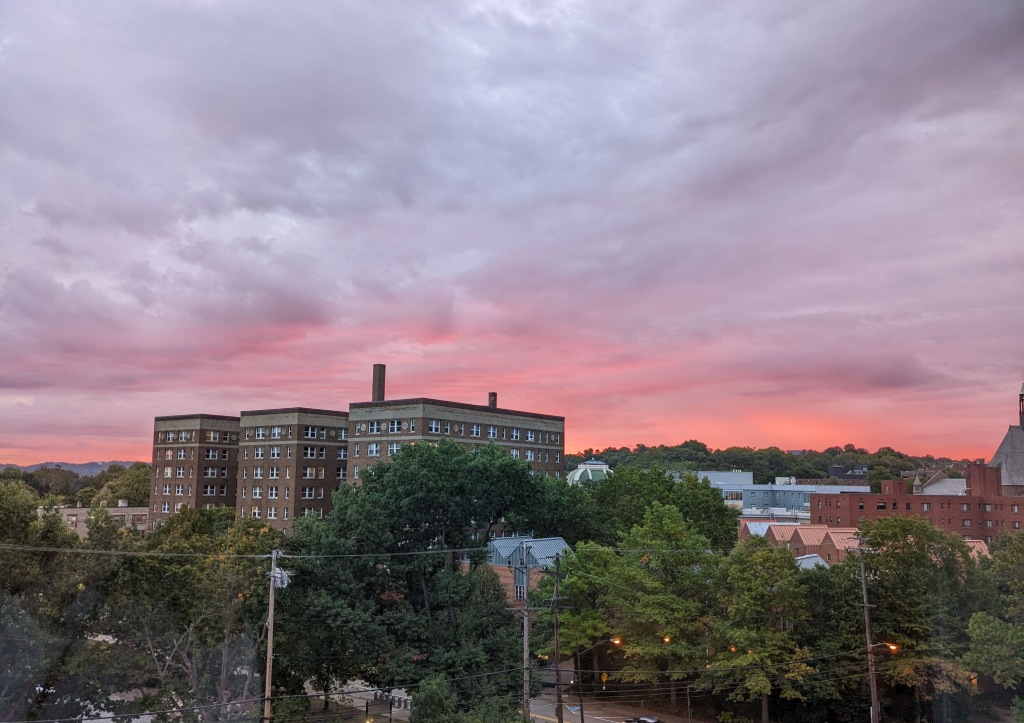
Beautiful sunrise on 26 October. Three crows pass by on their way from the roost.
American beech changing color, Schenley Park, 21 Oct 2023 (photo by Kate St. John)Sugar maple leaf, SGL 203, 22 Oct 2023 (photo by Kate St. John)Norway maple in yellow, Shadyside, Pittsburgh, 23 Oct 2023 (photo by Kate St. John)Fall foliage reflection at Moraine State Park, 24 Oct 2023 (photo by Kate St. John)
Golden yellow is a them from leaves to sky.
Sunrise with three crows, 26 Oct 2023 (photo by Kate St. John)
Bright red maple leaf near Phipps Conservatory, 16 October 2023 (photo by Kate St. John)
21 October 2023
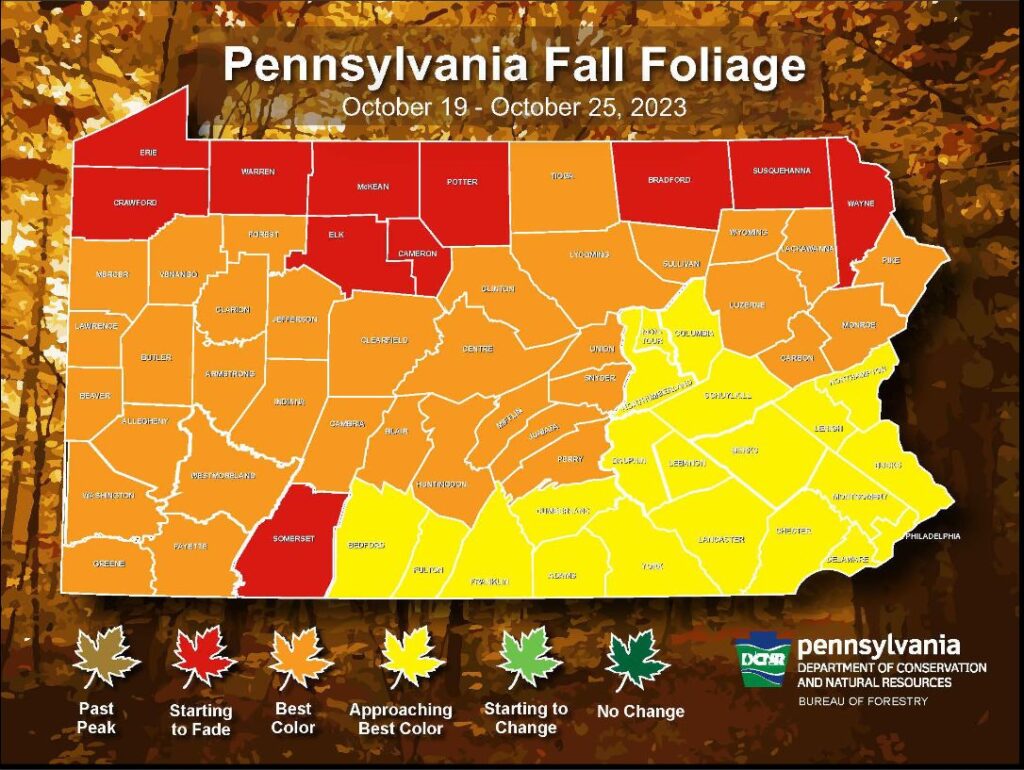
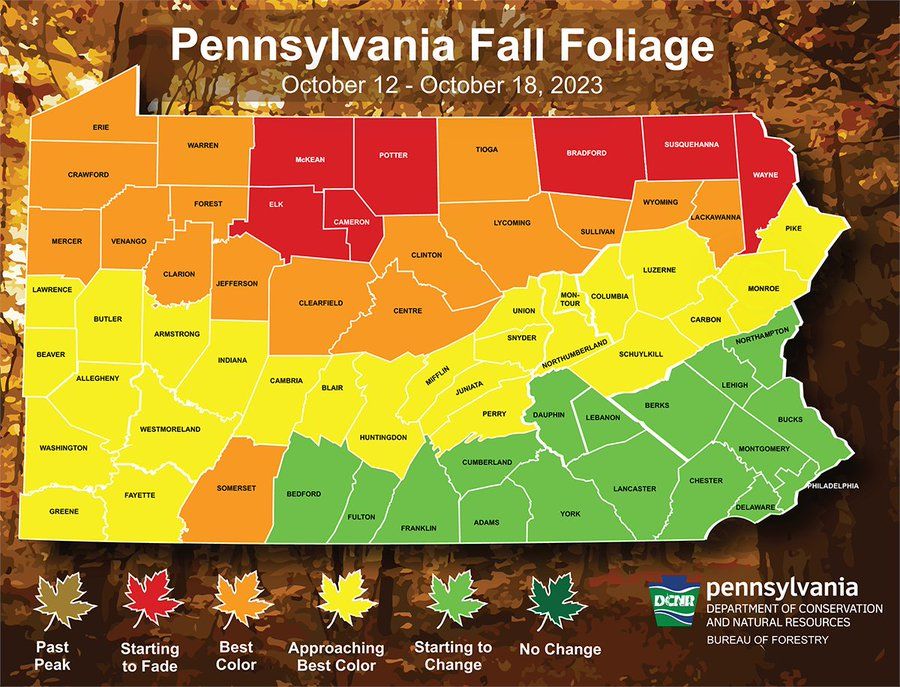
Fall color’s peak in southwestern Pennsylvania used to be around the 12th of October but climate change has pushed it later, closer to the 21st, as you can see in the PA fall foliage prediction for 19-25 October.
This week I found bright leaves on red maple trees, at top, and yellow on buckeyes and hickories.
Schenley Park leaves are yellow and green on 16 October 2023 (photo by Kate St. John)Yellow and orange maple leaves, Frick Park, 18 October 2023 (photo by Kate St. John)
Frick and Schenley are dominated by oaks whose color will peak in the next two weeks. Meanwhile their few red maples turned red from the top down and have lost their leaves in the same order. The maples are gorgeous up close but you can’t see them from a distance because the tops are bare.
The top of this red maple is almost bare, 16 October 2023 (photo by Kate St. John)
Tomorrow night the northwest wind will bring migrating birds overnight and patchy frost on Monday morning.
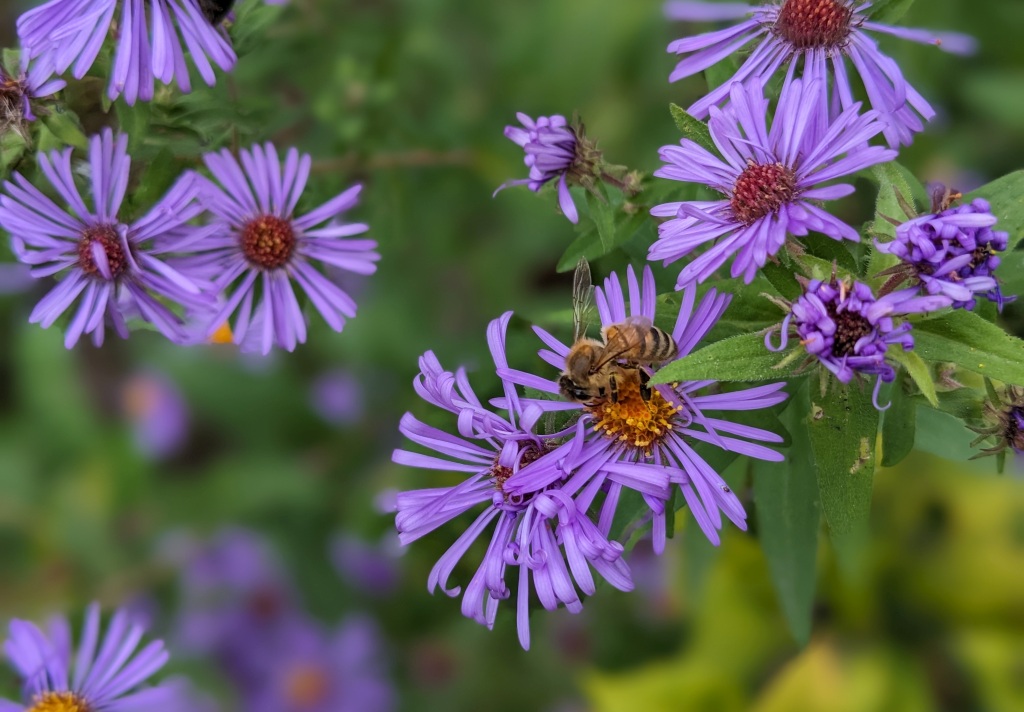
Honeybee on asters, Schenley Park, 28 Sept 2023 (photo by Kate St. John)
7 October 2023
The best photos from this week have been published already (Yesterday at Hays Woods Bird Banding) so I’m reaching back to late September for a few of things I’ve seen.
Bees of all kinds are attracted to deep purple asters beside the Westinghouse Memorial pond in Schenley Park. The honeybee, above, is hard to see near the flower’s orange center.
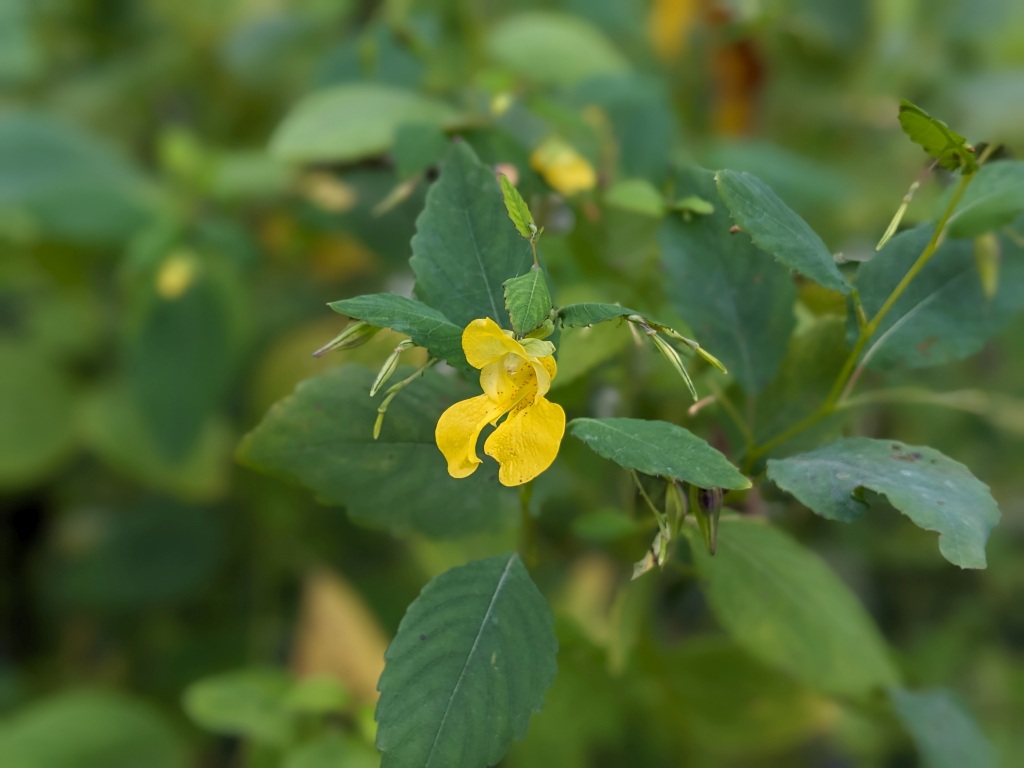
At Duck Hollow, yellow jewelweed still has flowers as well as fat seed pods. Try to pull one of the pods from the stem and see what happens.
Yellow jewelweed flower and seeds, Duck Hollow, 26 Sept 2023 (photo by Kate St. John)
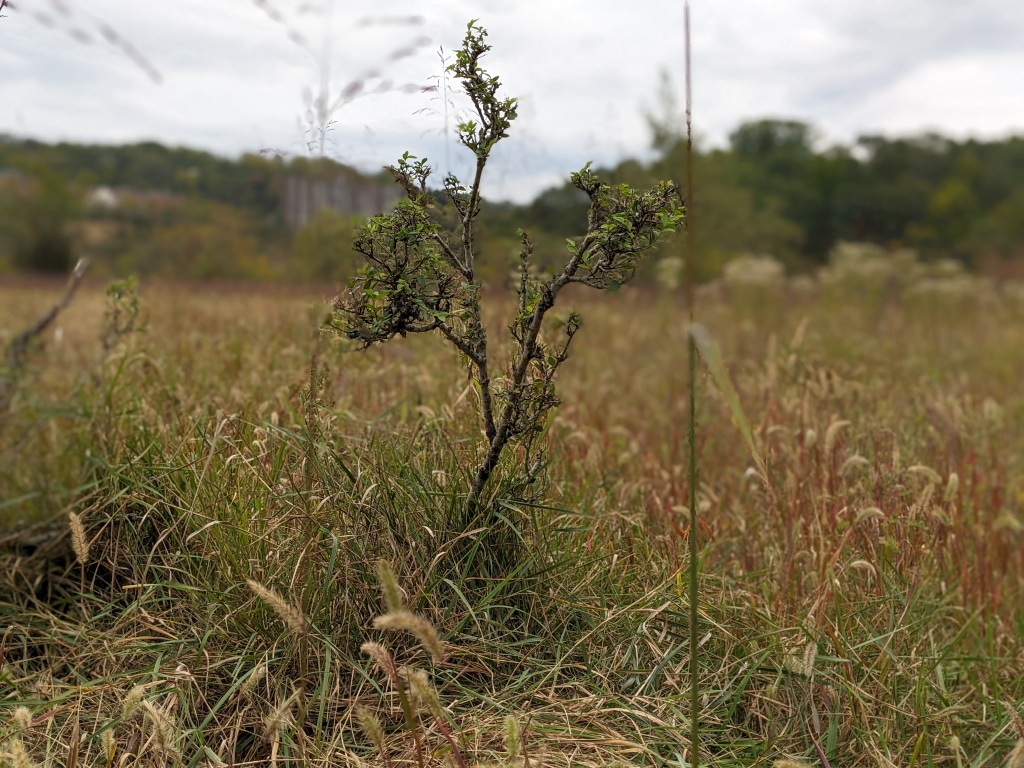
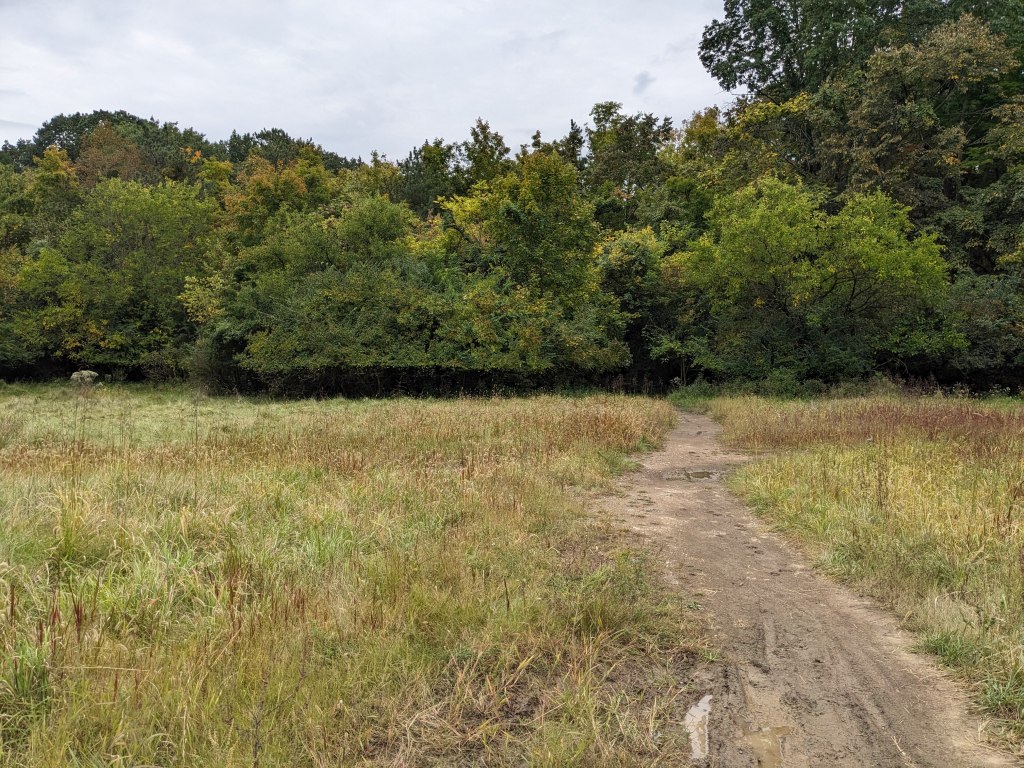
On 28 September I explored the slag heap flats near Swisshelm Park where (I think) solar arrays will be installed. Because the slag is porous the flats are a dry grass/scrub land where this shrub would have done well except that it’s been over-browsed by too many deer. It looks like bonsai.
Deer damage at the future site of solar flats, NMR Valley, 28 Sept 2023 (photo by Kate St. John)
Deer overpopulation is also evident by the browse line at the edge of the flats.
Browse line at the edge of the future solar flats,NMR Valley, 28 Sept 2023 (photo by Kate St. John)
On 26 September at Duck Hollow I encountered an optical illusion where Nine Mile Run empties into the Monongahela River. It looks as if this downed, waterlogged tree is damming the creek and that the water is lower on the downriver side of it. This illusion seems to be caused by the smooth water surface on one side of the log.
Optical illusion: the log is damming Nine Mile Run, 26 Sept 2023 (photo by Kate St. John)
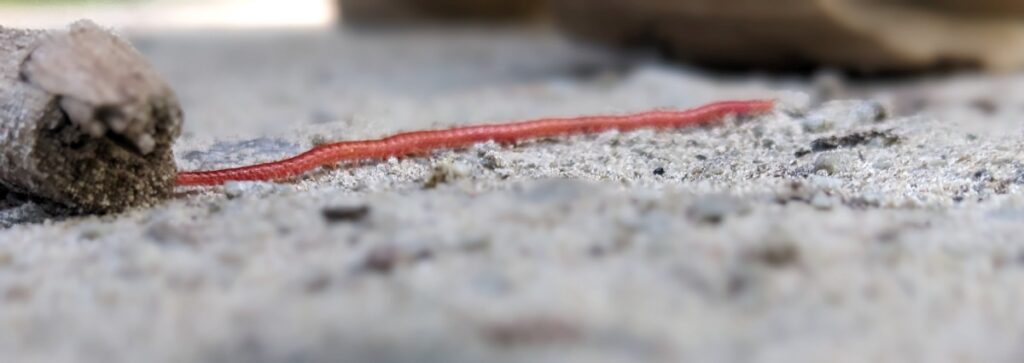
We found a tiny red centipede crossing the trail at Frick Park on 30 September …
Tiny red centipede, Frick Park, 30 Sept 2023 (photo by Kate St. John)
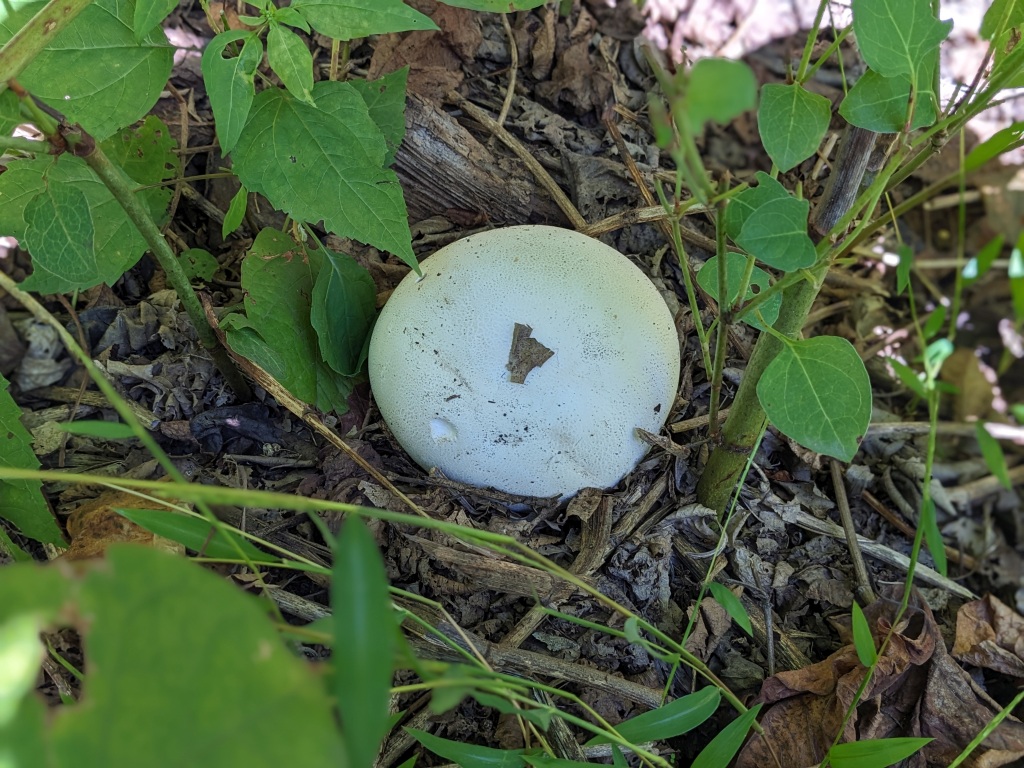
… and a puffball mushroom outside the Dog Park.
Puffball mushroom, Frick Park, 30 Sept 2023 (photo by Kate St. John)
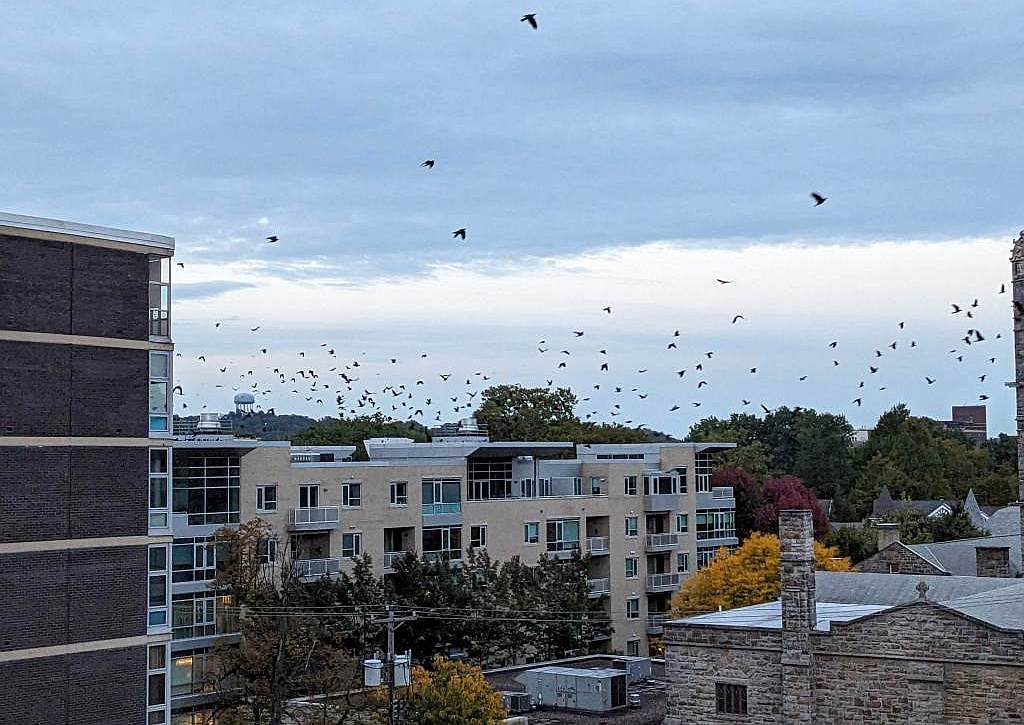
On 27 September hundreds, if not thousands, of crows gathered at dusk near Neville Street in Shadyside before flying to the roost. I thought this would happen again the next day but they changed their plan and have not come this close again.
Hundreds of crows take off from a roof on Neville Street, 27 Sept 2023 (photo by Kate St. John)
Sometimes sunrise is the most beautiful part of the day.
Sunrise at Neville Street, 28 Sept 2023 (photo by Kate St. John)
These photos don’t give the impression that it’s been abnormally dry, but precipitation in Pittsburgh is down 6″ for the year. Almost 2″ of that deficit occurred in September. The Fall Color Prediction says our leaf color-change is later than usual.
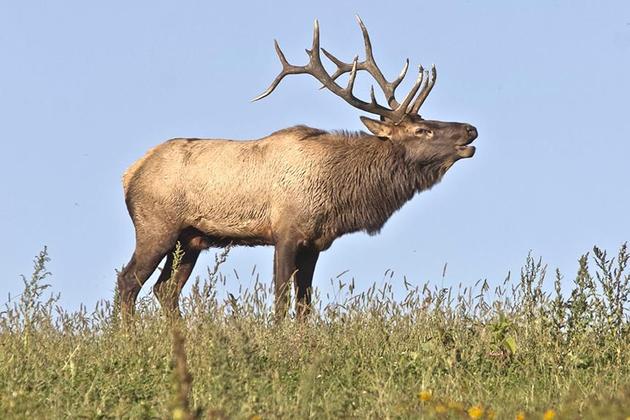
Elk bugling in Elk County, Pennsylvania (photo by Paul Staniszewski)
29 September 2023
If you’ve been waiting to hear the elk bugling in Pennsylvania, now’s the time to make the trip to Benezette, PA.
In September and October Pennsylvania’s elk (Cervus canadensis) are in the rut, their annual period of sexual activity. The bulls gather harems, pursue the females, antler-spar with other males, and “sing” a bugling love song.
Like white-tailed deer, male elk grow new antlers every year but these cervids are huge. Males are 25% larger than the females and can weigh up to 1,100 pounds with antlers that can span five feet.
Consequently it’s a bit surprising that the bugle is such a high-pitched call. Its bell-like echoing carries far in the woods and fields.
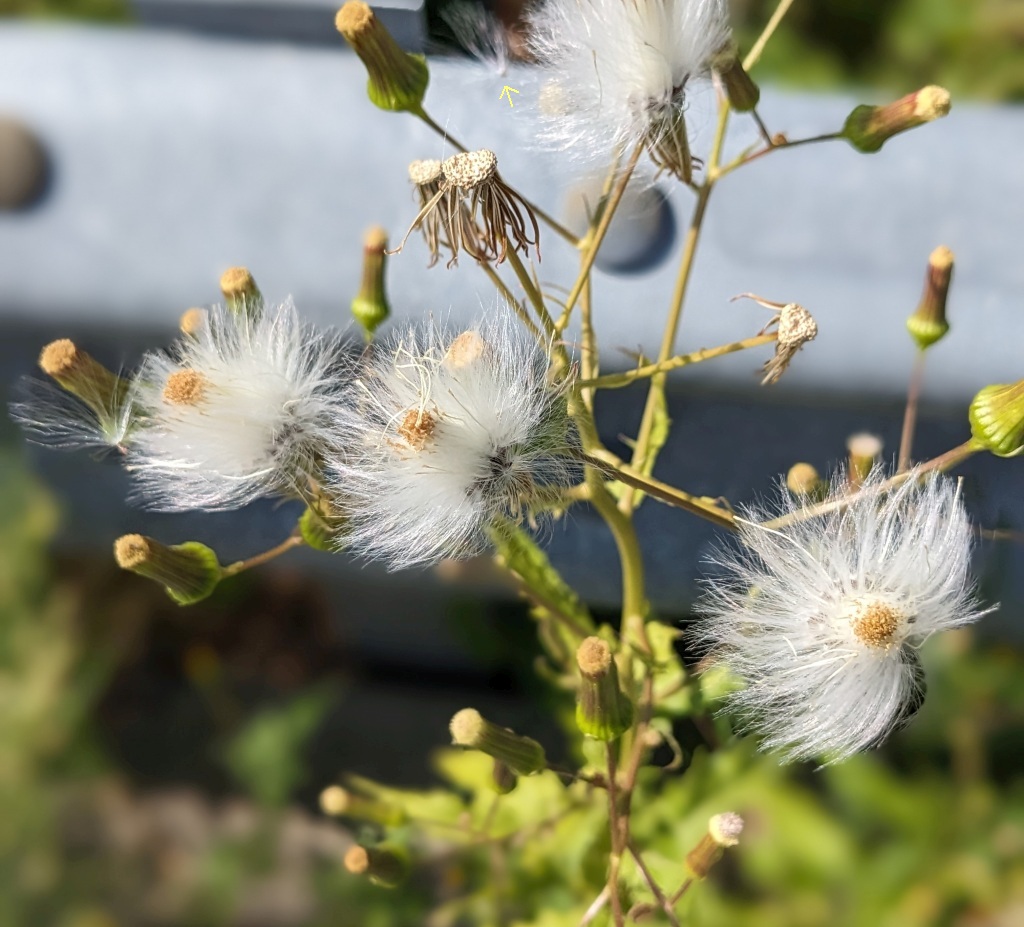
Pilewort seeds blow away in the wind, 20 Sep 2023 (photo by Kate St. John)
25 September 2023
Have you seen white fluff blowing in the wind lately? The fluff is not from dandelions. At this time of year it’s from pilewort.
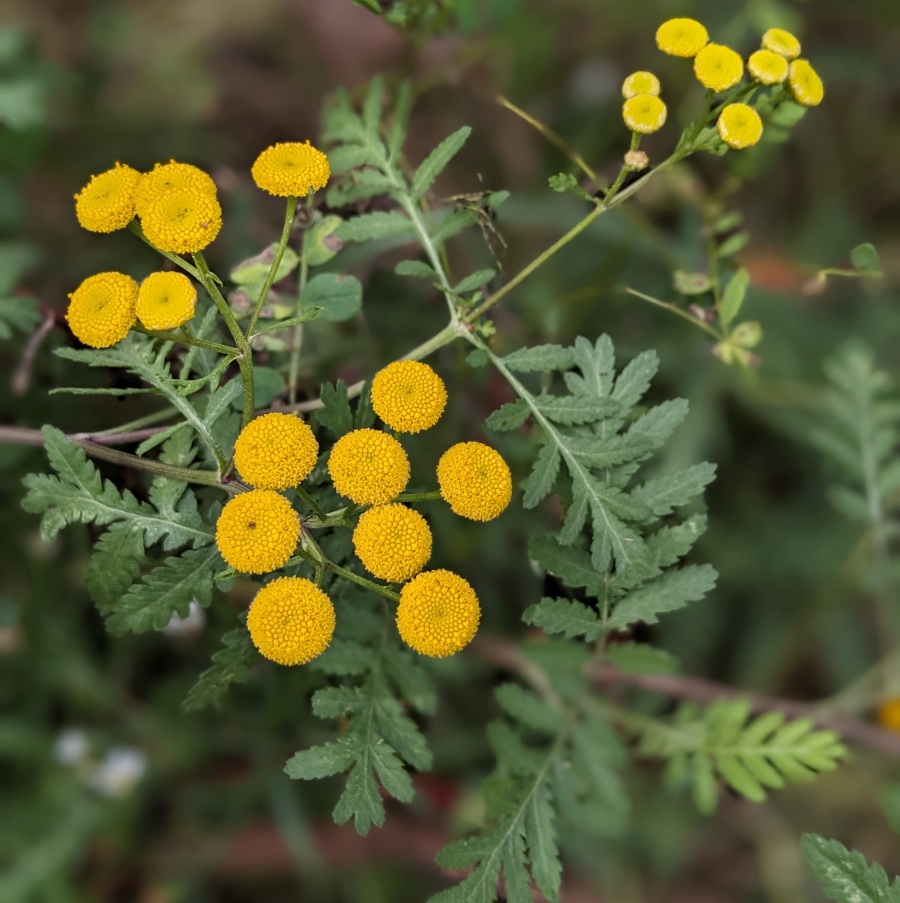
Pilewort (Erechtites hieraciifolius) is a native plant in the Aster family that looks very weedy, even ugly. At two to eight feet tall the flower heads on the tips of the branches look like seed pods because they barely open to expose pistils and stamens. To appreciate the flower you need a magnifying glass. Its beauty is microscopic.
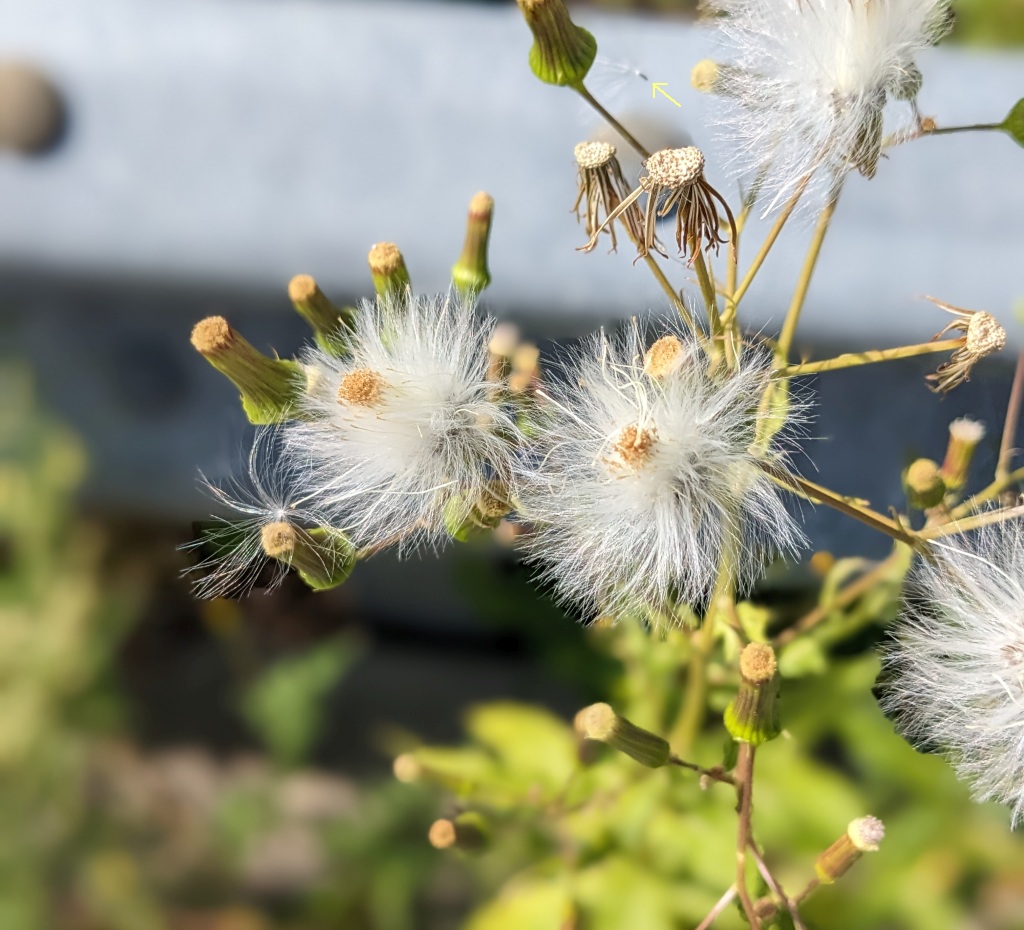
It doesn’t take much wind to set it going. Do you see the flying fluff in this closeup? Look for the tiny yellow arrow in this photo and the one at top.
Pilewort near Phipps’ parking lot, 20 Sep 2023 (photo by Kate St. John)
Why is it called pilewort? The common name literally means “hemorrhoid plant.” Penn State Extension explains.
Native Americans used American burnweed [pilewort] to treat rashes caused by exposure to poison ivy and poison sumac. Medicinally, it has also been used as an emetic and to treat dysentery, eczema, diarrhea, and hemorrhoids. It has been used to create a blue dye for wool and cotton and, despite its intense flavor, can be eaten raw or cooked.
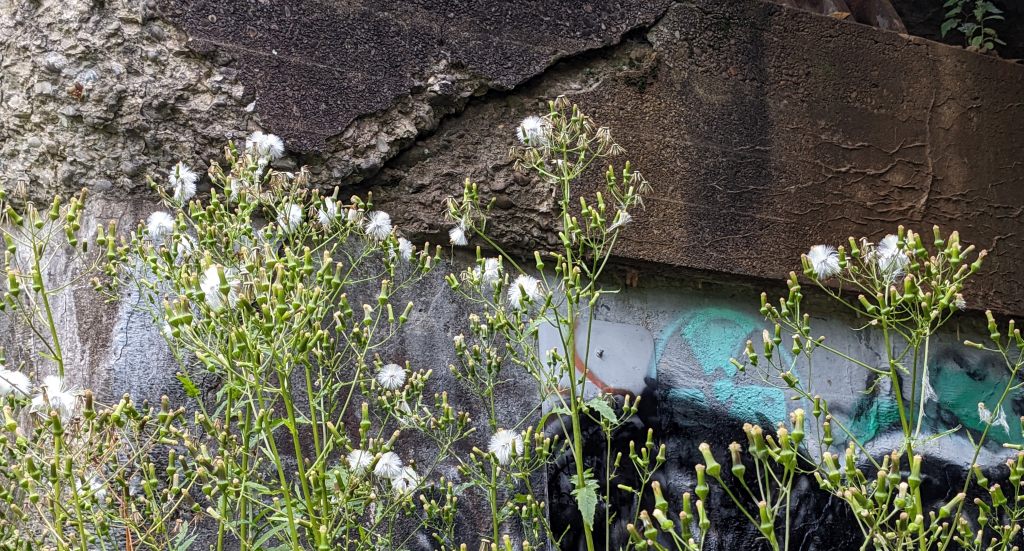
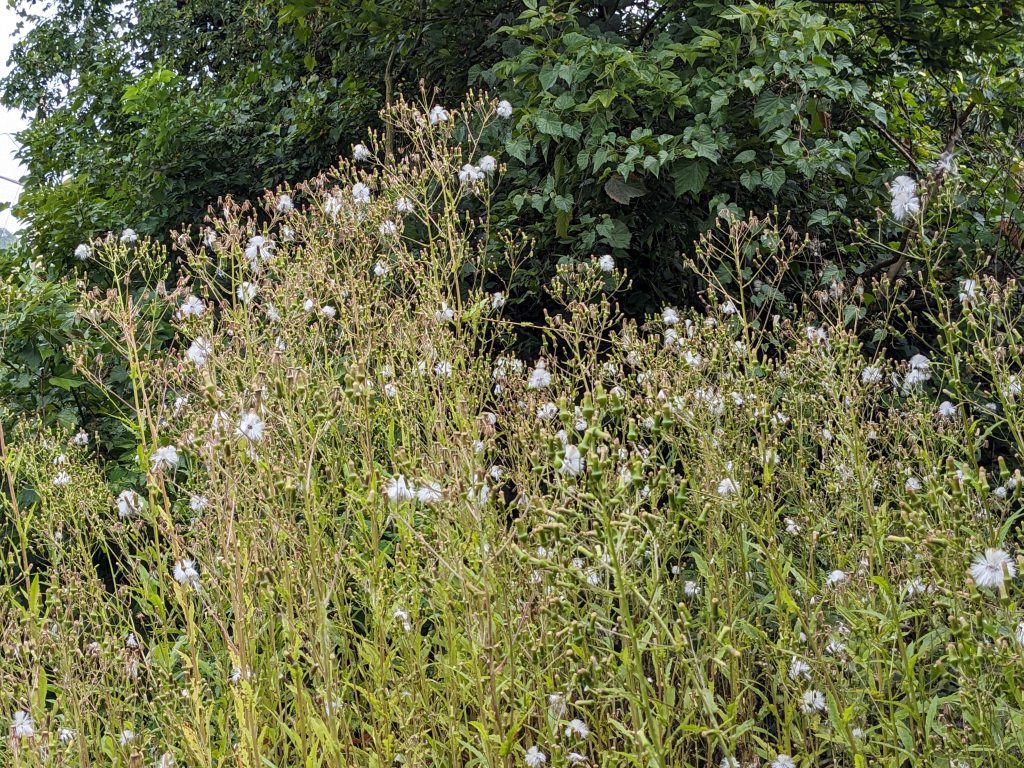
Pileweed’s other common name is American burnweed because it grows easily after brush fires. It loves disturbed soil and is easy to find by the side of the road, in churned up gardens, and in urban areas. In this age of bulldozers, roto-tillers and garden digging, pilewort has many opportunities to germinate.
I found a lot of it at Duck Hollow.
Pilewort at Duck Hollow, 18 Sep 2023 (photo by Kate St. John)Pilewort at Duck Hollow, 18 Sep 2023 (photo by Kate St. John)
Perhaps it’s a good thing that pilewort grows prolifically. A 2002 study in Japan found that Erechtites hieraciifolius is good at absorbing the greenhouse gas, nitrogen dioxide, turning it into an organic form.
It may not be beautiful but pilewort plants itself by the side of the road and then cleans the air.
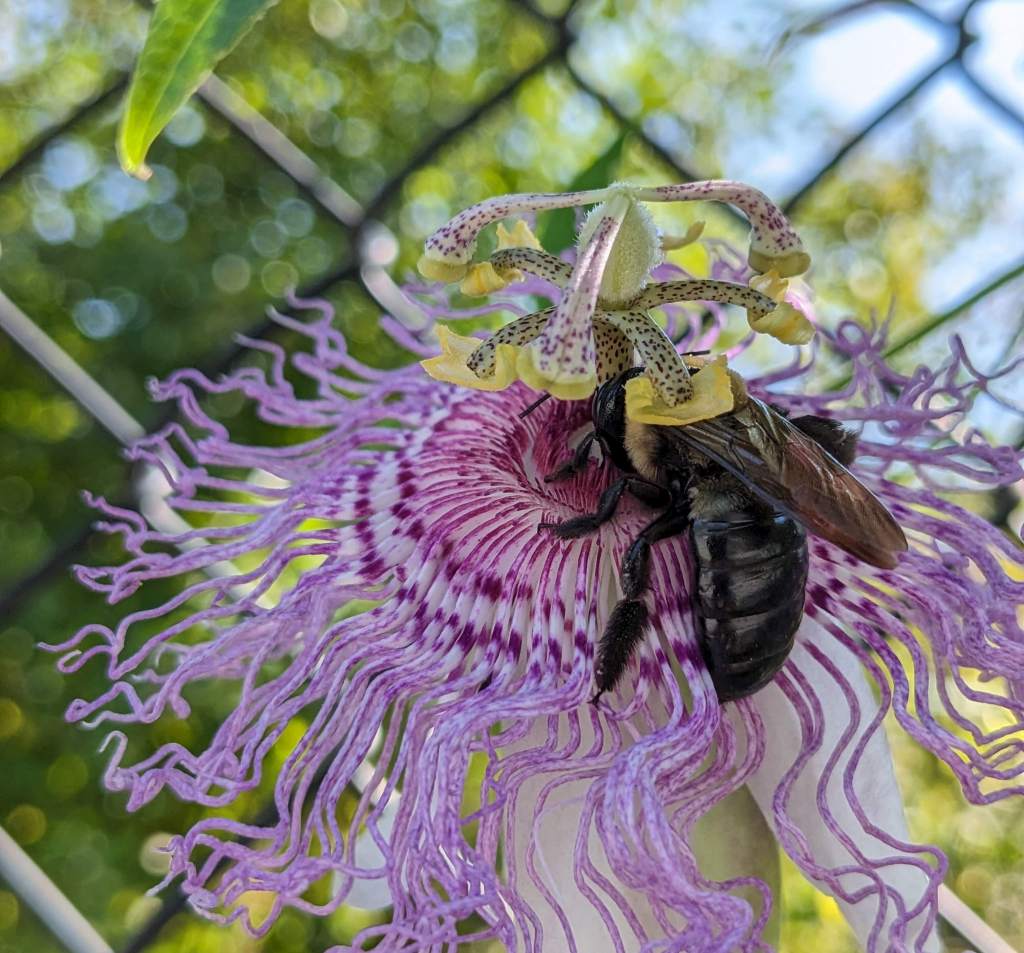
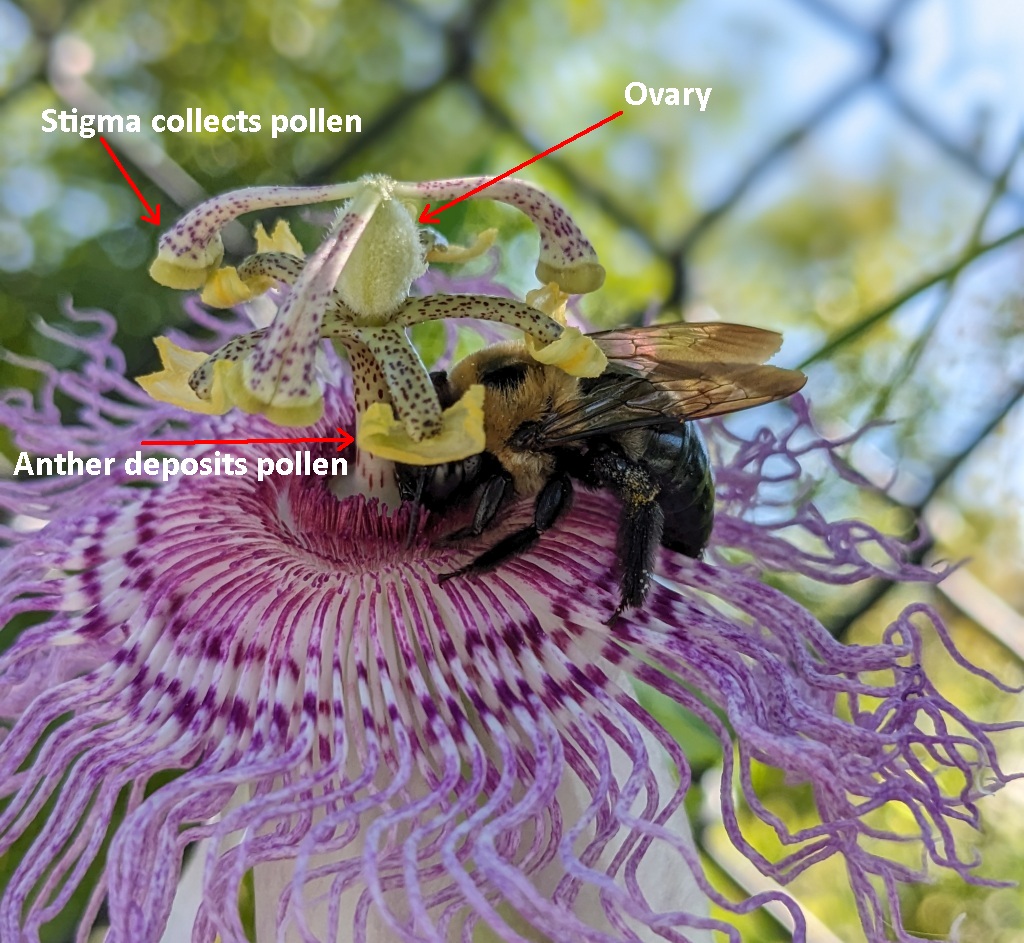
Large carpenter bee sips from a passionflower, Phipps, 20 Sep 2023 (photo by Kate St. John)
23 September 2023
Last Wednesday I watched an enormous carpenter bee sipping from passionflowers at Phipps Conservatory’s outdoor garden.
The passionflower’s nectar treat is directly below its overhanging anthers and stigmas. On Wednesday the anthers were in position to touch the hairy spot on the bee’s back. The stigmas were too high to touch the bee.
The pollination parts of a passionflower. An anther touches a bee, 20 Sep 2023 (photo by Kate St. John)
Later, the anthers and stigmas will trade positions. The anthers will pull back. The stigmas that collect pollen for the ovary will touch the bee.
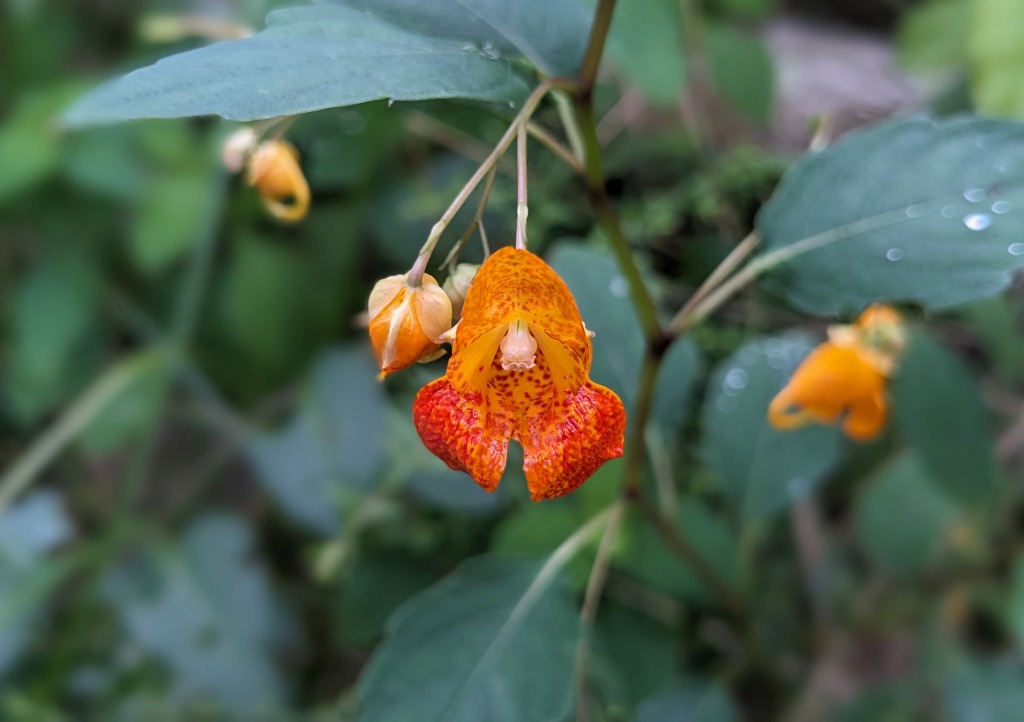
Orange jewelweed, Beechwood Nature Center, 16 August 2023 (photo by Kate St. John)
26 August 2023
Well, mostly “this week.” Two photos are older but I didn’t have room for them last time. Here’s a selection spanning 12 days.
Orange jewelweed (Impatiens capensis), above, does well at ASWP’s Beechwood Nature Center but is nearly extirpated from Schenley Park by deer overbrowse.
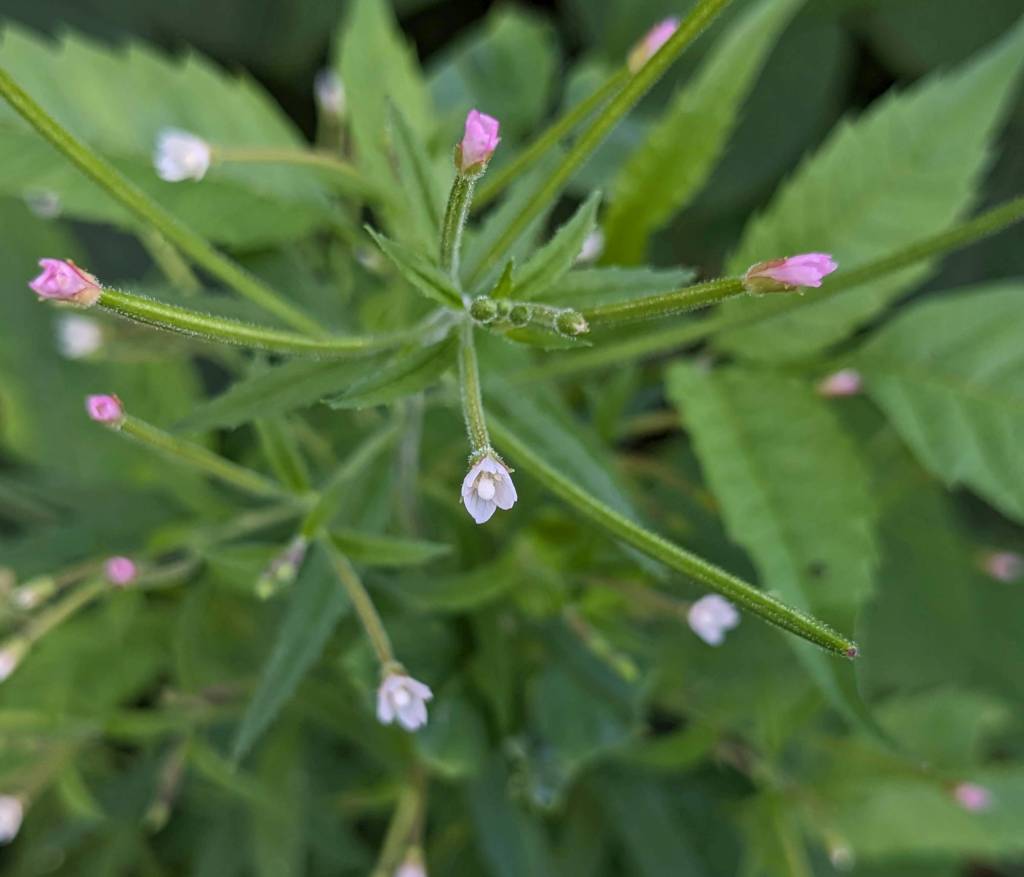
Tiny pink and white flowers of willow-herb (Epilobium sp) at West Penn Park on Polish Hill.
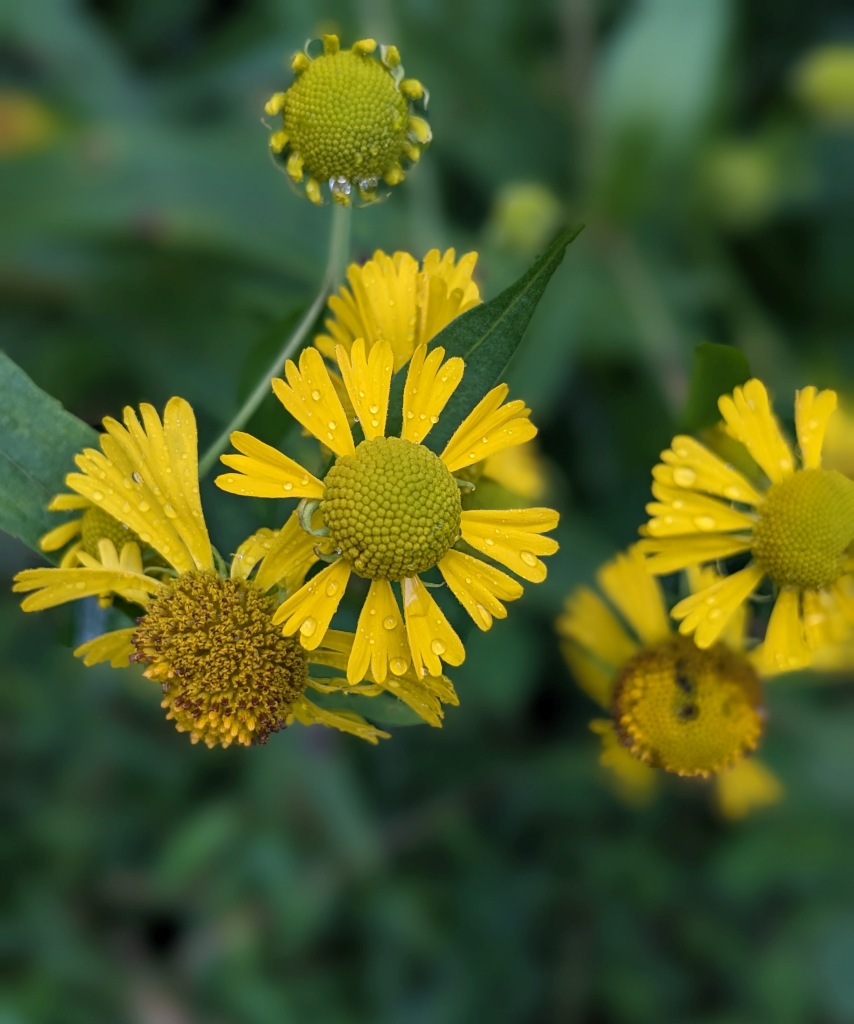
Sneezeweed at ASWP’s Beechwood Nature Center. They’ve cultivated many native flowers in the meadows.
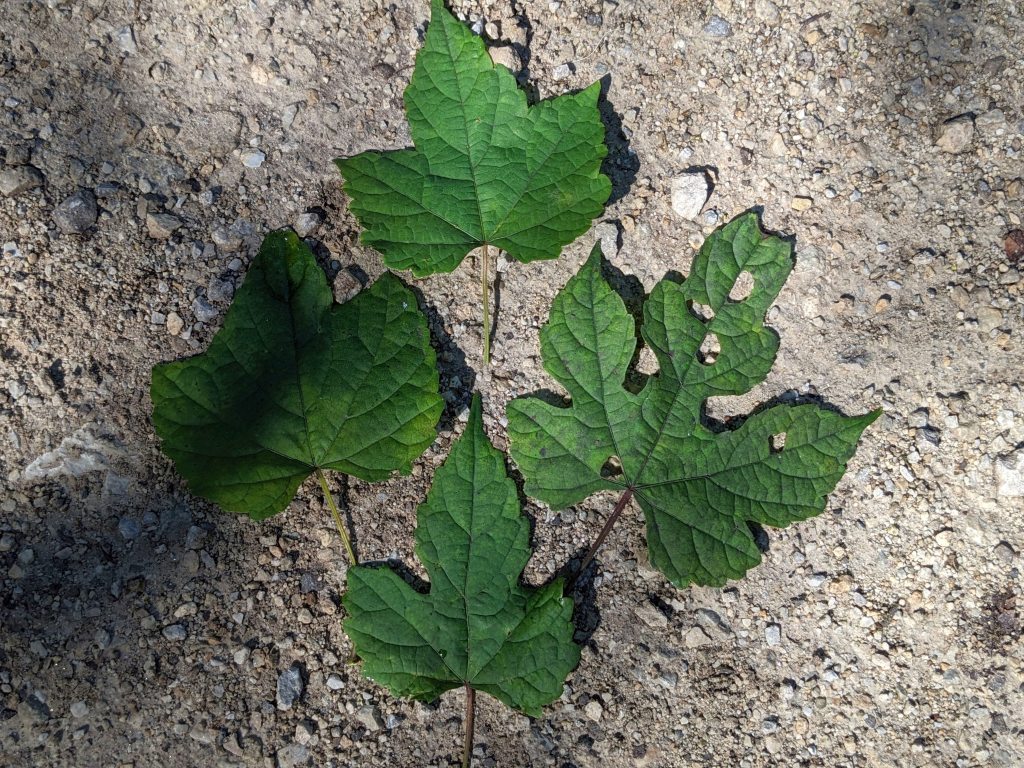
Porcelain berry leaves have many shapes, even on the same plant. A photo of four shapes.
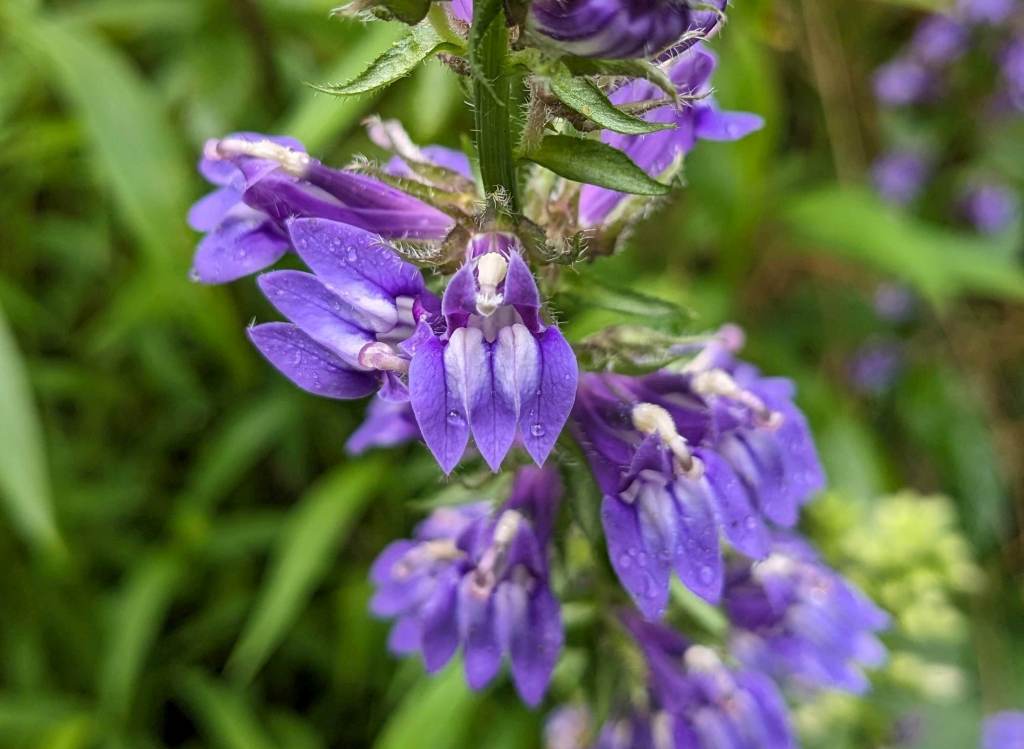
Great lobelia at ASWP’s Beechwood Nature Center.
Pink-orange sunrise on 24 August.
Willow-herb, West Penn Park, Polish Hill, 20 August 2023 (photo by Kate St. John)Common sneezeweed (Helenium autumnale), Beechwood Nature Center, 24 August 2023 (photo by Kate St. John)4 shapes of porcelain berry leaves, Nine Mile Run Trail, Lower Frick, 13 August 2023 (photo by Kate St. John)Great lobelia, Beechwood Nature Center, 24 August 2023 (photo by Kate St. John)Sunrise in Pittsburgh, 24 August 2023 (photo by Kate St. John)
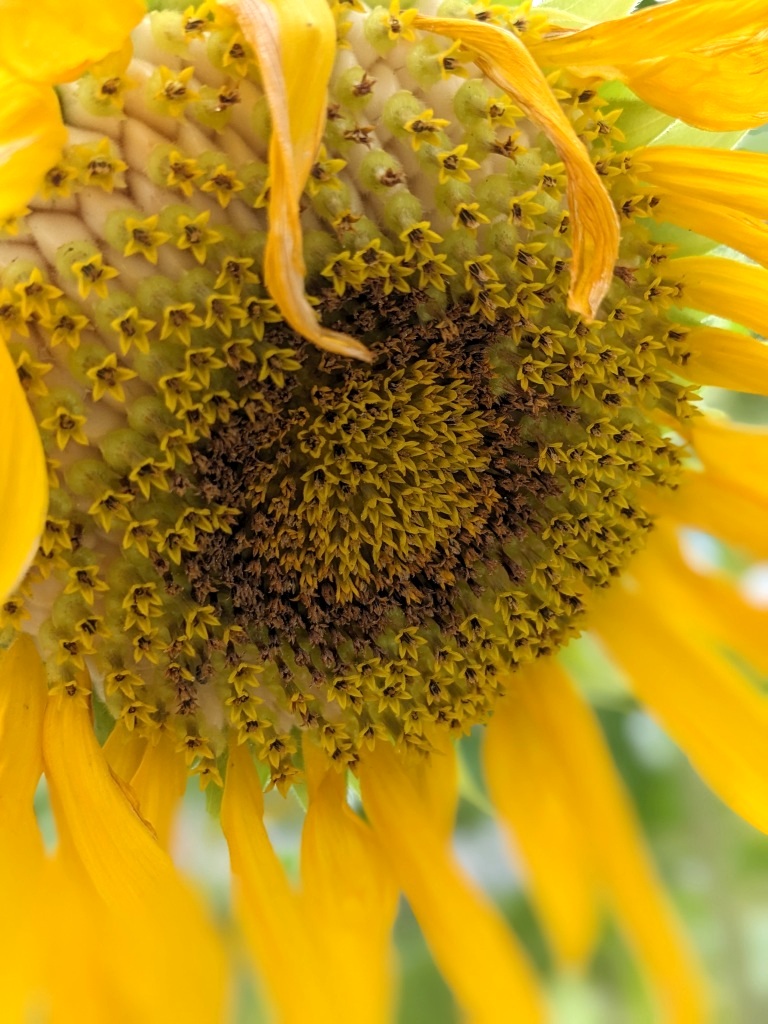
Common sunflower closeup, 14 Aug 2023 (photo by Kate St. John)
20 August 2023
Someone in my neighborhood planted common sunflower (Helianthus annuus) on the strip of land between the sidewalk and the street. This month it droops over the sidewalk, so tall that I barely have to duck to take this closeup of yellow with a golden cast. Did you know this food plant is native to the Americas?
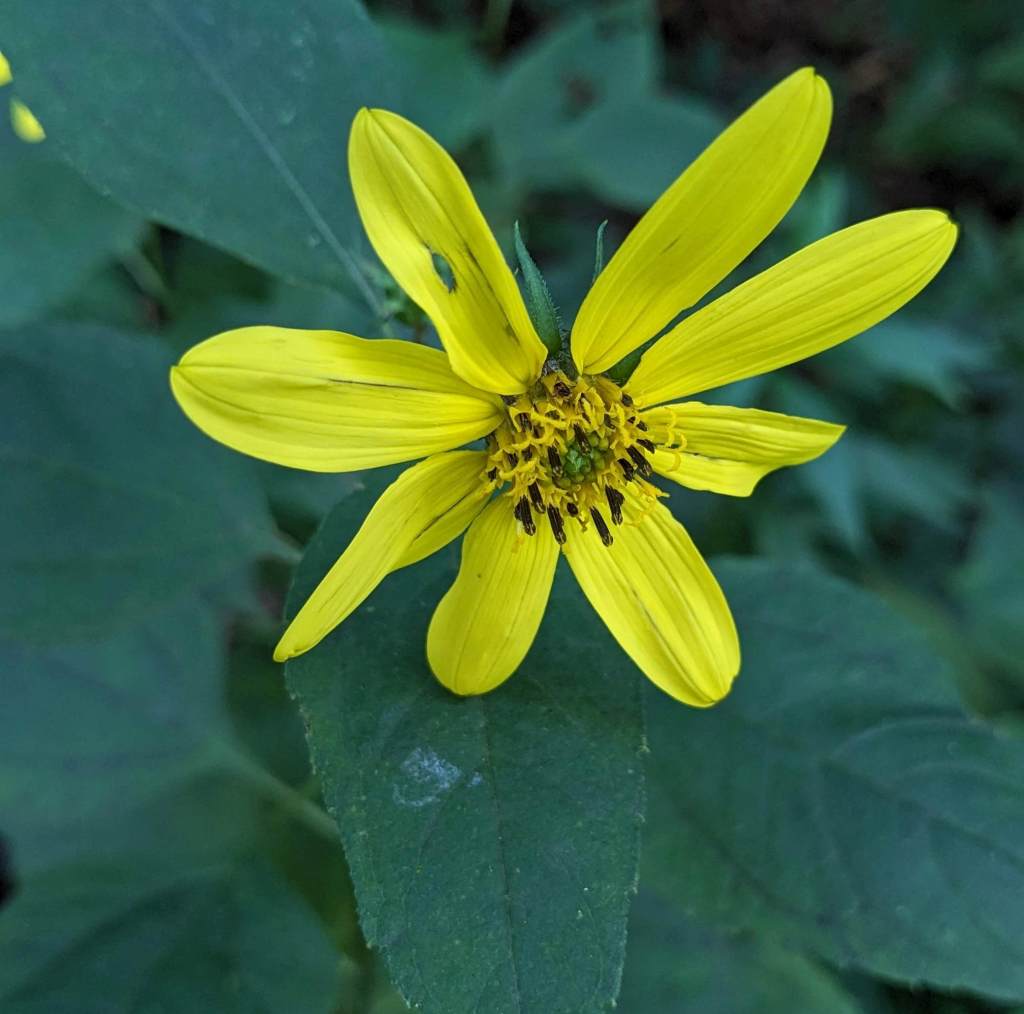
This woodland sunflower (Helianthus divaricatus), in a sunnier shade of yellow, was identified on the Botanical Society walk last Sunday at the Nine Mile Run Trail. The side of the flower is displayed because the bracts on the back and the bud are important. Click on the image to see a front view of the flower.
Woodland sunflower, Nine Mile Run Trail, 14 Aug 2023 (photo by Kate St. John)
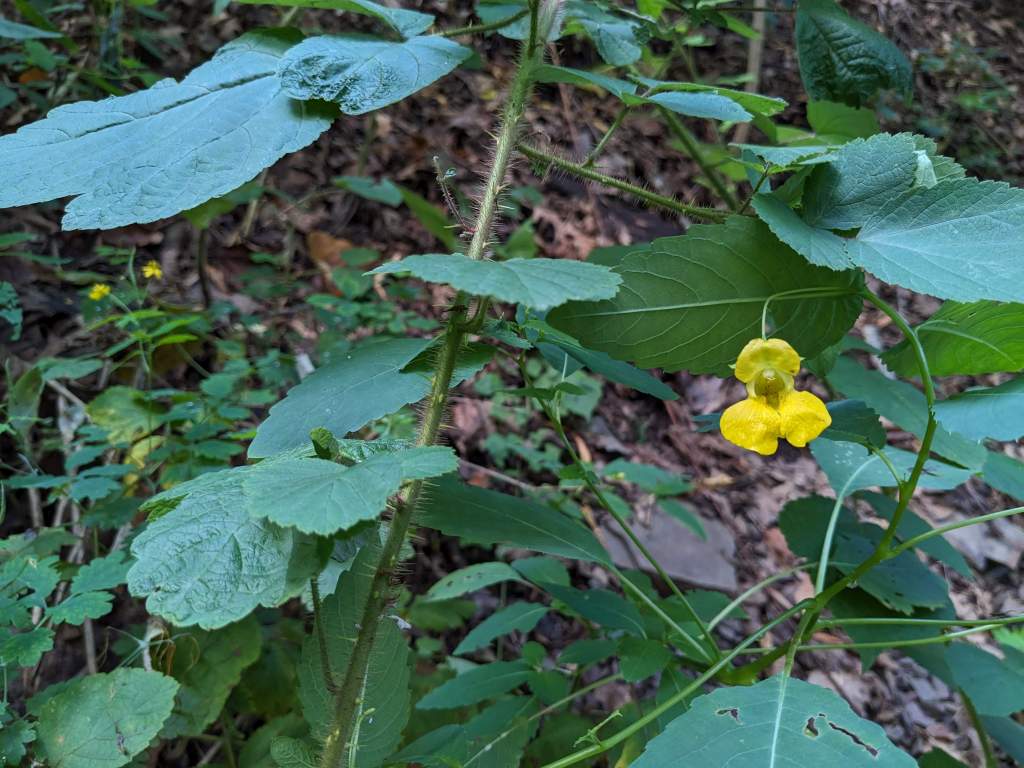
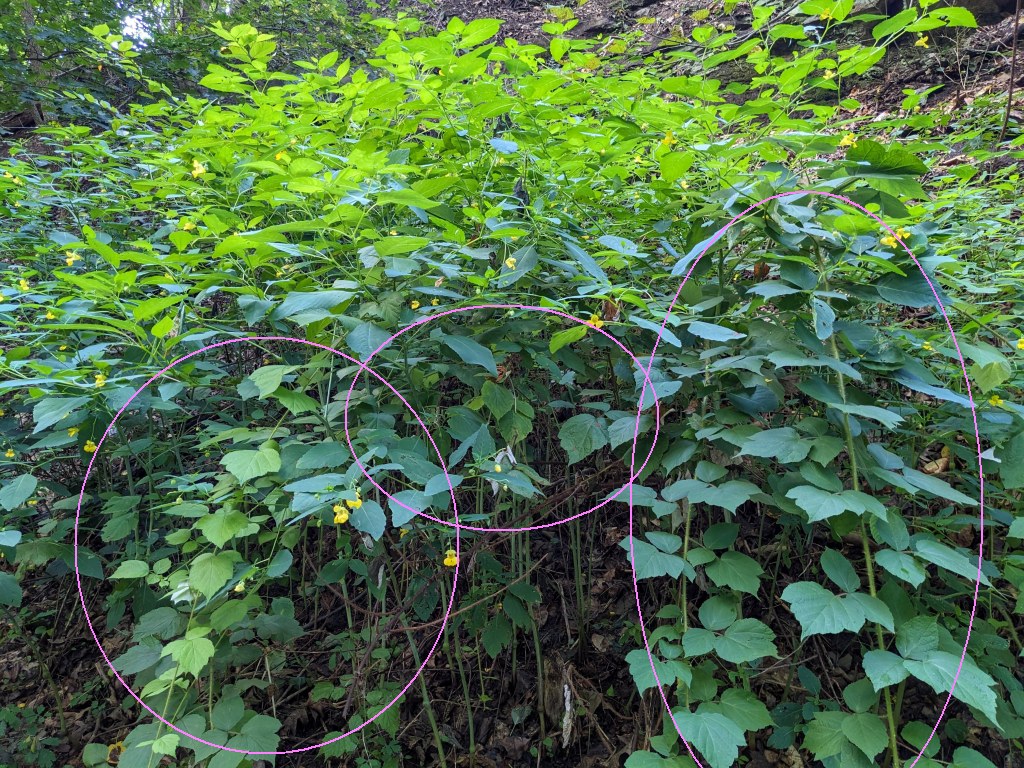
This very yellow “pale jewelweed” (Impatiens pallida) is a rarity in Schenley Park. Deer have eaten all the other jewelweed yet this patch thrives. Why? The clue is in middle of this ugly photo.
Do you see the prickly branch of wineberry draped over the jewelweed plant? The entire patch is protected by this invasive thorny plant. The deer cannot approach. (Wineberry stems are circled in purple below.)
Wineberry (circled) drapes over yellow jewelweed in Schenley Park, protecting it from deer, Aug 2023 (photo by Kate St. John)
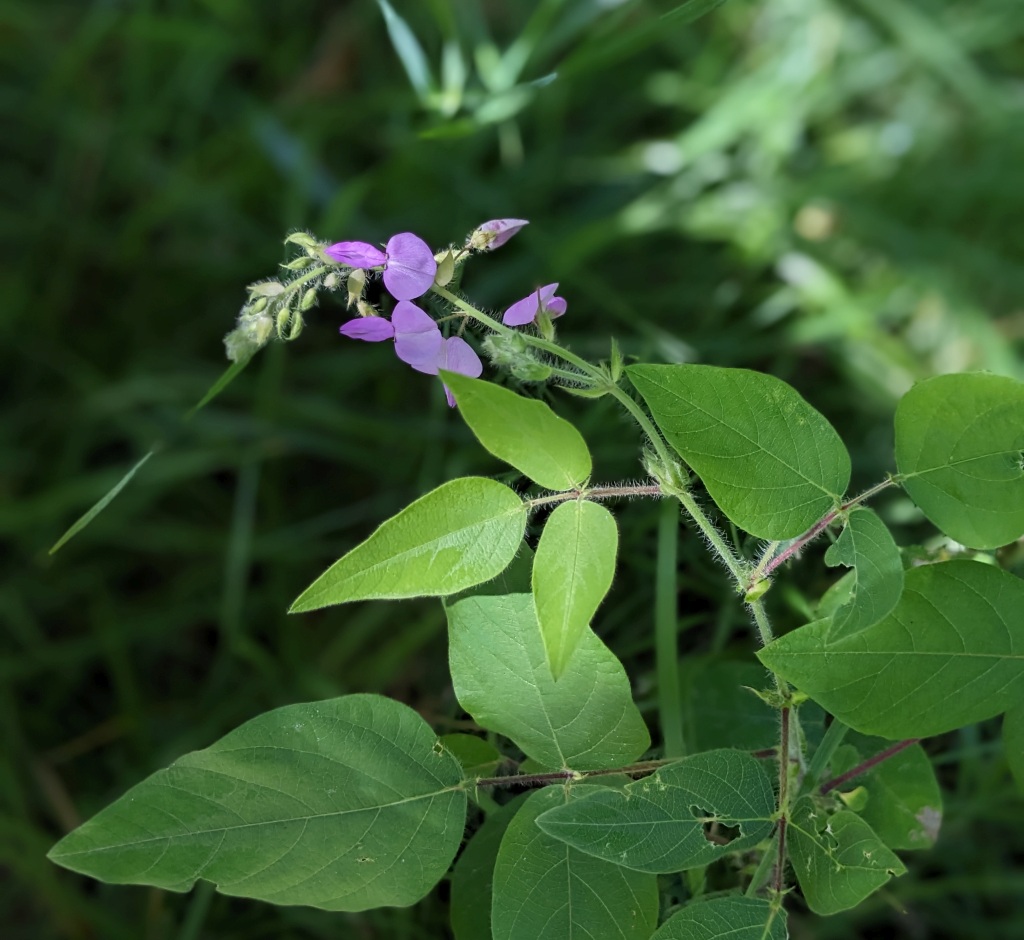
And a Purple Host:
I don’t remember the exact species of tick trefoil seen on the Botanical Society walk but a butterfly confirmed the plant is thriving.
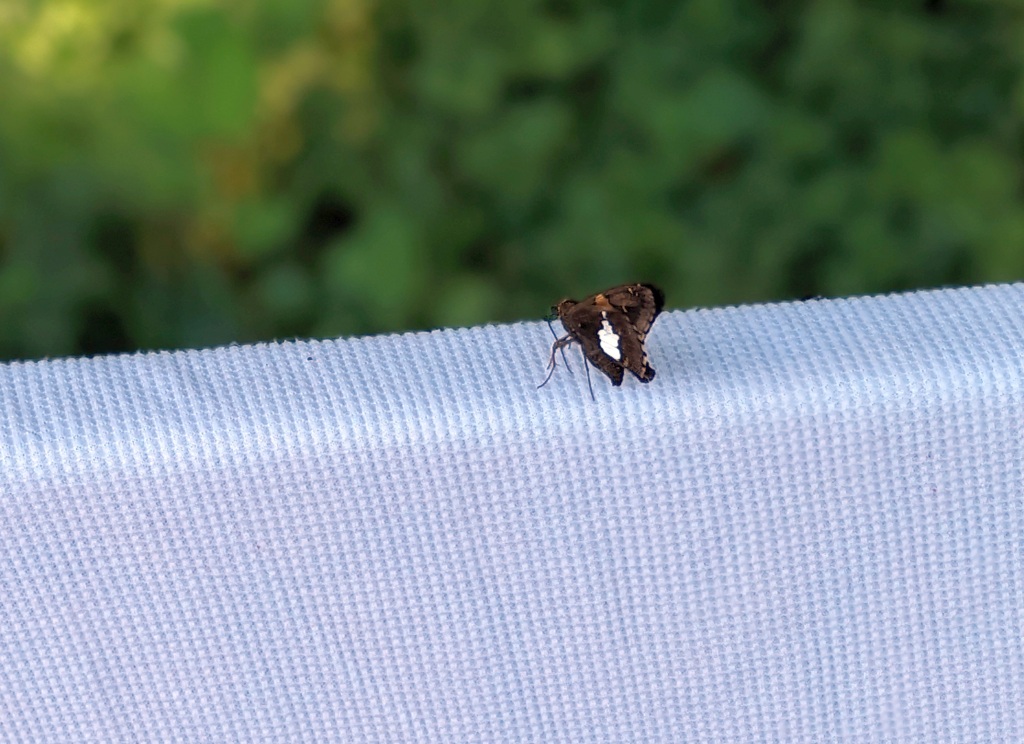
Tick trefoil is the host plant for the silver spotted skipper. This one was sipping on an wet abandoned shirt nearby its host.
Silver spotted skipper sipping on a wet cloth, NMR Trail, 14 Aug 2023 (photo by Kate St. John)
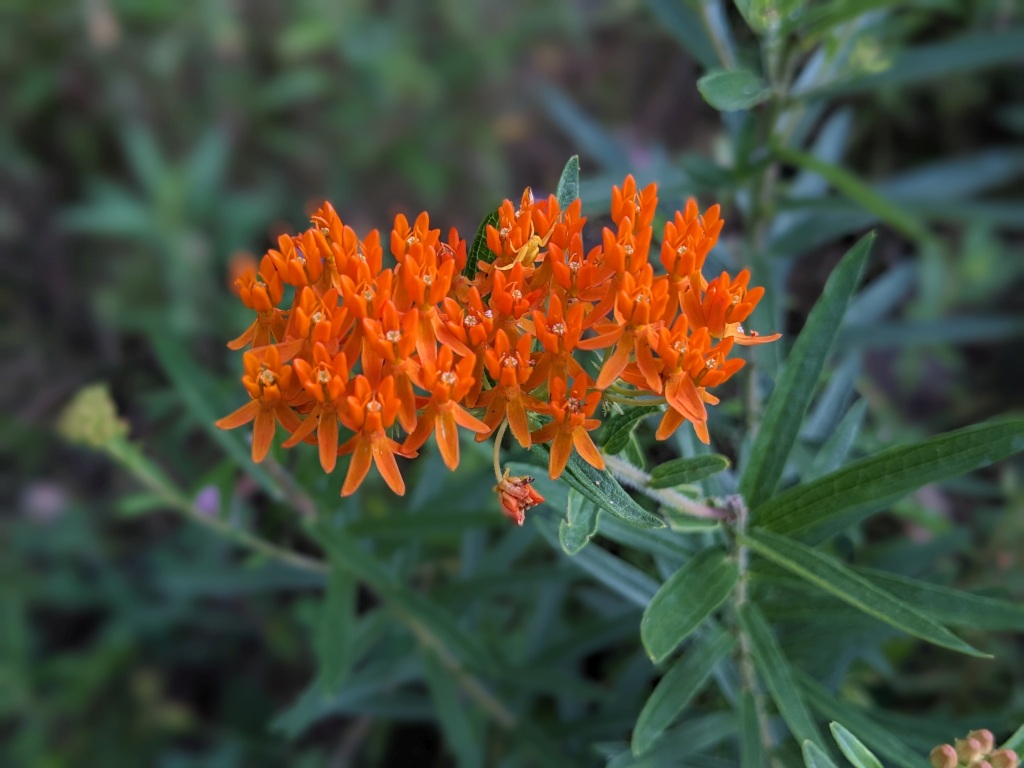
Butterfly weed, Schenley, 9 August 2023 (photo by Kate St. John)
13 August 2023
The birds are quiet now but the bugs are busy.
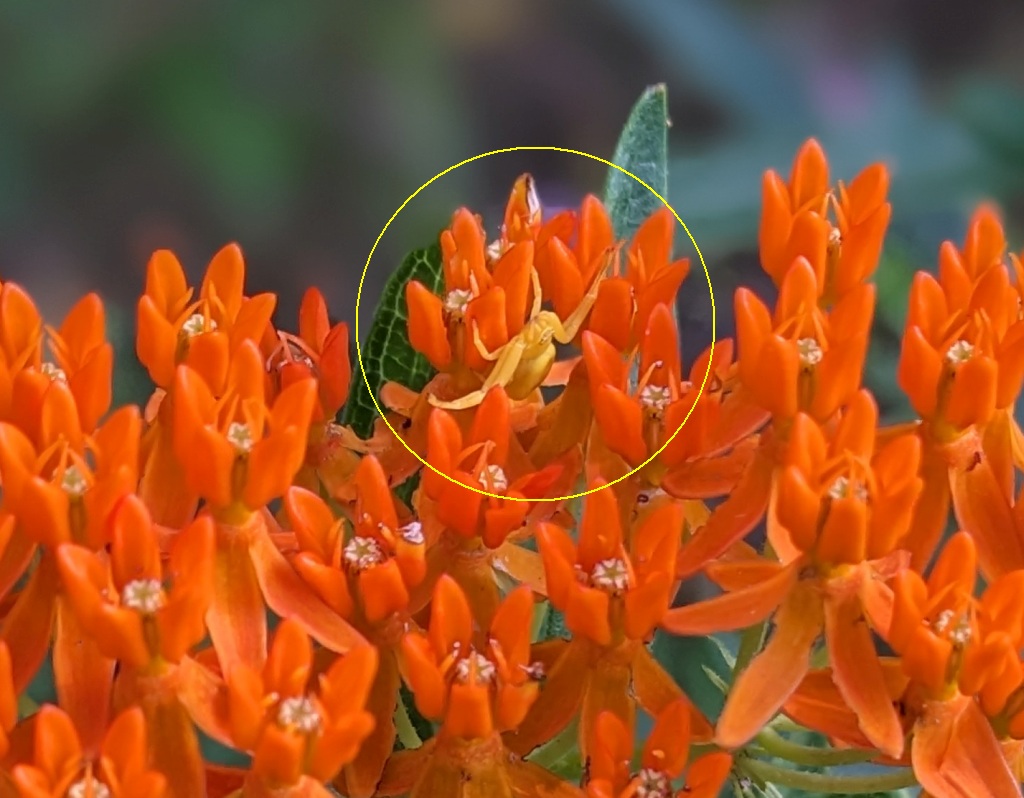
After I photographed this butterfly weed (Asclepias tuberosa) I zoomed in to look at the yellow spec on the back edge of the flower cluster and found a tiny yellow crab spider clinging to the flowers. My guess is that he’s a member of the Thomisidae family, lying in wait for something. But what?
Tiny yellow crab spider on butterfly weed, Schenley, 9 August 2023 (photo by Kate St. John)
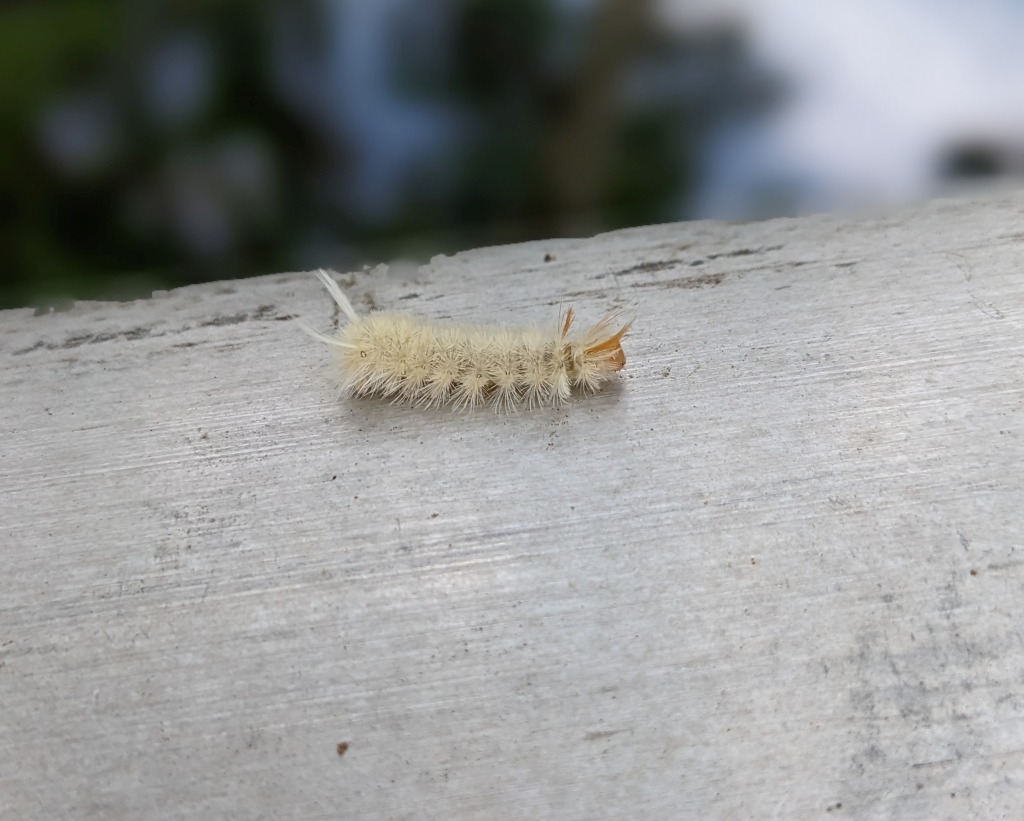
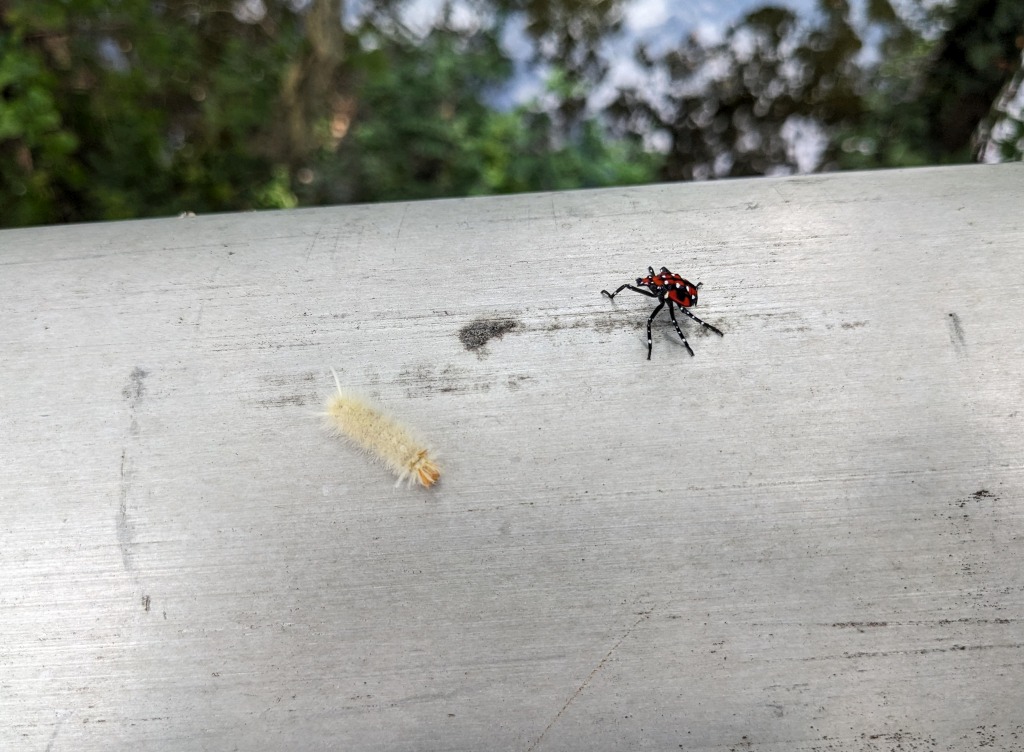
On Monday, while walking the Three Rivers Heritage Trail River opposite Herr’s Island, I noticed a caterpillar on the wide aluminum railing. It reminded me of the hickory tussock moth except that this one was blonde.
Sycamore tussock moth caterpillar near Herr’s Island, 7 Aug 2023 (photo by Kate St. John)
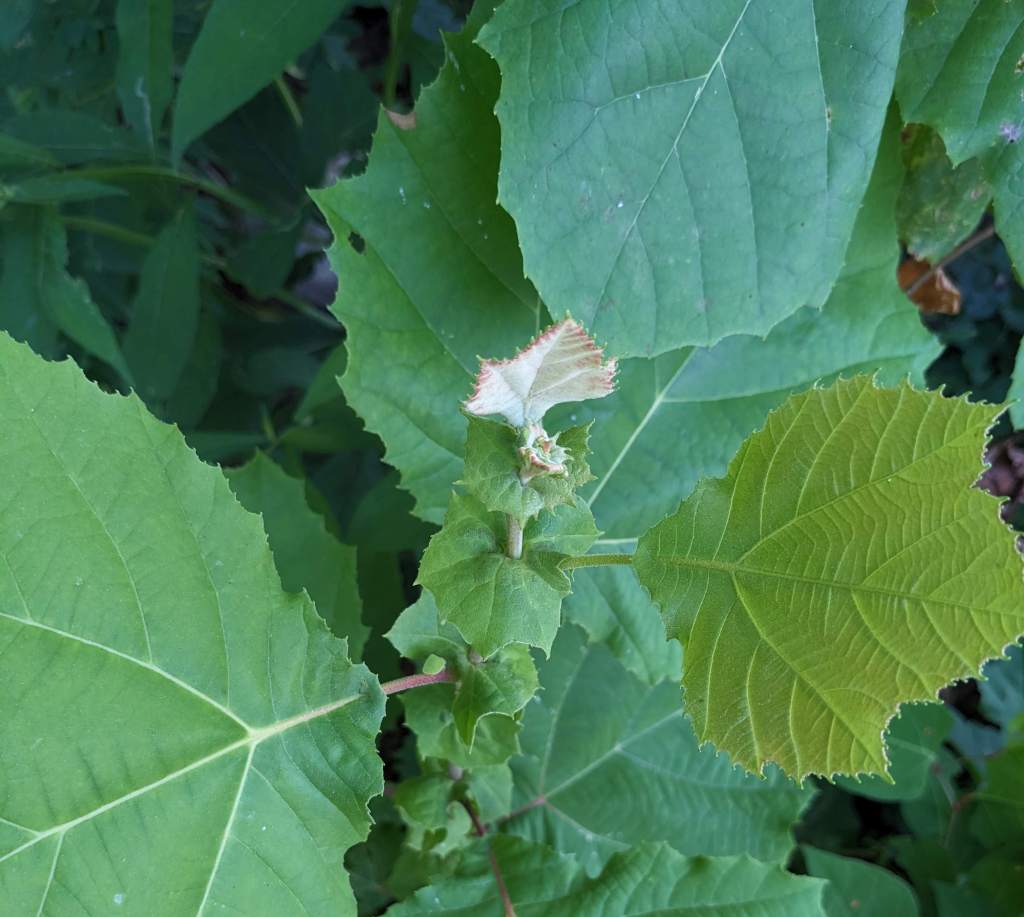
iNaturalist identified it as a sycamore tussock moth (Halysidota harrisii). The railing was directly beneath his host plant, a sycamore tree (Platanus occidentalis).
Sycamore leaves and stems, Aug 2023 (photo by Kate St. John)
The caterpillar walked rapidly down the railing in a straight line until Whoa! a spotted lanternfly red nymph walked rapidly toward him. The caterpillar made a detour.
Sycamore tussock moth detours to avoid a spotted lanternfly, 7 Aug 2023 (photo by Kate St. John)
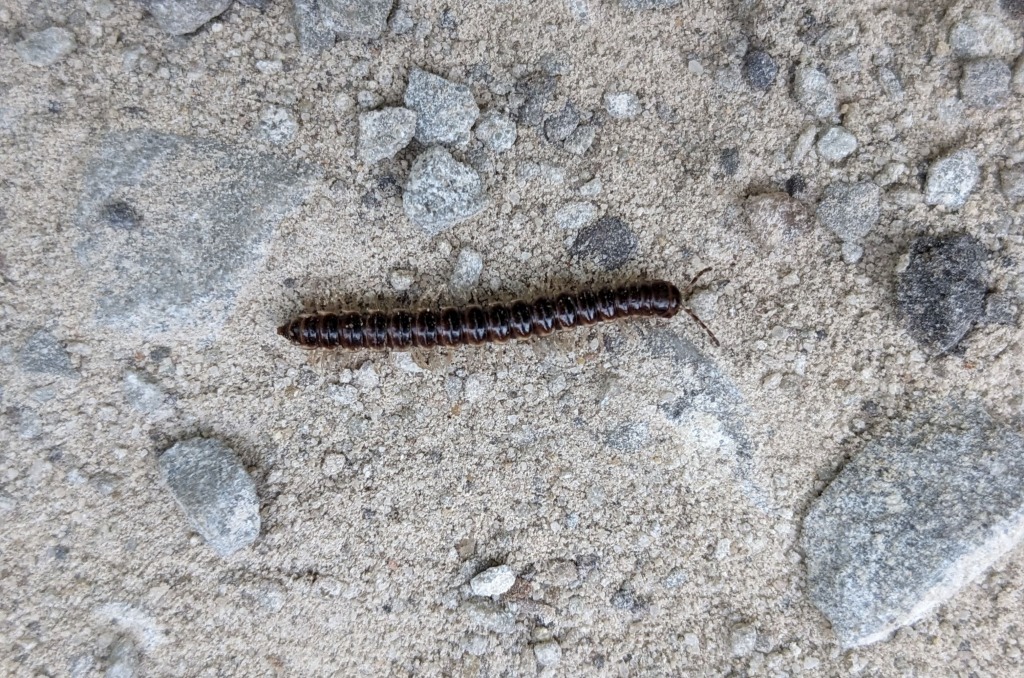
At Frick Park on 6 August we found a lot of millipedes on the paved Nine Mile Run Trail. iNaturalist says they are greenhouse millipedes (Oxidus gracilis), thought to be native to Japan but introduced around the world. They get their name from being a pest in greenhouses.
Greenhouse millipede, Frick Park, 6 Aug 2023 (photo by Kate St. John)
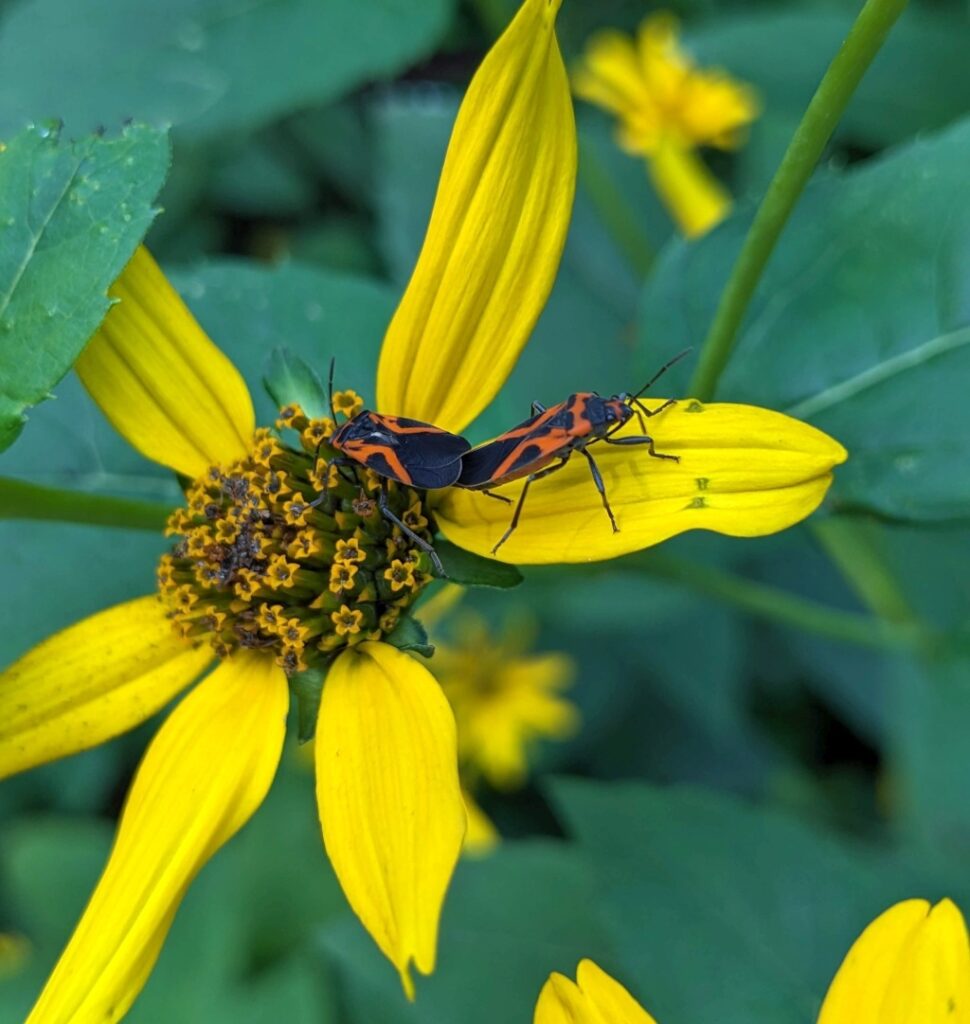
And finally I was fooled yesterday by these mating orange and black bugs, as fooled as they intended me to be. They looked like milkweed bugs, but why were they on a false sunflower?
False milkweed bugs mating on a false sunflower, 11 Aug 2023 (photo by Kate St. John)