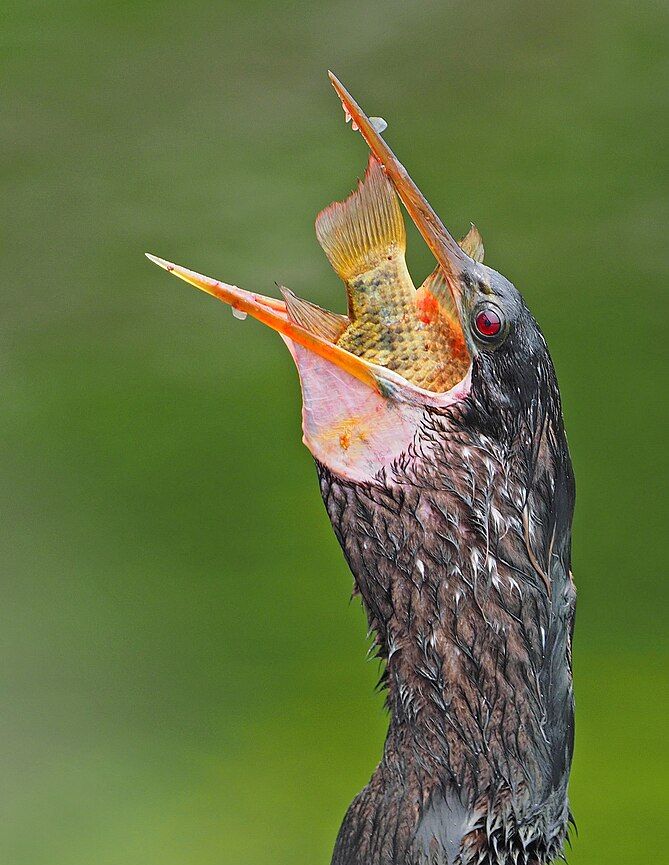
Unlike herons, anhingas spear their prey but this means they can’t open their beaks to swallow. This video shows what they do to solve the problem.
Anhingas go by many names. Some people call them snake birds. Others call them piano birds. Regardless of the chosen label, anhingas are pretty unique little dinosaurs. They catch their prey underwater by spearing it and when they surface, they have to somehow unspear it. pic.twitter.com/JamqyJLoBE
— Mark Smith Photography (@marktakesphoto) March 23, 2024
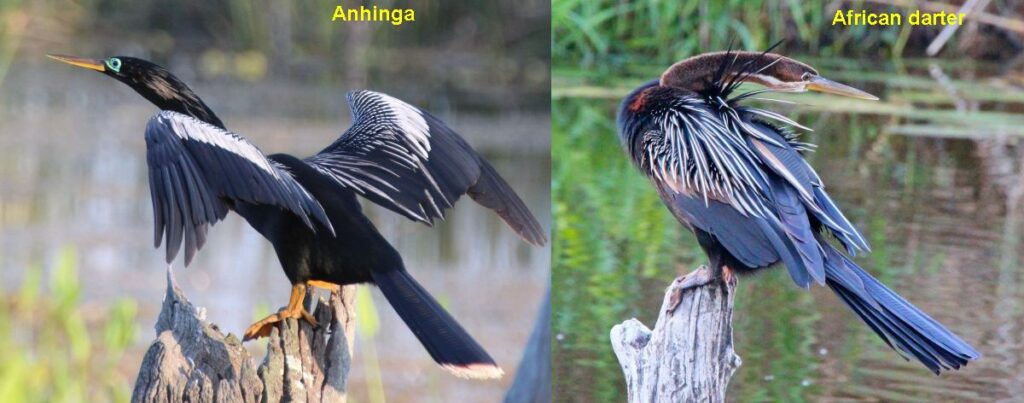
p.s. There’s a bird in Africa that looks like an anhinga (Anhinga anhinga). Closely related, the Anhinga rufa is the “African darter.”
Peregrines hang out where their food is plentiful so they’re often in places with lots of pigeons. Watching peregrines, as I often do, means waiting (bored) for them to choose the perfect moment to catch a bird. Inevitably I watch pigeons while I wait for peregrines so I’ve seen a lot of pigeon courtship.
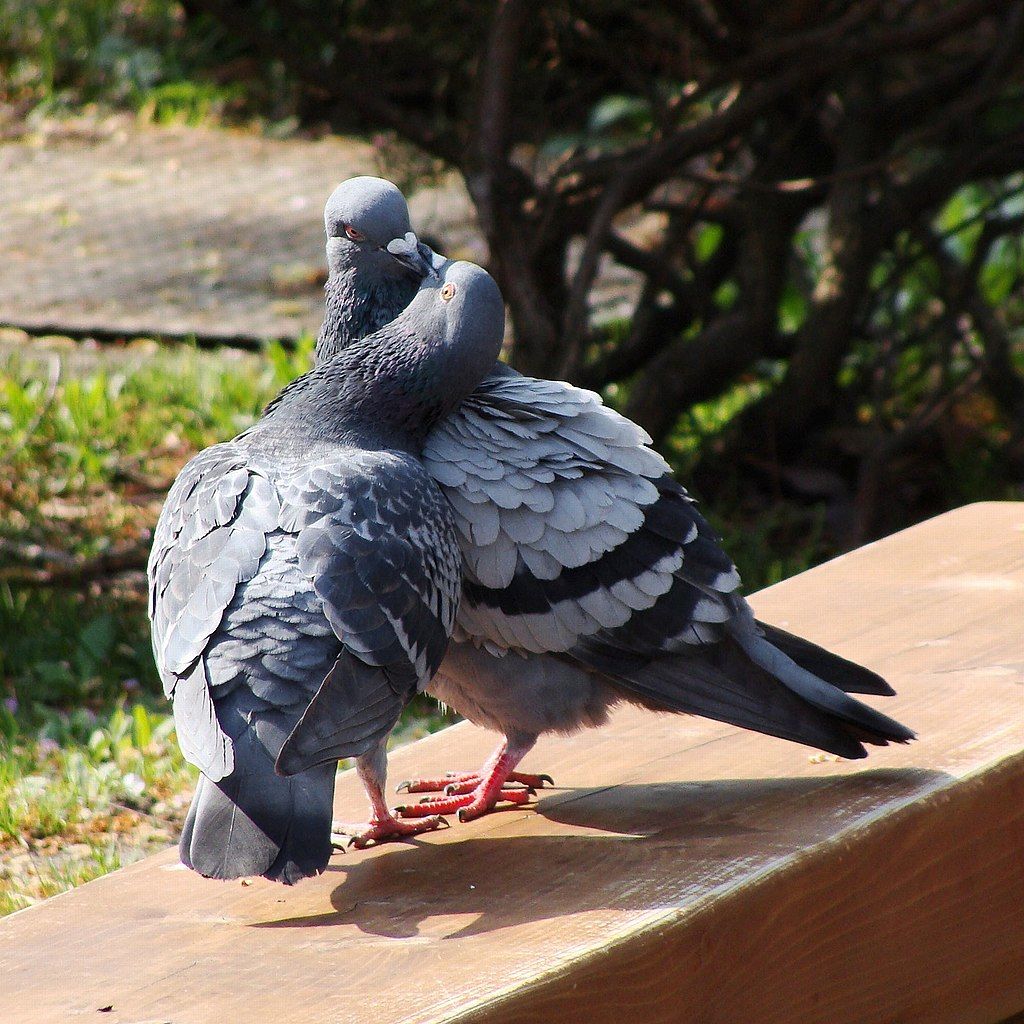
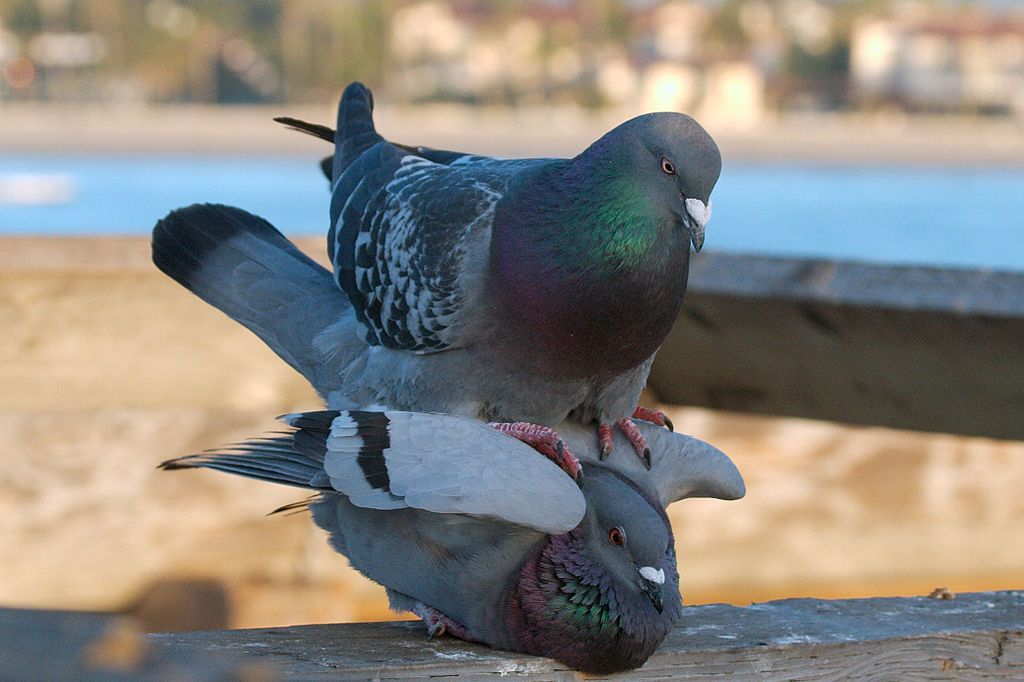
Most birds have a breeding season for a few months per year in spring and summer but rock pigeons, like humans, breed over and over all year long if there’s enough food to sustain their families. You can tell when they’re starting a new family because they court conspicuously.
[Courtship] Begins with bowing and cooing, in which male stands tall, inflates crop, fans tail, struts in circle, bows head and neck while giving display coo. This is repeated many times while circling and moving around the female.
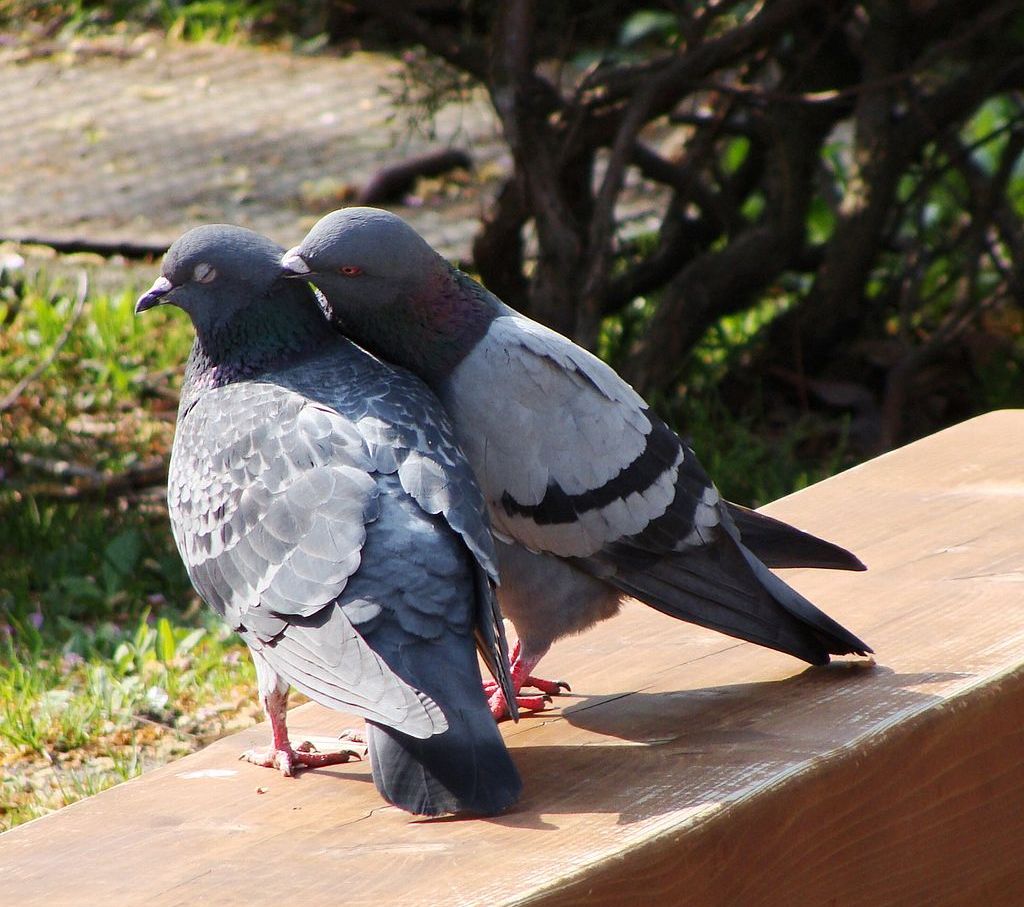
Hetero-preening (“nibbling”) follows, male first, female later.
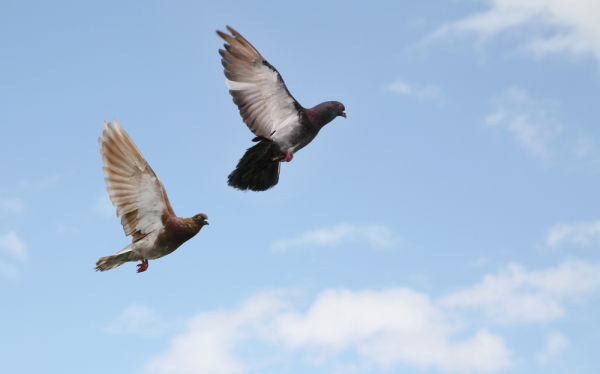
After mating the male may do a post copulatory display. Sometimes they fly together.
Post-copulatory display includes a few steps while standing tall, and often a display flight, usually by the male, in which wings are clapped together on an exaggerated upstroke for 3–5 wingbeats. Bird flies out to another perch, 40–80 m distant, clapping wings at least once and gliding with wings in a “V” between bouts of clapping
Two rock pigeons flying (photo from Shutterstock)
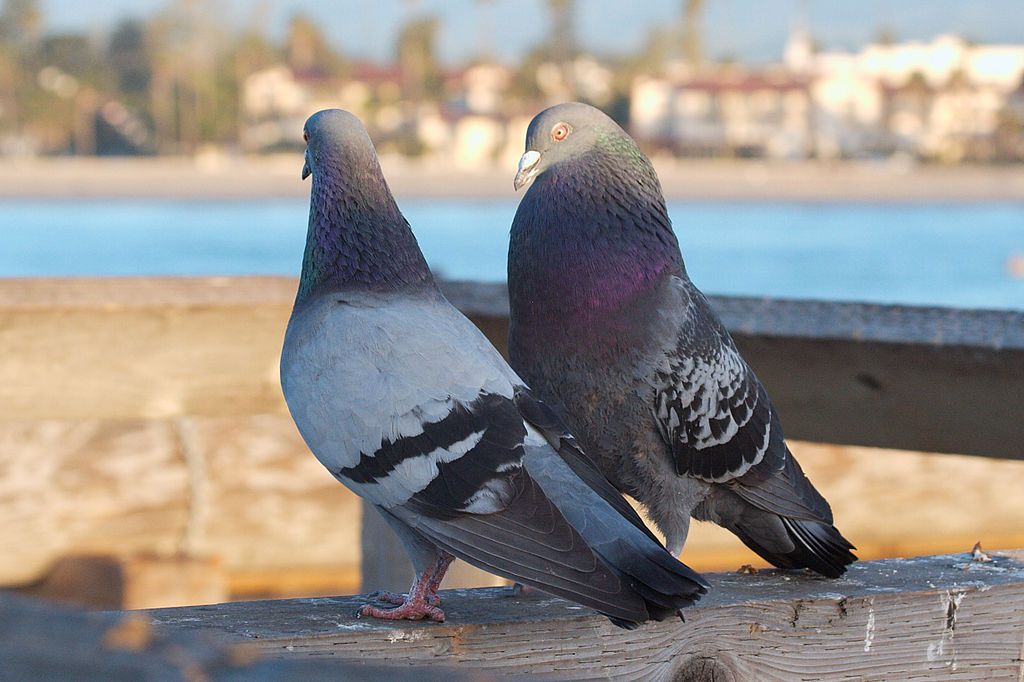
While you’re observing pigeon courtship there’s one more thing to notice. The male and female do not have the same plumage patterns because they choose mates that don’t look like themselves.
Akashinga Rangers set off on a patrol to establish an overnight observation post at Phundundu, near Nyamakate, Zimbabwe (photo by Davina Jogi embedded from akashinga.org)
27 March 2024
Before Women’s History Month draws to a close here’s some recent women’s history in Zimbabwe.
Poaching is a persistent problem in southern Africa because the body parts of exotic wild animals find a lucrative market in the outside world. Without effective patrols it can even happen in a national park as for example 11 years ago, in 2013, when poachers poisoned 41 elephants at Hwange National Park by putting cyanide in their watering hole.
To stem the tide of animal deaths Australian born Damien Mander founded Akashinga in 2009 to train squads of men to protect wildlife in their home areas. The men were too easily corrupted and poaching continued.
In 2017 he recruited women, many of them single mothers or formerly abused. They named themselves Akashinga — The Brave Ones in the Shona language — and the program has been a great success, not only in terms of wildlife but within their communities.
Today Akashinga has a team of 500+ staff and 9.1 million acres under management in Zimbabwe, Botswana and Mozambique. They have reduced poaching by 80% and have seen an increase in wildlife of 399%.
A decades-old problem became acute his winter. After high winds and a historic high tide damaged 20+ beachfront homes in January at Salisbury Beach, Massachusetts, the residents took up a collection to build a protective dune. It took five weeks, 14,000 tons of sand and more than half a million dollars to build the dune to protect the homes. Three days later it was gone.
Completion of the dune project in early March brought high hopes to Salisbury Beach.
The temporary dune did it’s job — no homes were damaged in March — but the idea of spending half million dollars after every storm is out of the question. So the town is regrouping and weighing options.
You might be wondering: Why don’t they just build a seawall?
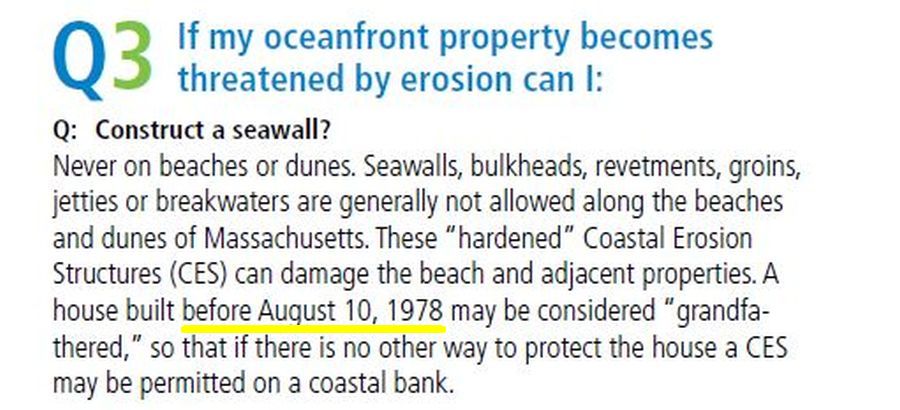
Seawalls just move the problem a few hundred feet down the beach so they are generally not allowed in Massachusetts (see special exception in yellow).
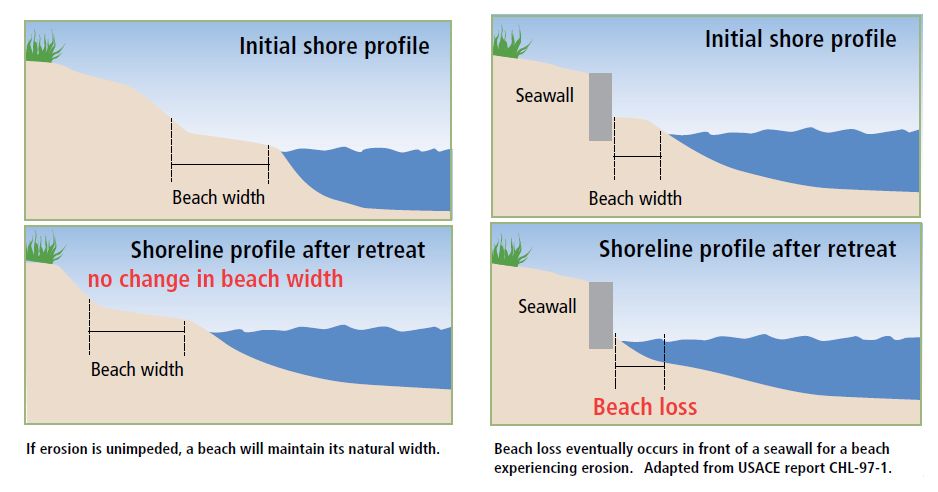
Also, a seawall will remove the beach entirely as shown in this diagram. If Salisbury Beach builds a seawall they will have no beach at all, just a wall with a sheer drop to the ocean. Understandably, the homeowners want a beach.
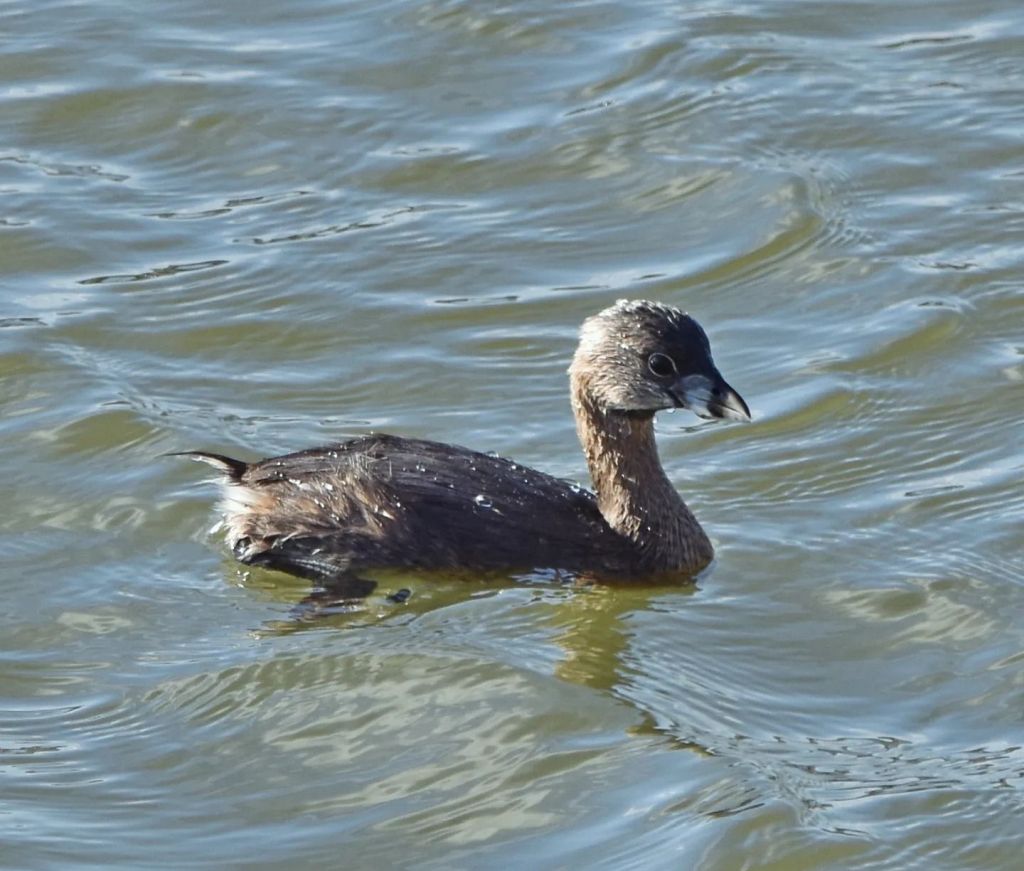
Pied-billed grebe at Duck Hollow, 21 and 24 March 2024 (photo by Charity Kheshgi)
25 March 2024
Yesterday at Duck Hollow it was brilliantly sunny and *cold.* Though the temperature was 27°F the light wind made it feel like 17°F. Brrrr!
Charity Kheshgi and I scouted on Thursday and found a pied-billed grebe near shore who was still present in the same zone on Sunday. Alas, the seven horned grebes we saw on Thursday were long gone.
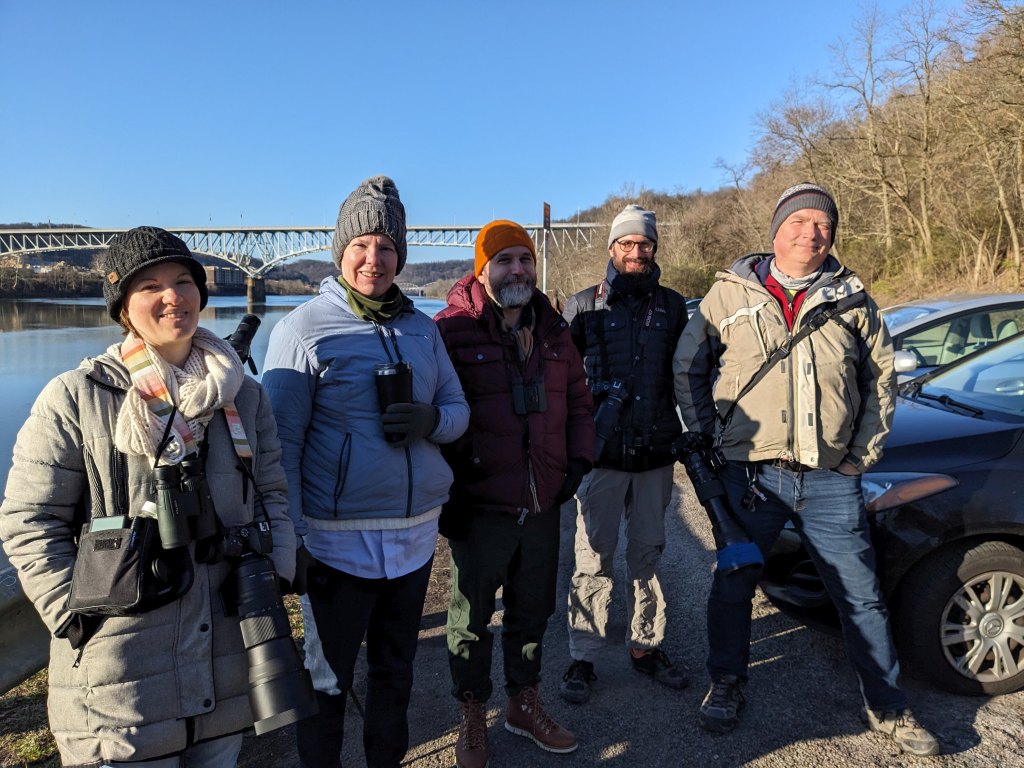
Despite the cold and (shall I say “stabbing”?) sunlight we had a good time and saw 32 species. Our checklist is here https://ebird.org/checklist/S165818025 and printed below.
Duck Hollow outing, 24 March 2024 (photo by Kate St. John)
My next outing will be sooner than usual, just three weeks from now in Schenley Park on Sunday 14 April at 8:30am. Stay tuned.
Duck Hollow, Allegheny, Pennsylvania, US Mar 24, 2024 8:30 AM – 10:00 AM
Canada Goose (Branta canadensis) 11 Wood Duck (Aix sponsa) 1 bird. Only one person saw it. Mallard (Anas platyrhynchos) 4 Hooded Merganser (Lophodytes cucullatus) 2 A very distant pair. The male’s crest was raised and he was flinging back his head in courtship display Common Merganser (Mergus merganser) 1 Pied-billed Grebe (Podilymbus podiceps) 1 Mourning Dove (Zenaida macroura) 4 Killdeer (Charadrius vociferus) 1 Herring Gull (Larus argentatus) 2 Great Blue Heron (Ardea herodias) 1 Turkey Vulture (Cathartes aura) 8 Cooper’s Hawk (Accipiter cooperii) 1 Belted Kingfisher (Megaceryle alcyon) 1 Downy Woodpecker (Dryobates pubescens) 2 Northern Flicker (Colaptes auratus) 2 Eastern Phoebe (Sayornis phoebe) 1 Blue Jay (Cyanocitta cristata) 2 Carolina Chickadee (Poecile carolinensis) 3 Tufted Titmouse (Baeolophus bicolor) 2 Golden-crowned Kinglet (Regulus satrapa) 2 Carolina Wren (Thryothorus ludovicianus) 5 Northern Mockingbird (Mimus polyglottos) 2 American Robin (Turdus migratorius) 7 House Finch (Haemorhous mexicanus) 4 American Goldfinch (Spinus tristis) 7 Dark-eyed Junco (Junco hyemalis) 1 White-throated Sparrow (Zonotrichia albicollis) 1 Song Sparrow (Melospiza melodia) 7 Red-winged Blackbird (Agelaius phoeniceus) 17 Brown-headed Cowbird (Molothrus ater) 3 Common Grackle (Quiscalus quiscula) 1 Northern Cardinal (Cardinalis cardinalis) 16
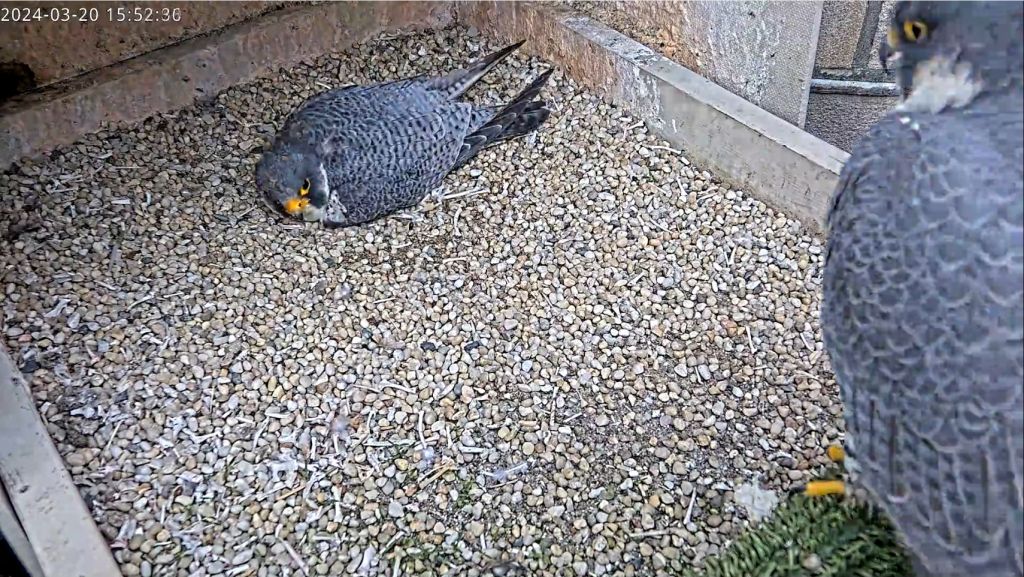
Incubation began last week at the Pitt peregrine nest. Carla and Ecco are now 6 or 7 days into The Big Sit.
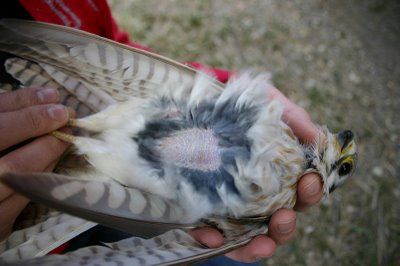
To incubate their eggs and brood their chicks, birds open their warm feather coats by developing a brood patch for the breeding season. The brood patch is bare skin on their bellies that they place directly against the eggs to keep them warm. It has no feathers or down and lots of blood vessels close to the surface. When the bird is standing upright, surrounding feathers fall over the patch to cover it. If you had the bird in hand, as this bander holds a kestrel, blowing on the bird’s belly will move the surrounding feathers away so you can see the brood patch.
Both male and female peregrines have brood patches and both incubate the eggs. Instead of one big patch as on the kestrel, Birds of the World describes peregrines as: “Both sexes have paired lateral brood patches. Less well developed in male.”
To expose the brood patch and incubate the eggs, peregrines move the surrounding feathers out of the way by bobbing up-and-down and side-to-side. In this video Carla turns the eggs with her feet, then bobs to open her brood patch before she settles on the eggs.
Female peregrines incubate all night (with this interesting exception) but the amount of time the male incubates during the day depends on the couple’s preferences.
Some males love incubation duty, others not so much. Birds of the World sites several studies (paraphrased): “Based on studies in interior Alaska, males incubated about 33% of time. A study by Nelson suggested that for the Pacific Northwest male, incubation was 30–50% of the time. An extreme case in New Mexico was a male incubating as much as 87% of daylight period.”
Ecco loves to incubate so Carla and Ecco are still working it out. In this 20 March video Carla wails off camera “I want something to change!” Yup. She wants to incubate. Ecco eventually gets the message.
Peregrine eggs hatch 33-35 days after incubation begins but when did it start at the Cathedral of Learning?
Typically incubation starts after the next-to-last egg is laid — that would be Egg #3 on 19 March at 2am — but it looks like it may have begun on the 18th before that egg was laid.
Two Day-in-a-Minute videos illustrate the difference between incubating and not. This one on 17 March shows that the two eggs are often exposed.
Day-in-a-Minute, 17 March 2024
On 19 March there are 3 eggs and incubation has definitely begun. Notice that Ecco is on the nest more than half the time on that day –> 54%. He’s the smaller bird and is present 390 minutes out of 720 mins in the video. No wonder Carla wailed at him on the 20th!
Day-in-a-Minute, 19 March 2024
So incubation began on either the 18th or 19th of March. It is hard to tell about the 18th because it was cold that day (28°F to 36°F) and Carla and Ecco may have covered the eggs to protect them from freezing without opening their brood patches(*).
We’ll never know for sure whether the brood patch was open because we can’t see under the bird.
(*) EXPLAINING DELAYED INCUBATION: Some species, such as bald eagles, incubate immediately as soon as an egg is laid. Within these clutches the chicks hatch days apart from each other. Others species, such as peregrine falcons and ducks, want the clutch to hatch all at once so they delay incubation until the clutch is (nearly) complete. During freezing weather the eggs must be protected from freezing. Covering them without opening the brood patch is one way to regulate the start of incubation.
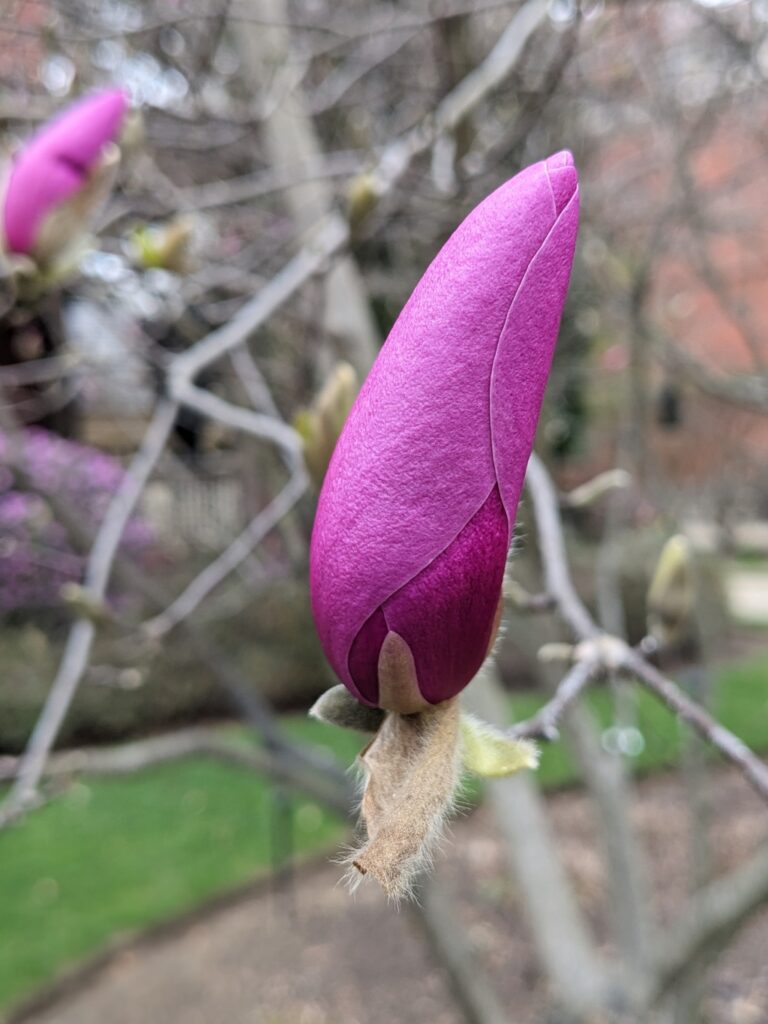
Saucer magnolia bud about to bloom, Pittsburgh, 18 March 2024 (photo by Kate St. John)
23 March 2024
This week non-native flowering trees put on a show in the city of Pittsburgh. Originally from China and Japan their growing season is earlier than our native trees.
Star magnolia in bloom, Pittsburgh, 15 March 2024 (photo by Kate St. John)
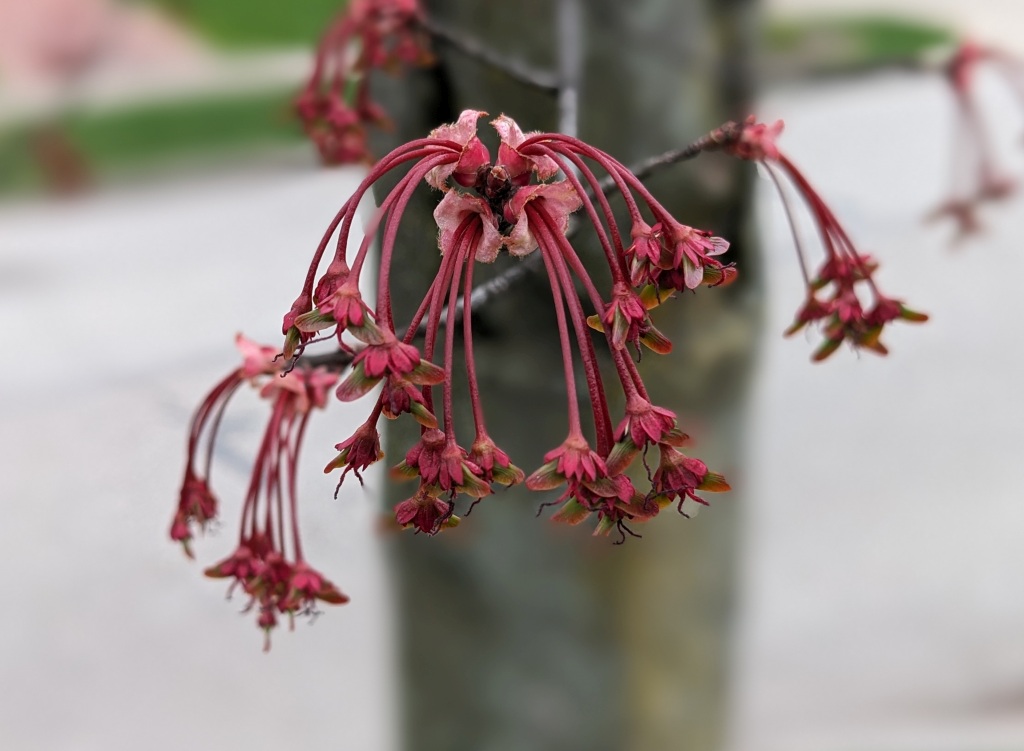
This month’s three-day spurts of highs in the 60s and 70s prompted the red maples to flower and start producing seeds.
Red maple already gone to seed, Pittsburgh, 18 March 2024 (photo by Kate St. John)
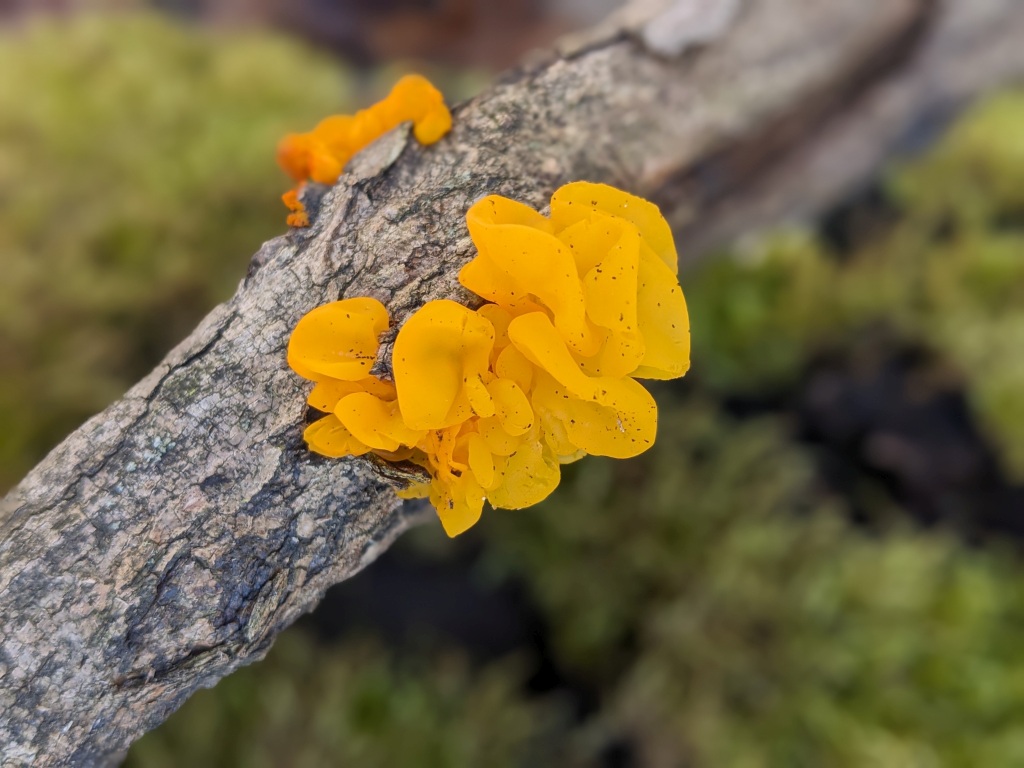
Last Saturday I visited Wolf Creek Narrows, almost an hour north of Pittsburgh, where the growing season is later than at home. There we found an interesting jelly fungi called witches butter (Tremella mesenterica) …
Witches butter fungi, Wolf Creek Narrows, 16 March 2024 (photo by Kate St. John)
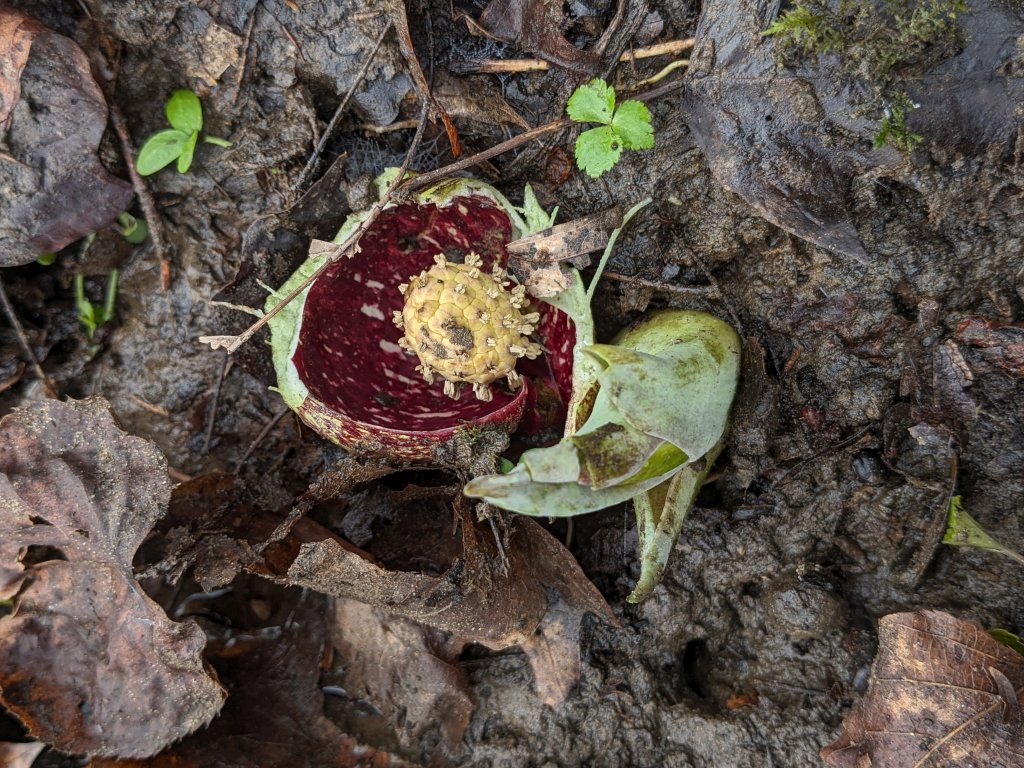
… and a decapitated skunk cabbage that allowed us to see the spadix inside. The hood usually covers this structure but something ate the hood. What animal could put up with the odor to eat that hood? And then the animal would vomit because the plant is toxic.
Skunk cabbage spadix revealed, Wolf Creek Narrows, 16 March 2024 (photo by Kate St. John)
I promised you an owl.
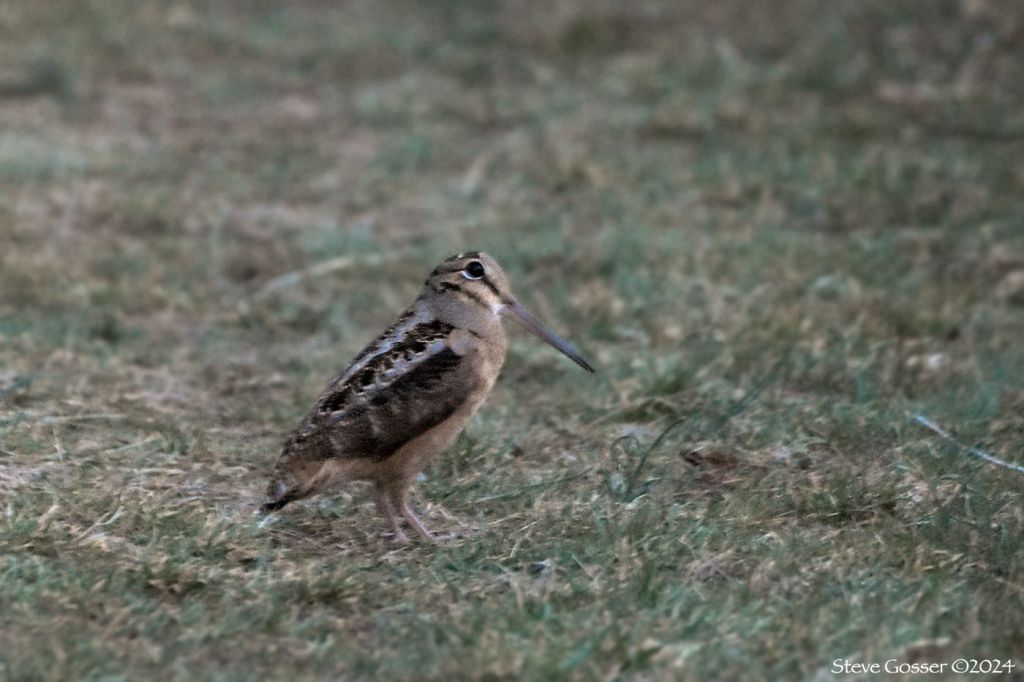
Inspired by Steve Gosser‘s photo of an American woodcock at North Park Upper Fields on 4 March, two of us stood out in the cold on Thursday evening waiting for sunset and for American woodcocks to make their twittering courtship flights. The sky was clear and the moon was so bright that we had moon shadows. It was also 5°F colder than at home in the city and I brought the wrong gloves. Brrrr!
Despite the cold it was worth the trip. Half an hour after sunset three American woodcocks put on a show and two flew right past us on their way to the sky.
American woodcock, North Park Upper Fields, 4 March 2024 (photo by Steve Gosser)
But the big surprise of the evening came before the woodcocks. Karyn saw a great-horned owl fly out of the pines and land on top of a brush pile. The owl was hunting while the voice of a youngster begged for food from pines.
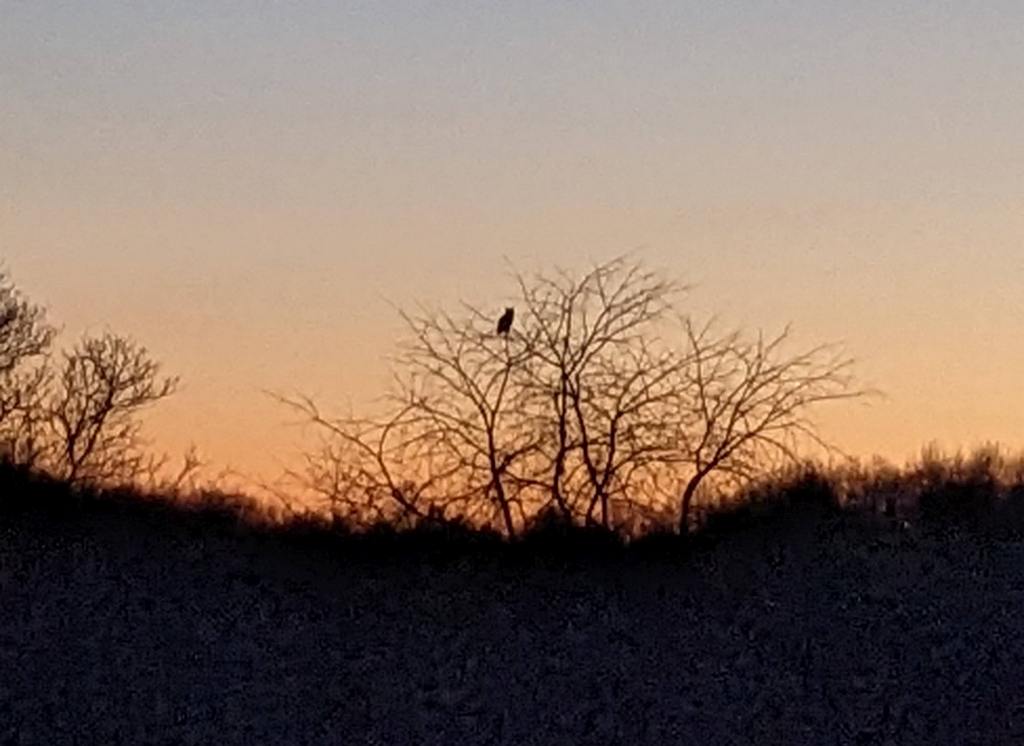
Meanwhile a second adult owl flew to a bare tree at the other end of the field where we could see its silhouette against the glowing sky. Though my cellphone is not good at distance photos, you can faintly see the ear tufts that prove that this second bird of prey is a great-horned owl.
Great horned owl, North Park Upper Fields, 21 March 2024 (photo by Kate St. John)
Eurasian eagle-owl chick at the National Aviary hatched on 15 March 2024 (photo courtesy of the National Aviary)
22 March 2024
Eurasian eagle owls Dumbledore and X are parents again at the National Aviary. Their latest chick hatched on 15 March and is growing quickly and thriving in the Aviary’s Avian Care Center. You can see the chick and his caregivers through the Avian Care Center window.
When the chick hatched he weighed 55 grams (0.121 pounds, roughly the size of a small lime) but will grow so rapidly that in only eight weeks he’ll be fully grown, weighing up to 4kg (9 pounds!) with a wingspan of up to 6.5 feet.
I’ve said “he” for this chick but there is no way to visually tell whether he’s male or female. The National Aviary will do a DNA feather test to determine the chick’s sex.
Eventually he’ll look like his parents who lead active lives at the National Aviary. His father, Dumbledore, participates in flight shows and meets visitors when he’s not busy breeding.
I don’t have recent videos of X or Dumbledore (they’ve been busy off camera!) so to give you an idea of how big a Eurasian eagle owl is and how calm one can be as an avian ambassador, watch the public’s reaction when an owl visited the Hive Library in Worcester, UK with BBC Earth Unplugged.
Guests are encouraged to drop by on weekdays to see the Eurasian eagle owl chick as he grows! He is the 11th chick his parents have hatched at the National Aviary over the years.
Carla laid her fourth egg at the Cathedral of Learning at 10:25a this morning, 56.4 hours after Egg#3. Most of us didn’t realize it happened. Thanks to Laurie Kotchey’s sharp eyes and her comment on my blog, I knew to start looking for Egg#4 when I got home at 11:30a.
The video below shows the egg-laying moment, sped up to double-time, but you won’t see the egg itself because Carla is facing the camera. Instead, watch her behavior. She eventually stands tall, opens her beak and points it upward. Wait for the moment when she bows down and raises her tail as she lays the egg.
Daffodils in Pittsburgh, 18 March 2024 (photo by Kate St. John)
21 March 2024
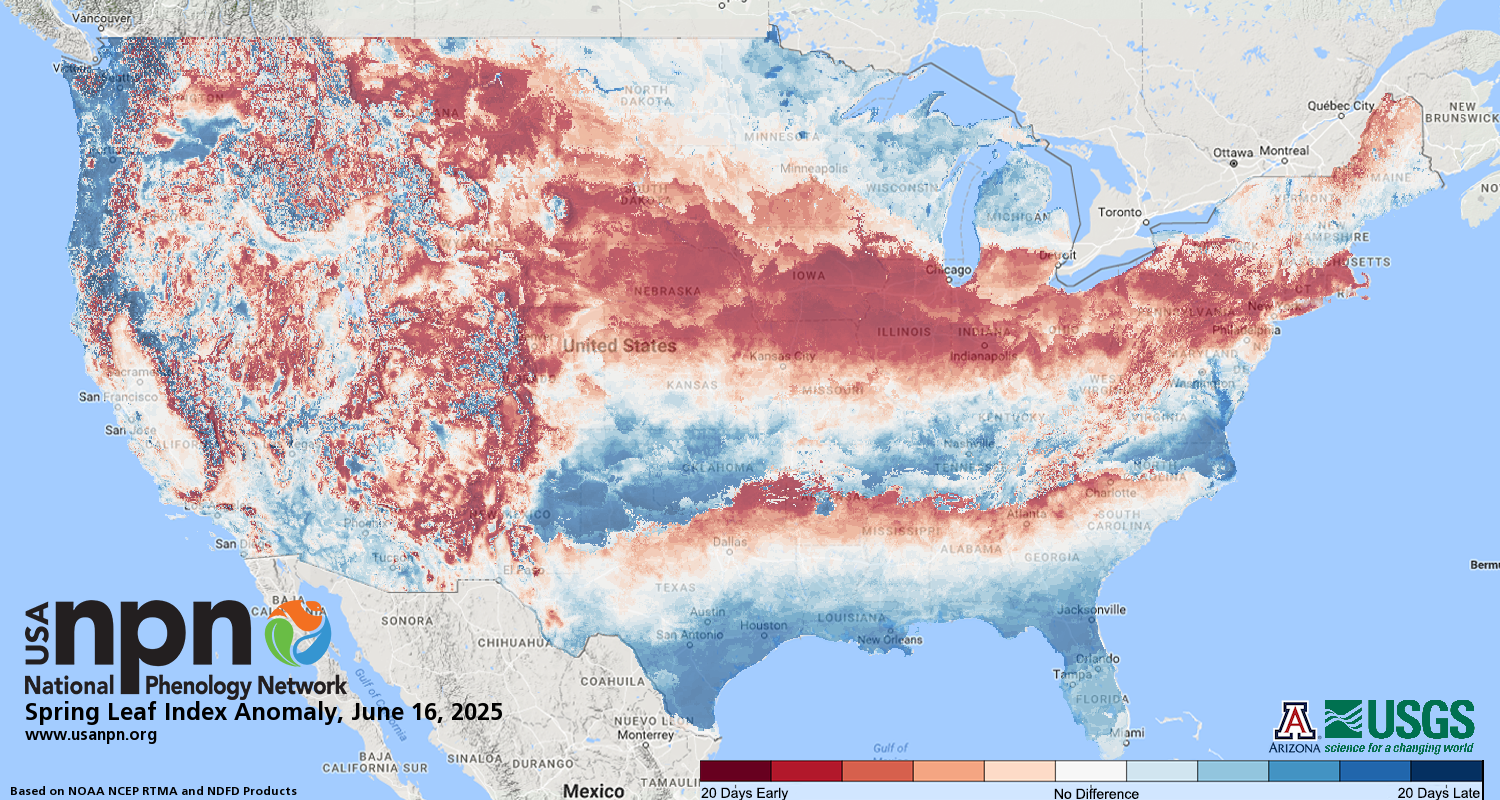
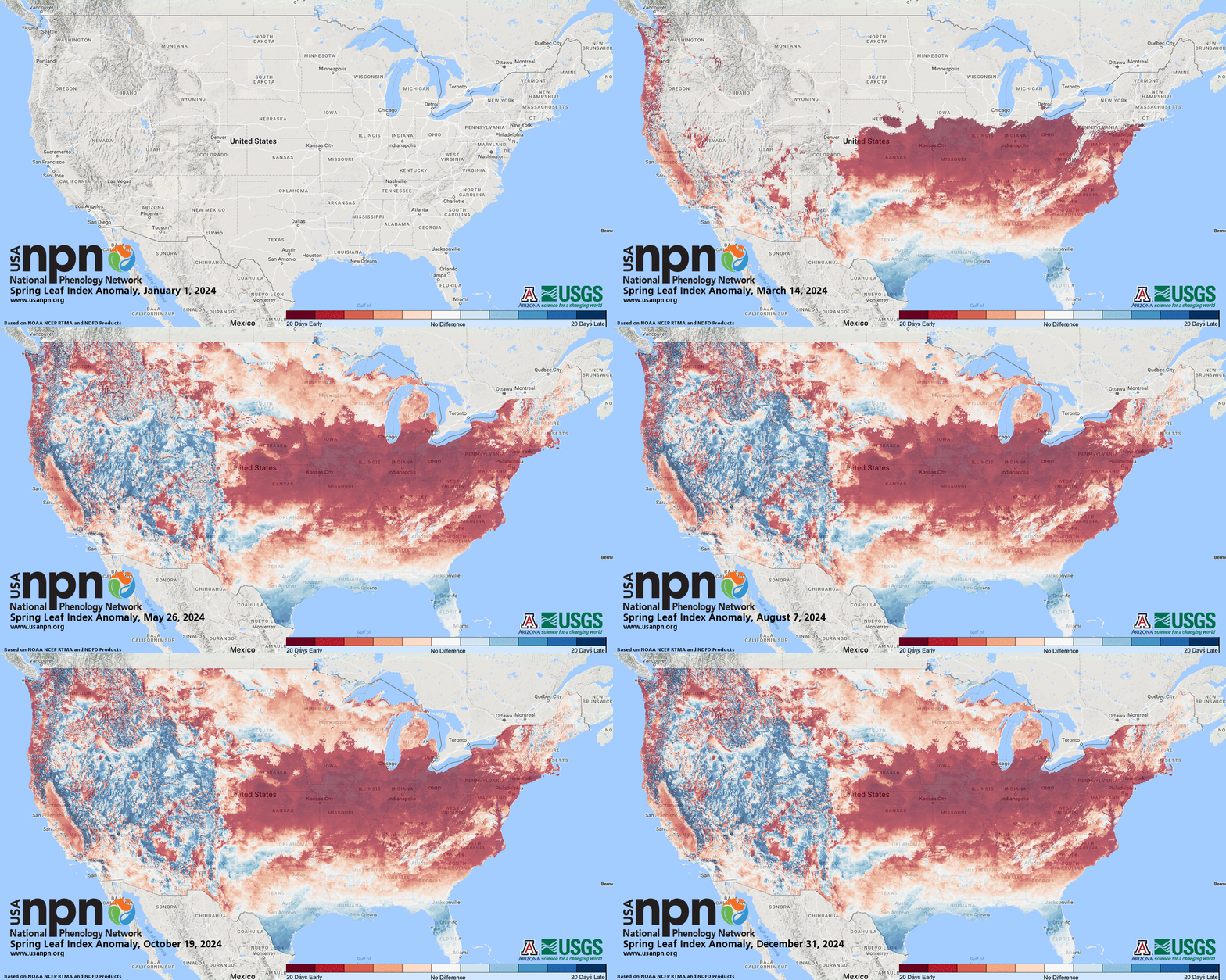
After a slow start to spring in the southern part of the U.S., spring is spreading more quickly now across the central part of the country. Des Moines, IA is 20 days early, Detroit, MI is 23 days early, and Cleveland, OH is 16 days early compared to a long-term average of 1991-2020.
Though it’s only 23°F this morning in Pittsburgh we, too, are having a very early spring. Just three days ago I photographed daffodils and many flowering trees in my neighborhood.
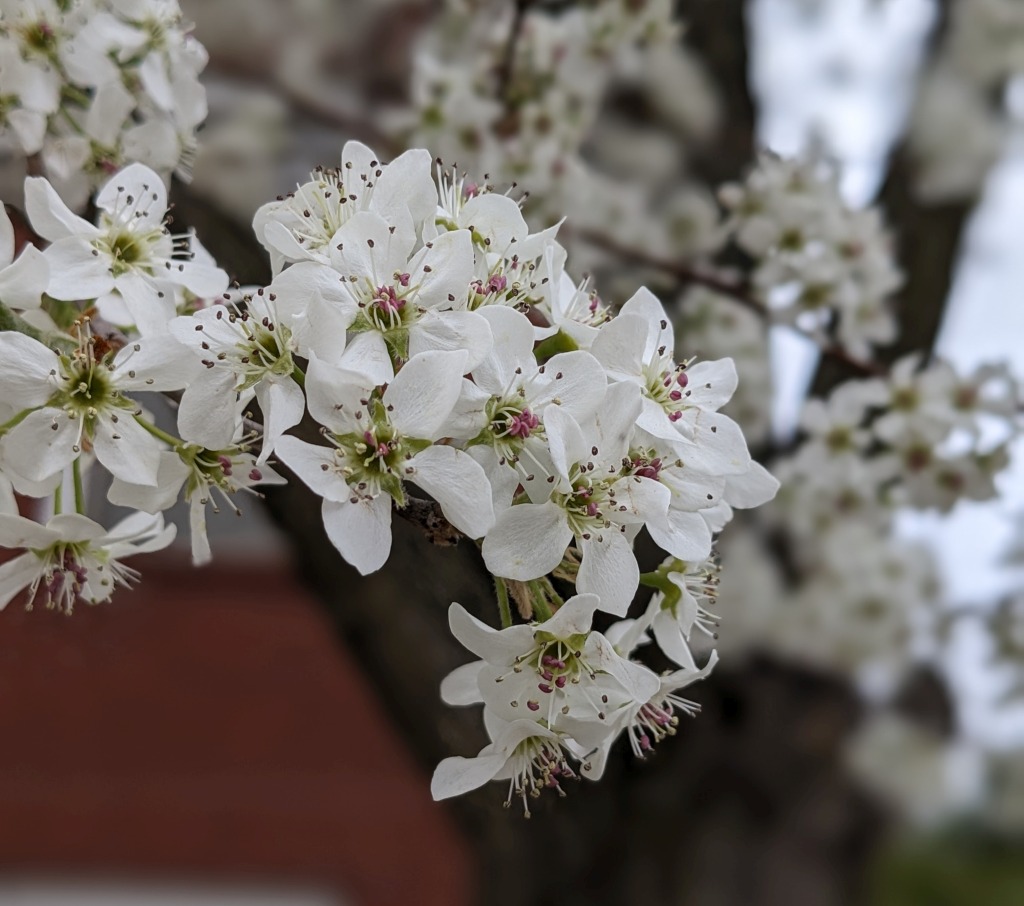
Flowering Callery pear in Pittsburgh, 18 March 2024 (photo by Kate St. John)
Today’s low temperature feels like an aberration compared to what we’ve come to expect this “winter” with highs in 60s and 70s. Dark red on the map below shows how early spring is across the continental US. In Pittsburgh it’s 20 days early.
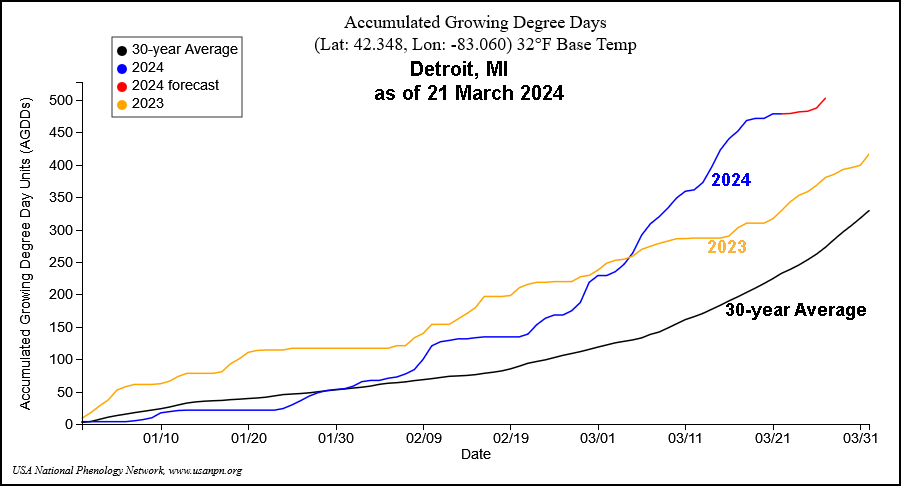
Do you see the reddish dot on Detroit? March has been insanely warm for them (see below). Pull the graph for your zip code at NPN’s Visualization Tools.
Accumulated Growing Degree Days in Detroit, MI for 2024 as of 21 Mar 2024 (graph from USA NPN Visualization Tool)