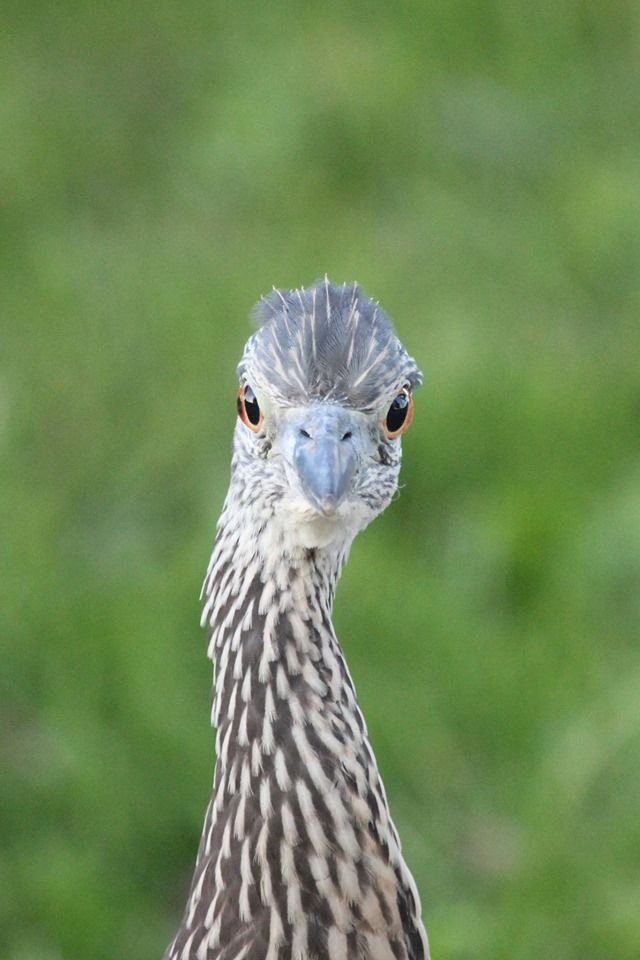
In August 2019 a rare bird showed up every evening at an industrial park in Duquesne, PA. The bird was outside his normal range, but this is not surprising for a juvenile yellow-crowned night-heron.
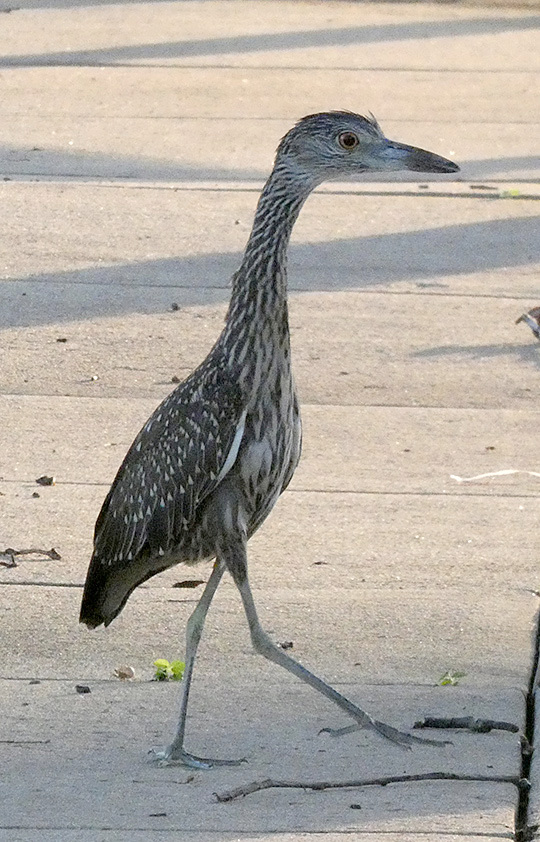
Related to egrets and bitterns, yellow-crowned night-herons (Nyctanassa violacea) live near water and eat mostly crustaceans. Some live year round in Central and South America. Others breed in North America and migrate south for the winter as shown on the map below.
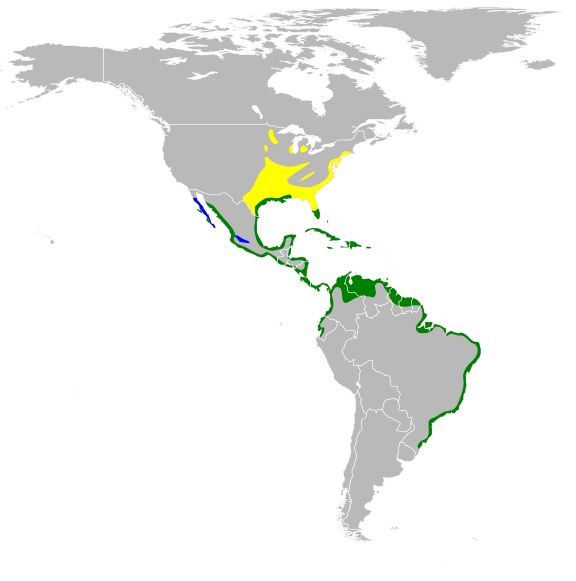
However, juvenile yellow-crowned night-herons are great wanderers. As Cornell Lab’s All About Birds explains, “After the breeding season, young birds often disperse to the north or west before heading to wintering grounds.” That’s how they end up in Newfoundland, North Dakota and Duquesne, PA.
At 4pm on Sunday August 18, I went to see him at the industrial park but he wasn’t there because (duh!) he’s a night-heron. So I went back at 7:20pm.
He attracted a small crowd. Five of us watched him roam the sidewalks and grass beneath the pine trees at American Textile Company. He was so unafraid of humans that he walked right past two people standing on the sidewalk. This bird is completely focused on cicadas.
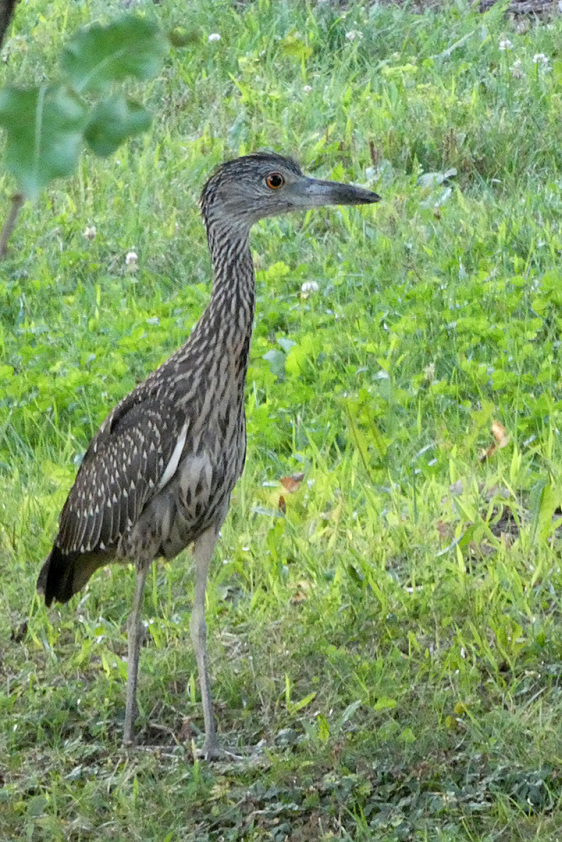
To give you an idea how close he came, here are photos from Oliver Lindheim (at top) and Amy Henrici, two of the many birders who’ve made the trek to Duquesne.
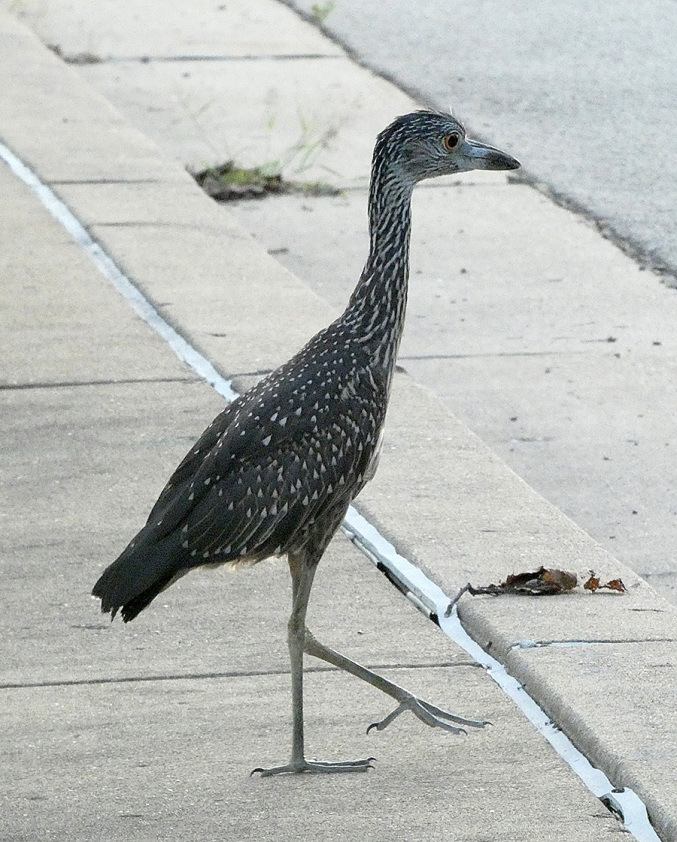
As soon as the glut of cicadas is over, this bird will be on his way.
UPDATE 26 August 2019: This bird is gone. He didn’t show up on the evening of August 21.
NOTE: If you went to see the yellow-crowned night-heron and you use eBird, please mark his location as the new “Stakeout” Hotspot created specially for him called “stakeout, yellow-crowned night-heron at City Center, Duquesne, PA.
(photos by Oliver Lindheim and Amy Henrici)
That face! He looks like he means it.
I live where this species breeds in NJ and just thought that I’d add that I see them foraging in the day all the time. So don’t rule out daytime for sighting purposes. Interesting that it’s foraging for cicadas. Cool observation. I usually see them eating marine worms and small crabs.
I am in Jamaica. I also found this unusual visitor in my yard today, June 25, 2024 at 2:06 pm. I’ve never seen this bird before in my area.