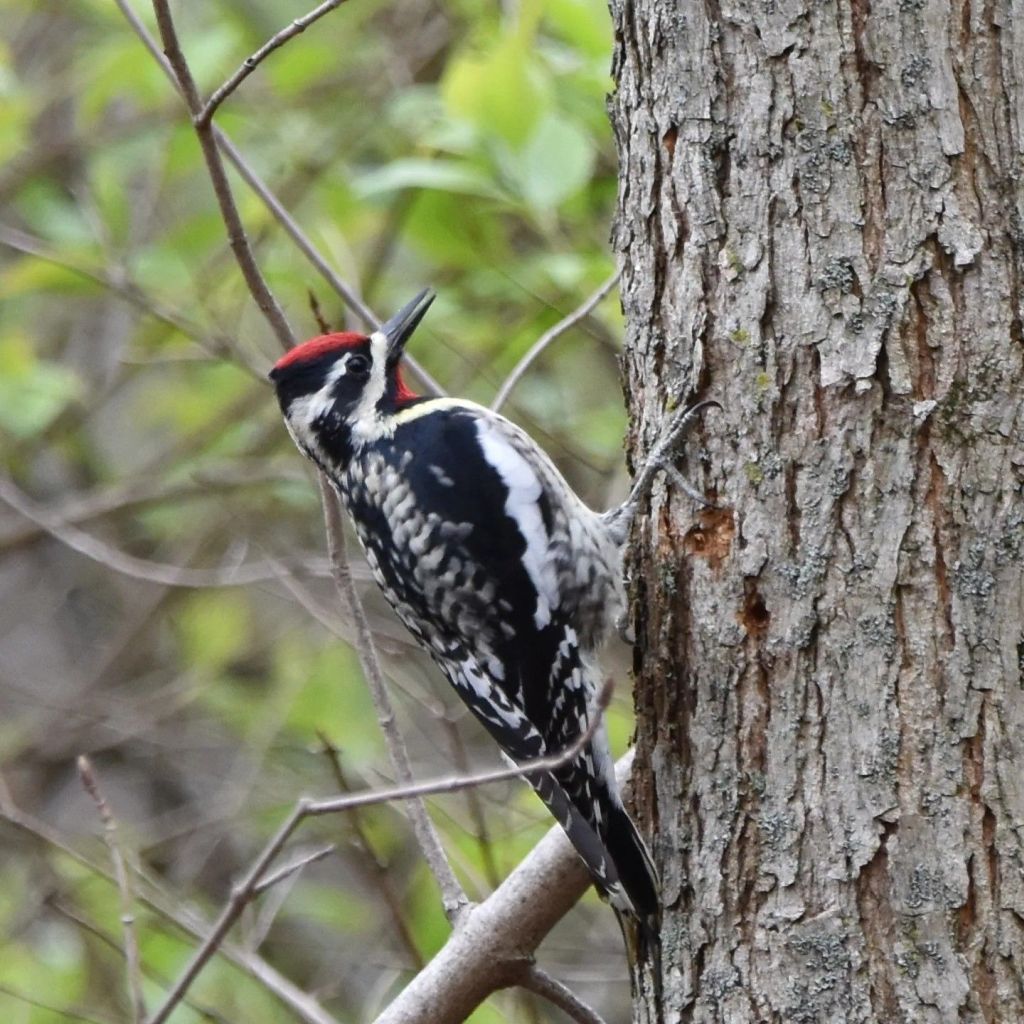
Yellow-bellied sapsucker, Frick Park, 6 April 2024 (photo by Charity Kheshgi)
8 April 2024
Surprise! Instead of an outing on the last Sunday of the month, let’s go birding next weekend. Join me at the Schenley Park Visitors Center for a bird & nature walk on Sunday 14 April, 8:30a – 10:30a.
Yellow-bellied sapsuckers migrate through Allegheny County in April so mid-month is the best time to find one in Schenley. Charity Kheshgi and I saw this one at Frick.
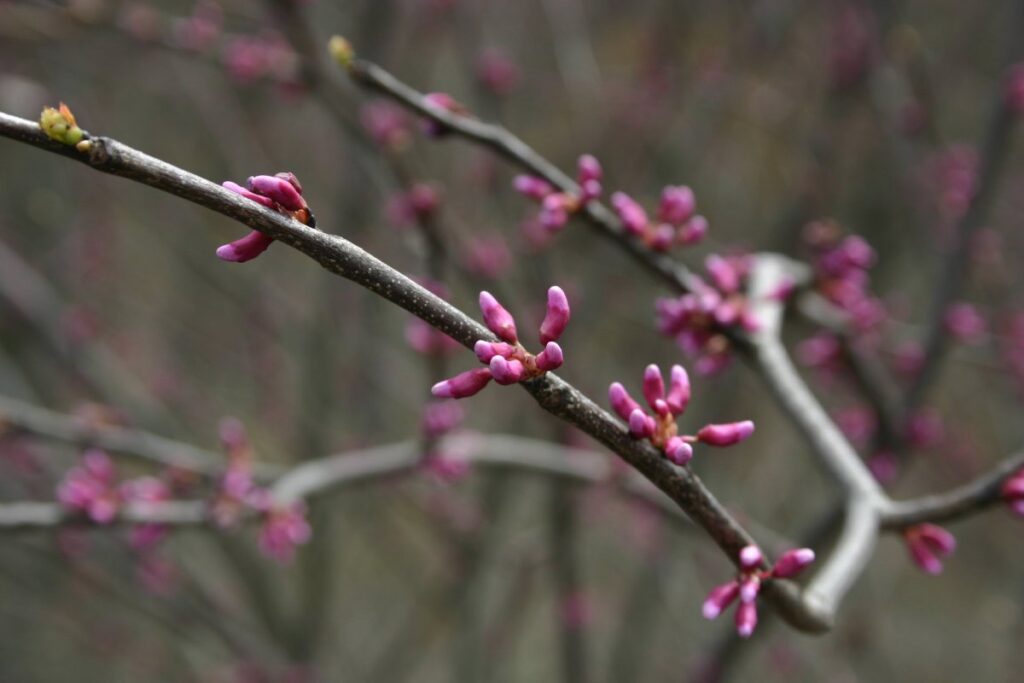
We’ll also see trees in bud, in bloom, and with tiny leaves. Ten years ago the redbuds had not opened yet. Will they be blooming next Sunday?
Redbuds in bud, Schenley Park, 18 April 2014 (photo by Kate St. John)
April showers won’t stop us. This event will be held rain or shine, but not in downpours or thunder. Check the Events page before you come in case of cancellation.
Dress for the weather and wear comfortable walking shoes. Don’t forget your binoculars.
Hope to see you there.
p.s. If the birding is good I’ll give an option to continue until 11:00am.
p.p.s. Don’t expect a big show of spring wildflowers like we used to see several years ago. Pittsburgh’s overabundant deer have eaten everything except the toxic flowers.
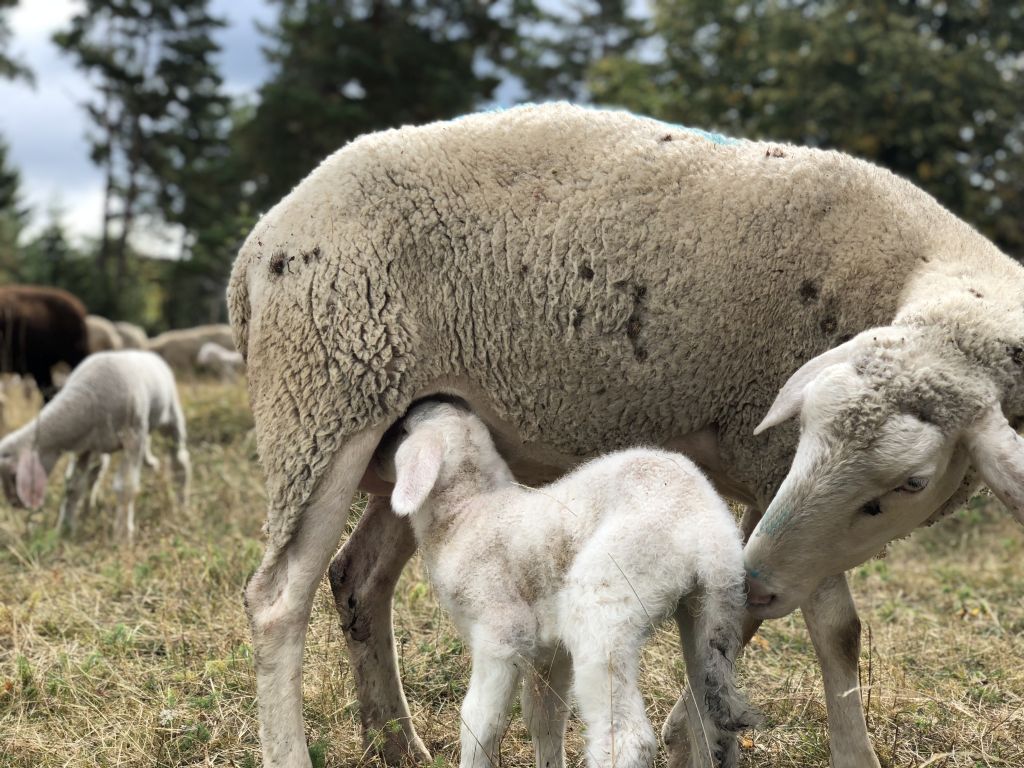
If you live in close contact with animals you get to know them well. Shepherds of small flocks develop an especially close relationship with their sheep because they tend them every day — and for 24 hours a day during lambing in early spring.
Paula Aarons, originally from Valencia PA, runs a small sheep farm in New Hampshire called the Dancing Pony Sheep Farm. Last month she appeared on Junction Fiber Mill‘s Millcast program to tell the story of her flock supporting each other and supporting her, their shepherd.
Our mutual friend Jeff Cieslak introduced her 15-minute video.
People: My friend Paula told this wonderful story about her sheep for a podcast. I watched it, and I wept a little, and now you, too, must weep.
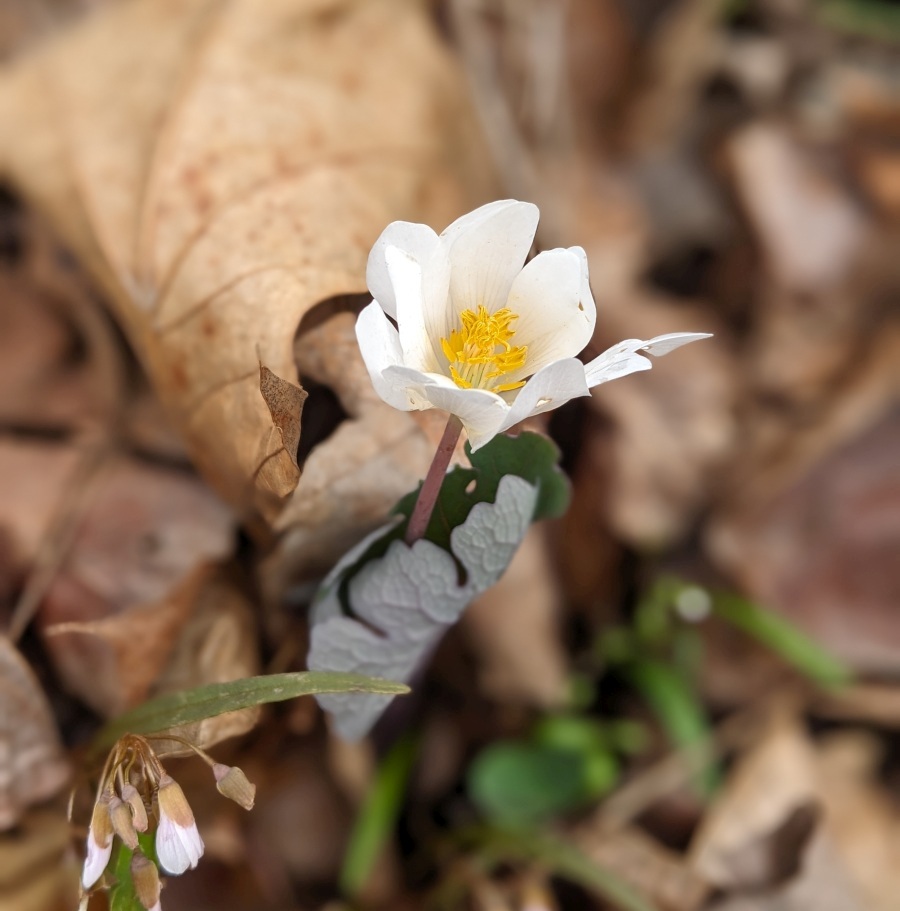
Bloodroot blooming at Independence Marsh, 31 March 2024 (photo by Kate St. John)
6 April 2024
This week March went out like a lamb and April came in like a lion.
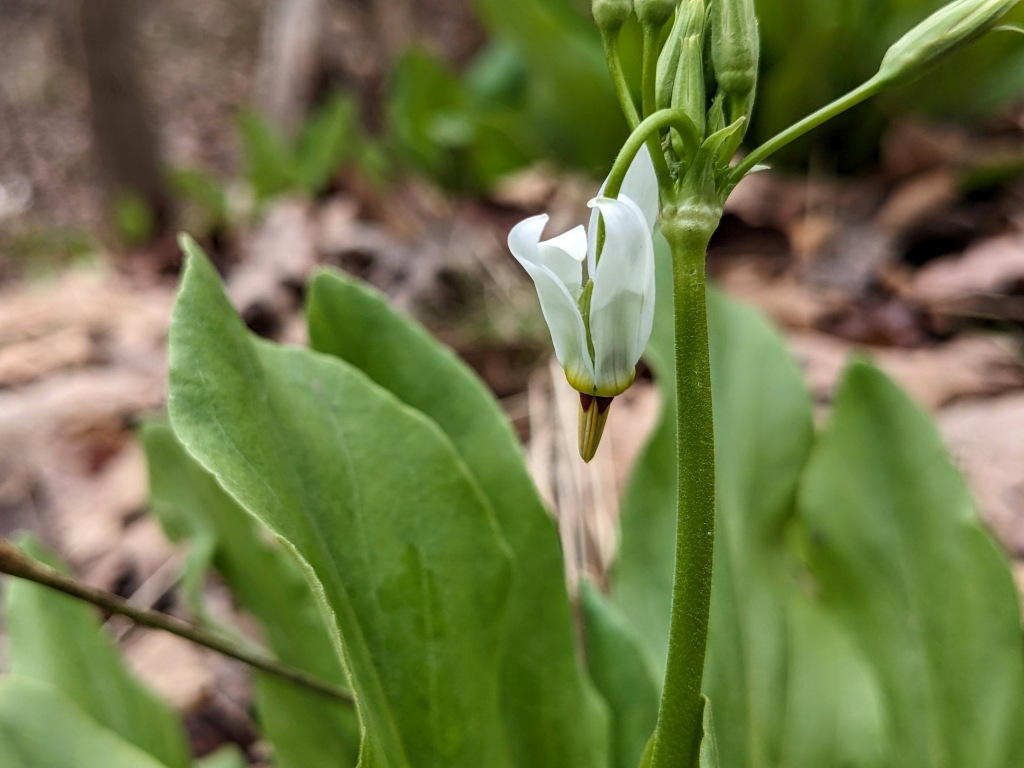
After photographing garden flowers on Easter morning I traveled out to Independence Marsh in Beaver County. I did not find my target bird, rusty blackbirds, but I did find spring flowers: Dutchmans breeches, cutleaf toothwort, bloodroot (above) and the first tiny bloom on shooting star (below).
Early bloom on shooting star, Independence Marsh, 31 March 2024 (photo by Kate St. John)
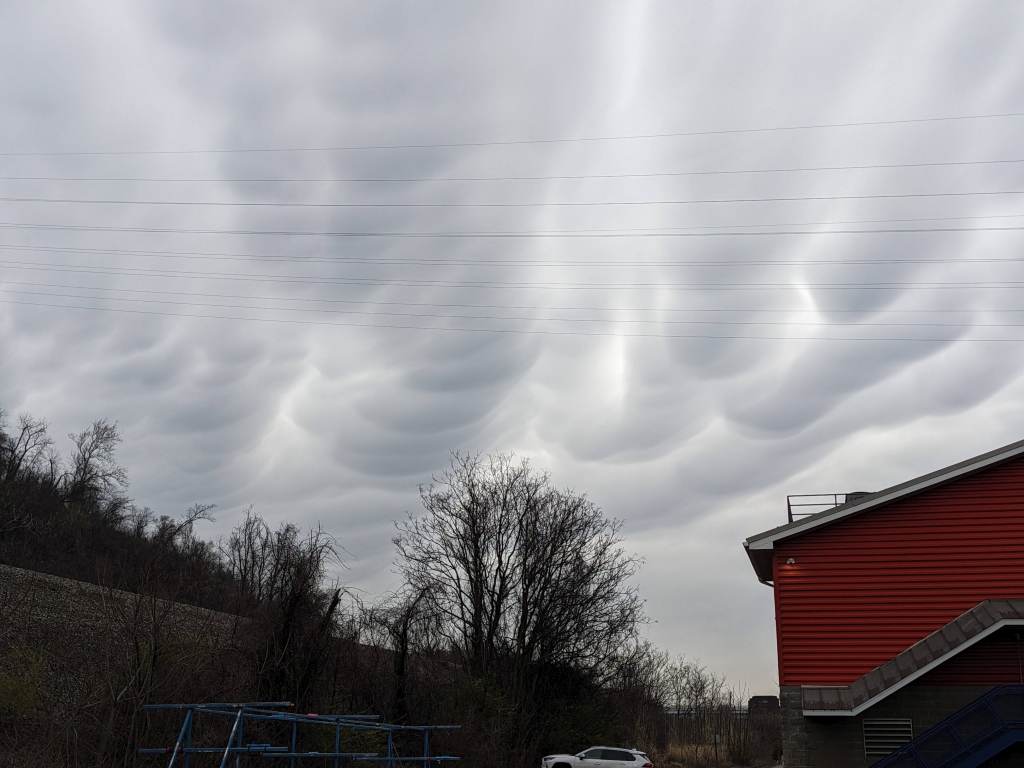
As soon as March was over, things went wrong. I should have known when I saw this troubled sky of mammatus clouds on Saturday, 30 March. Not a good sign.
Mammatus clouds presage a week of rain, snow and graupel in Pittsburgh, 30 March 2024 (photo by Kate St. John)
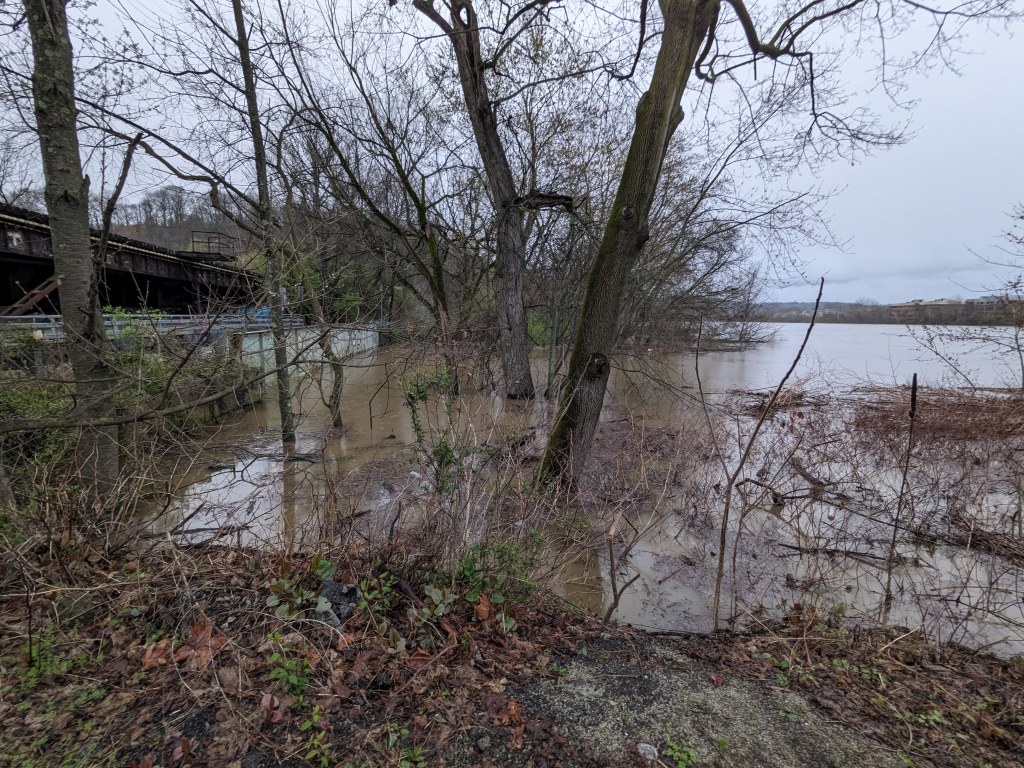
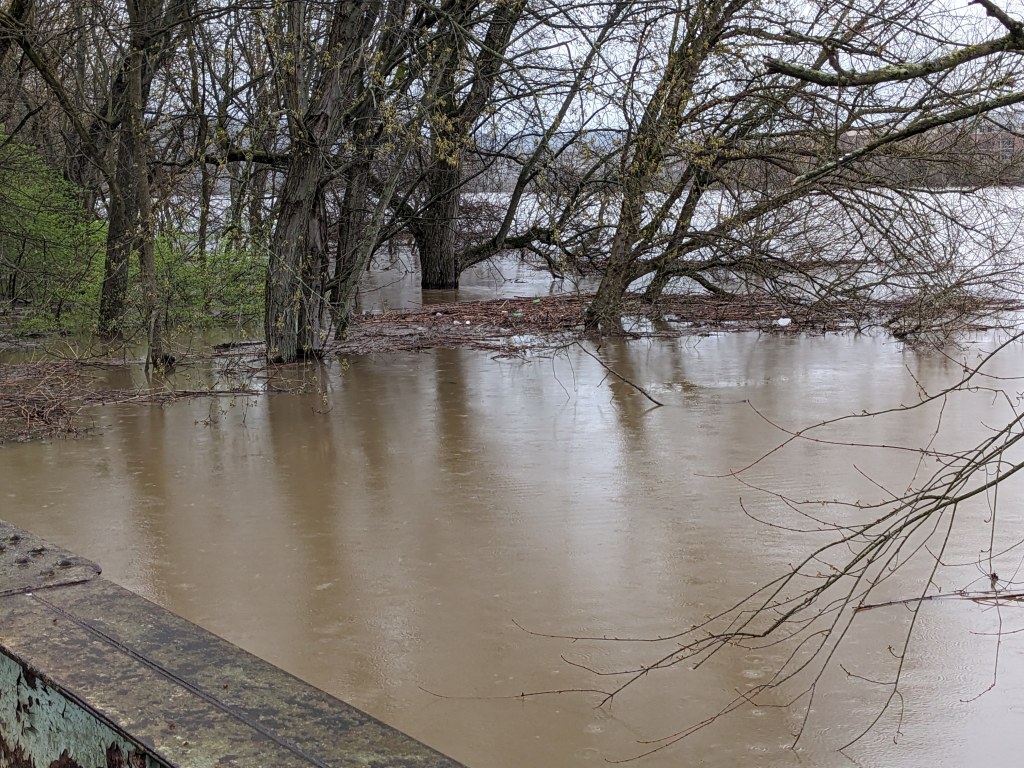
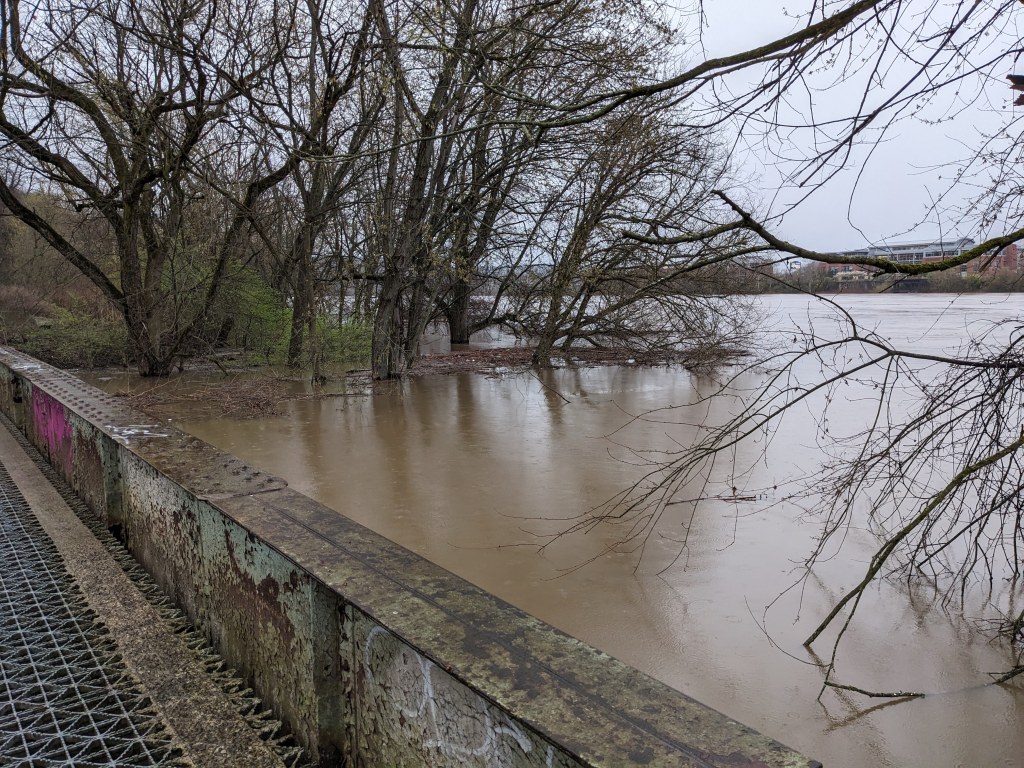
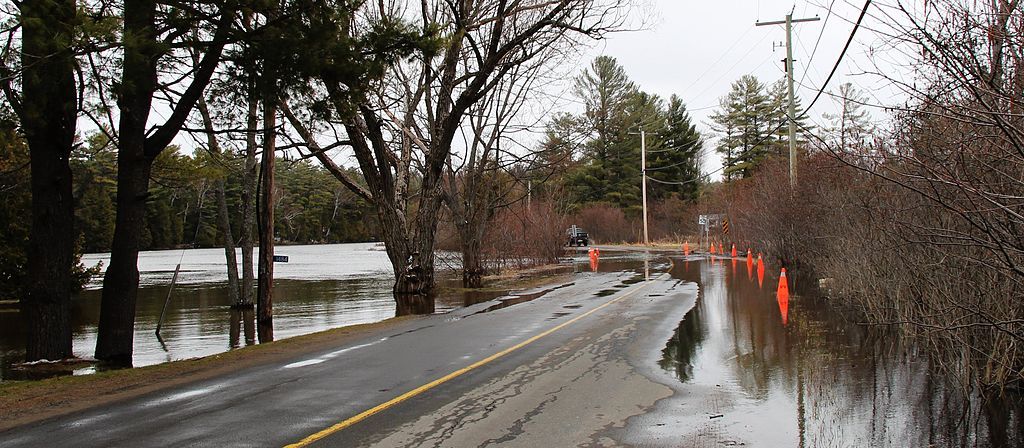
It rained and rained and rained on April 1-3, setting a record of 2.68 inches on April 2. Streams and basements were hit hard while the rain was falling. The rivers rose, as shown at at Duck Hollow on 4 April with the Monongahela River at parking lot level. (more flood photos and videos here)
Duck Hollow parking lot — A River Runs Through It — 4 April 2024, 7:19am ET
Later that same day, Thursday 4 April, the temperature fell and so did graupel.
Graupel falls o n4 April 2024 (video by Kate St. John)
Today it’s cold but the precipitation has finally stopped.
Meanwhile ….Remember those beautiful tulips I posted last Sunday, Easter morning?
BEFORE –> Tulips on N. Neville St on Easter morning, 31 March 2024 (photo by Kate St. John)
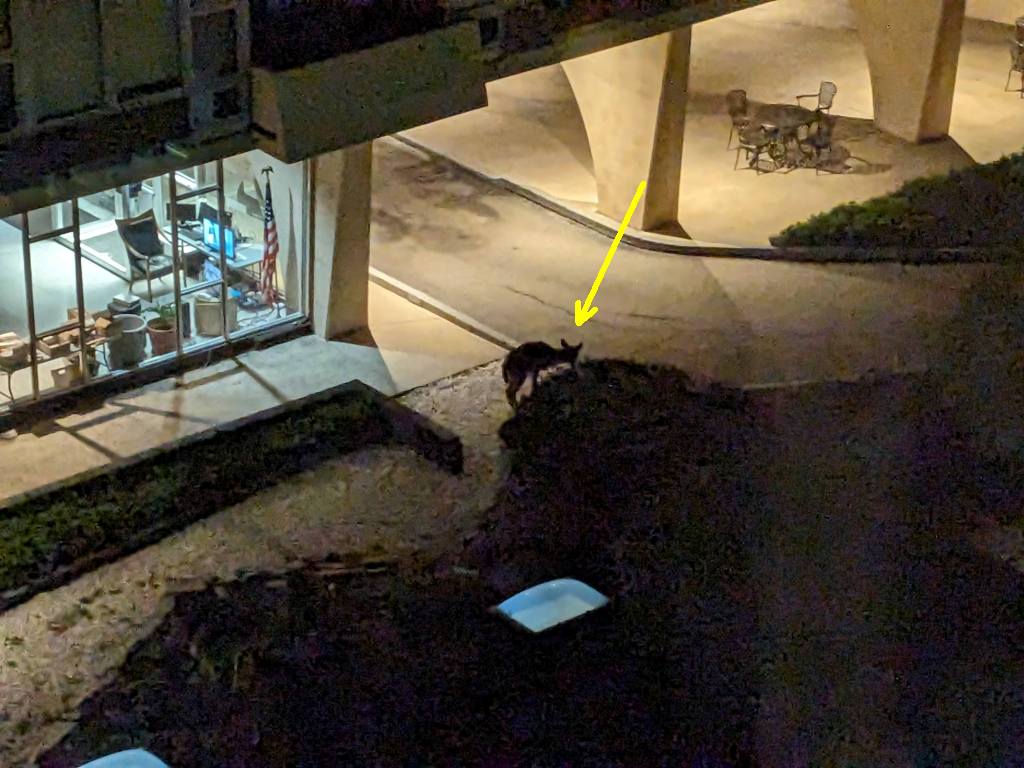
And remember the deer I saw between two highrises in Oakland on 24 March?
A deer browsing the garden at a highrise in Pittsburgh, 5:30am 24 March 2024 (photo by Kate St. John)
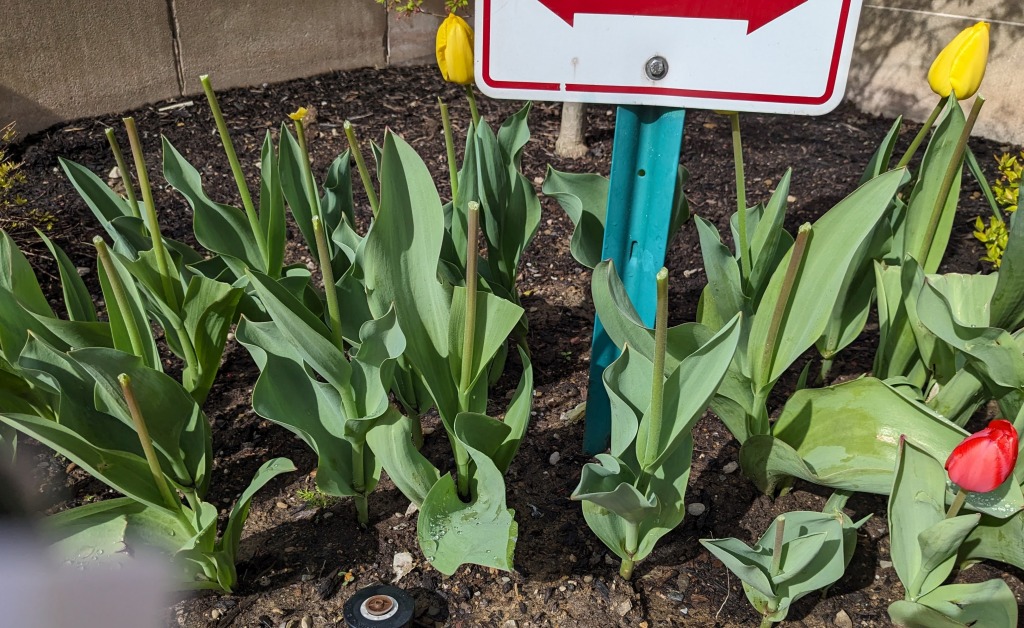
Well, the two met up and the tulips did not fare well.
AFTER –> Same tulips eaten by deer on N. Neville St as of 2 April 2024 (photo by Kate St. John)
That was on N Neville Street. Here’s N Craig Street.
BEFORE –> Tulips in front of a highrise on N Craig St, Easter morning, 31 March 2024 (photo by Kate St. John)AFTER –> Tulips eaten by deer on N Craig St, 4 April 2024 (photo by Kate St. John)
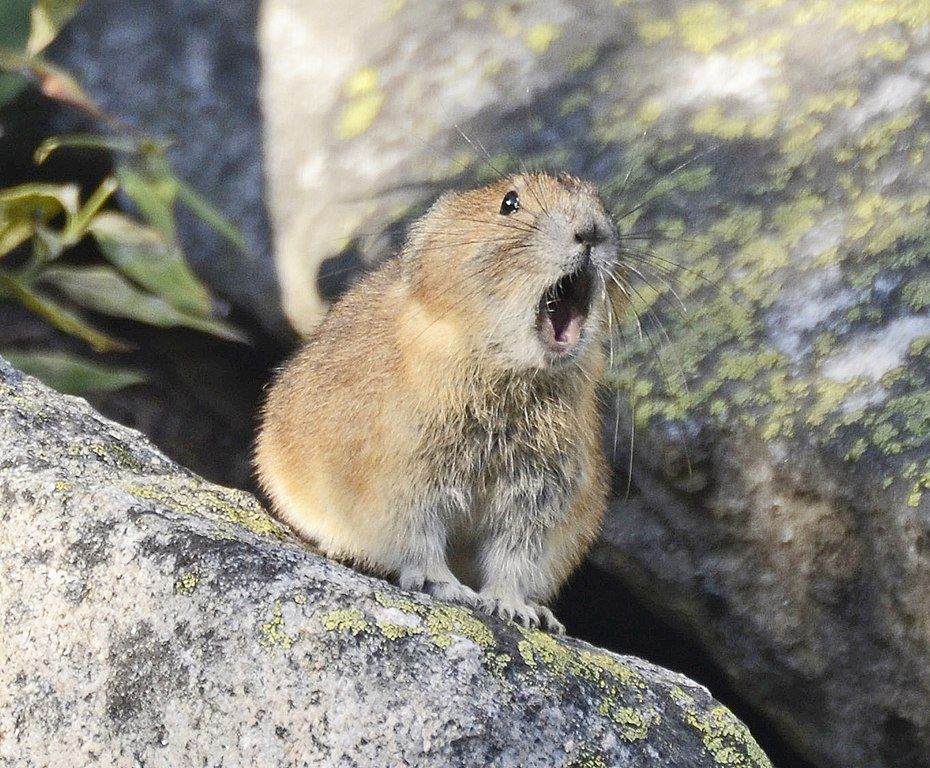
Rabbits rarely say anything but this small mammal, related to rabbits, stands on a prominent rock and shouts to his friends when he sees danger.
American pikas (Ochotona princeps) weigh 6 ounces and are only 6-8 inches long, covered from head to toe in thick fur. They live in boulder fields above the treeline where they eat flowers, grasses and other plants that they cache in a “haystack” for the winter. Though tiny these small mammals are a tasty meal for hawks, eagles, coyotes, bobcats, foxes and weasels.
Pikas very social and vocal, calling out danger and “singing” during the breeding season. When a pika sees danger he lets all the nearby pika’s know.
Though he has a small voice, he works on projection.
Monongahela River floods the Duck Hollow parking lot, 4 April 2024, 7:20am (photo by Kate St. John)
4 April 2024
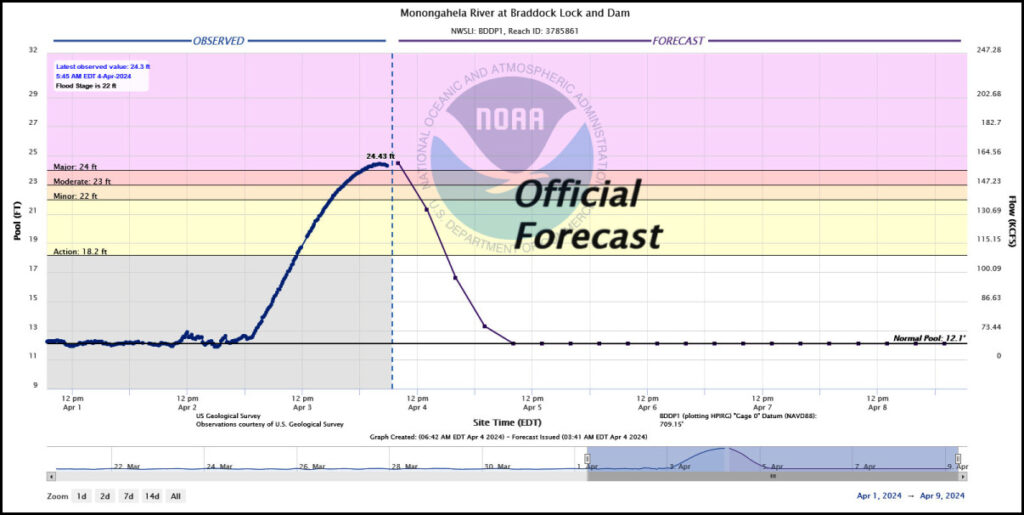
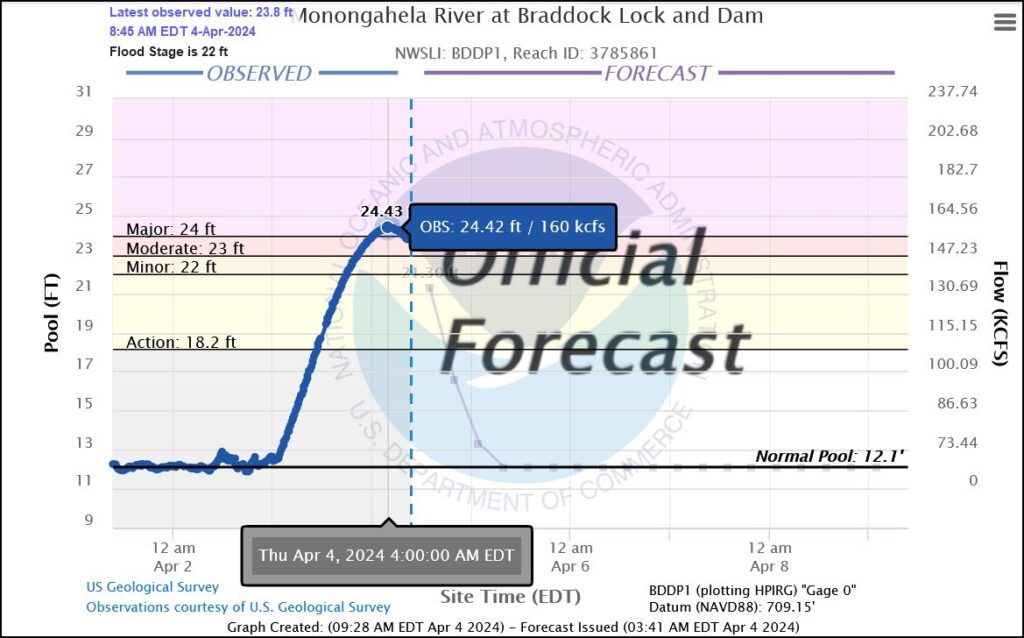
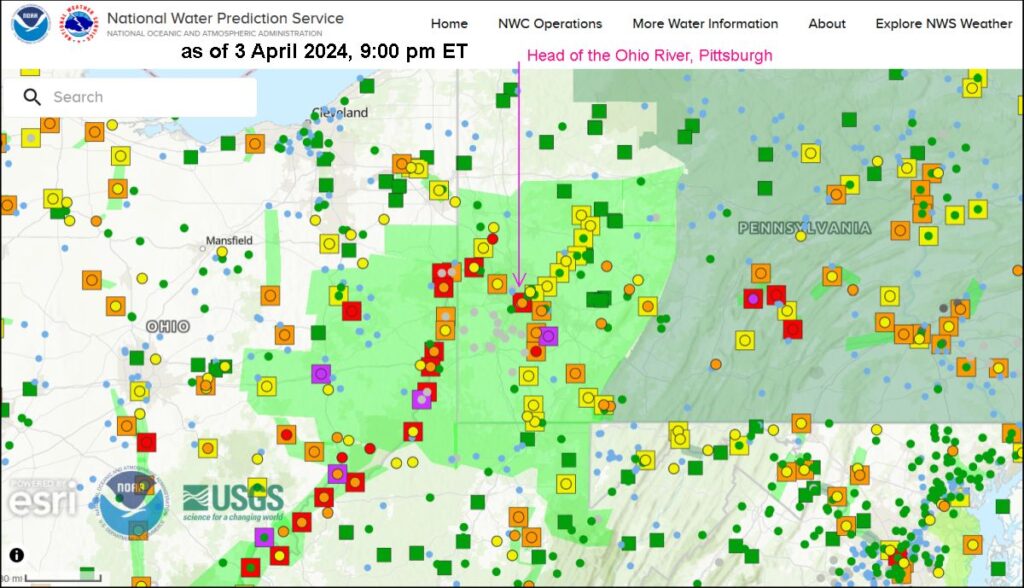
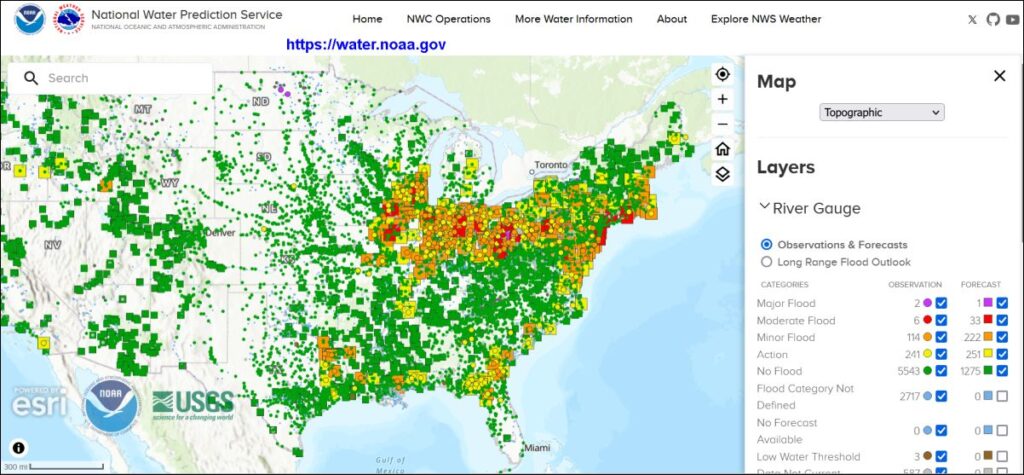
This morning I checked NOAA’s National Water Prediction Service and saw there was a major flood today on the Monongahela River at Braddock Lock & Dam, just upriver from Duck Hollow. It looked like it would crest this morning …
… so I rushed down to Duck Hollow just after sunrise and here’s what I saw.
It was so deep that the parking lot garbage can was floating. Needless to say there were no barges or ducks on the river.
The birds were singing as I filmed the river at the mouth of Nine Mile Run.
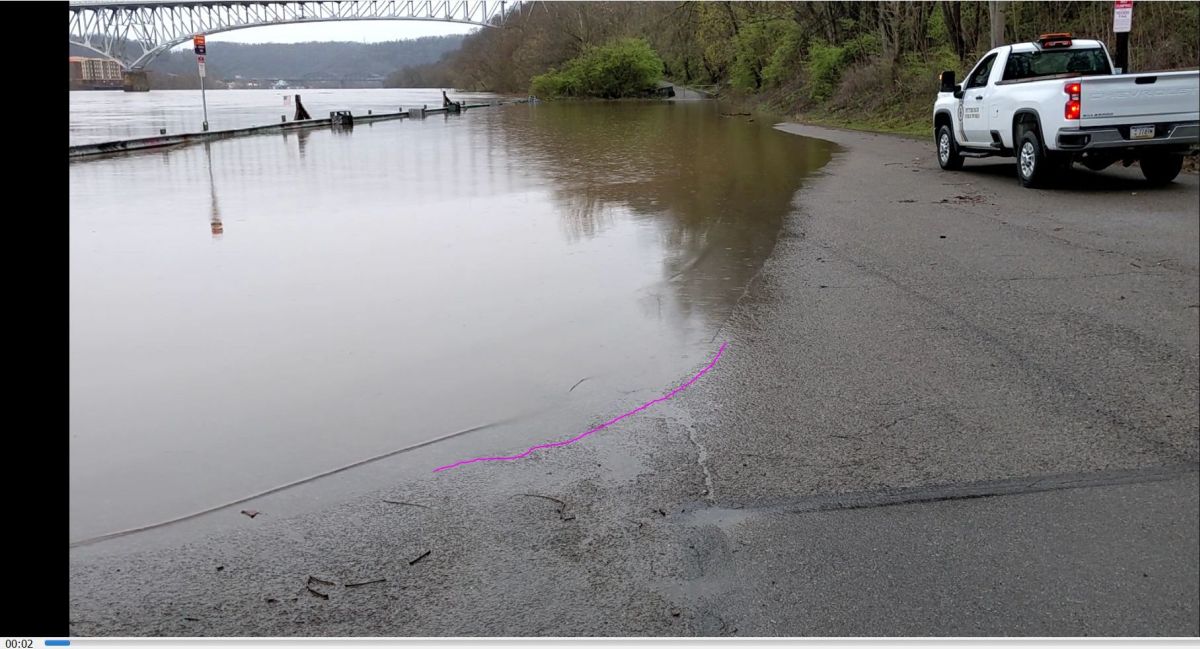
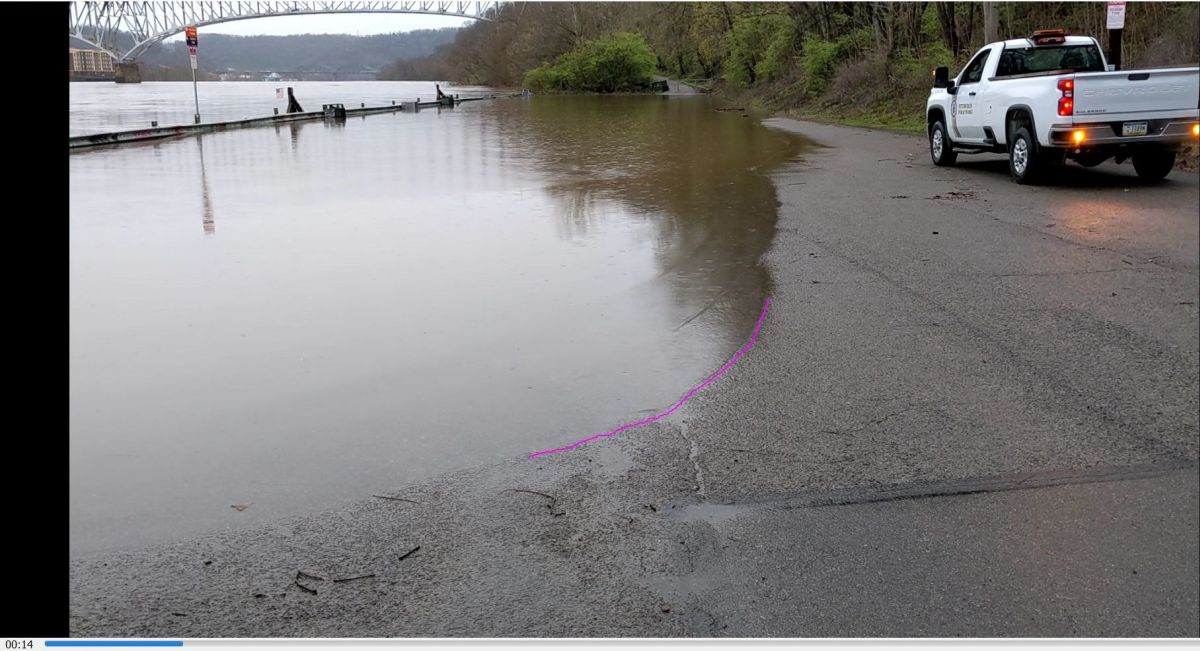
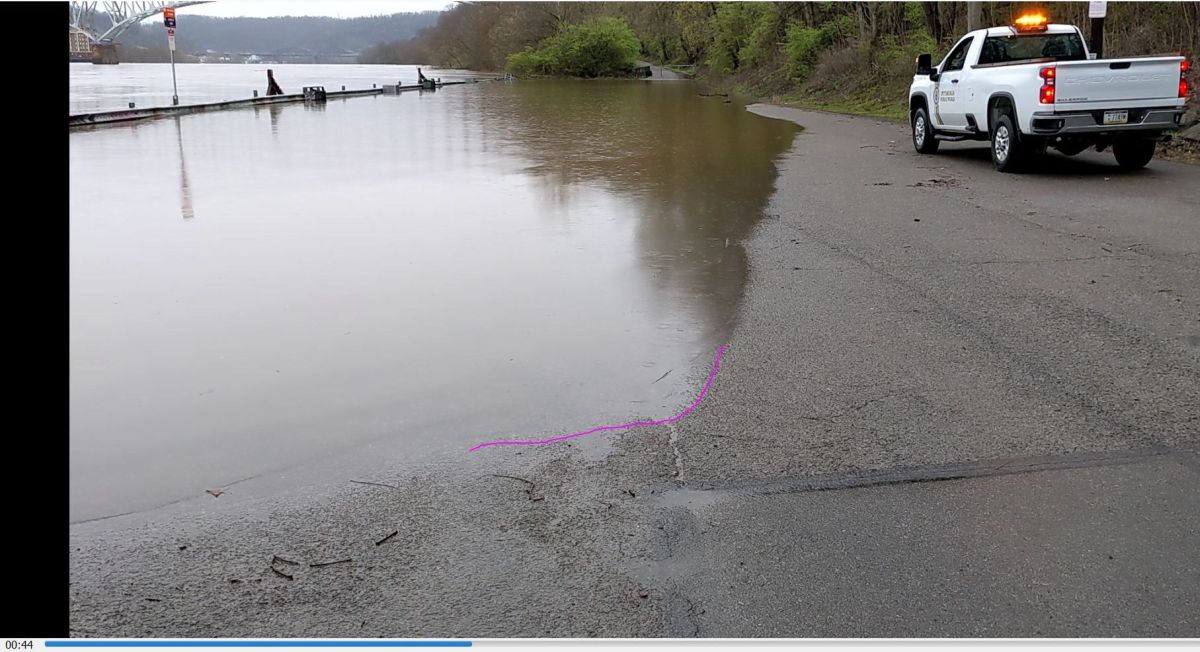
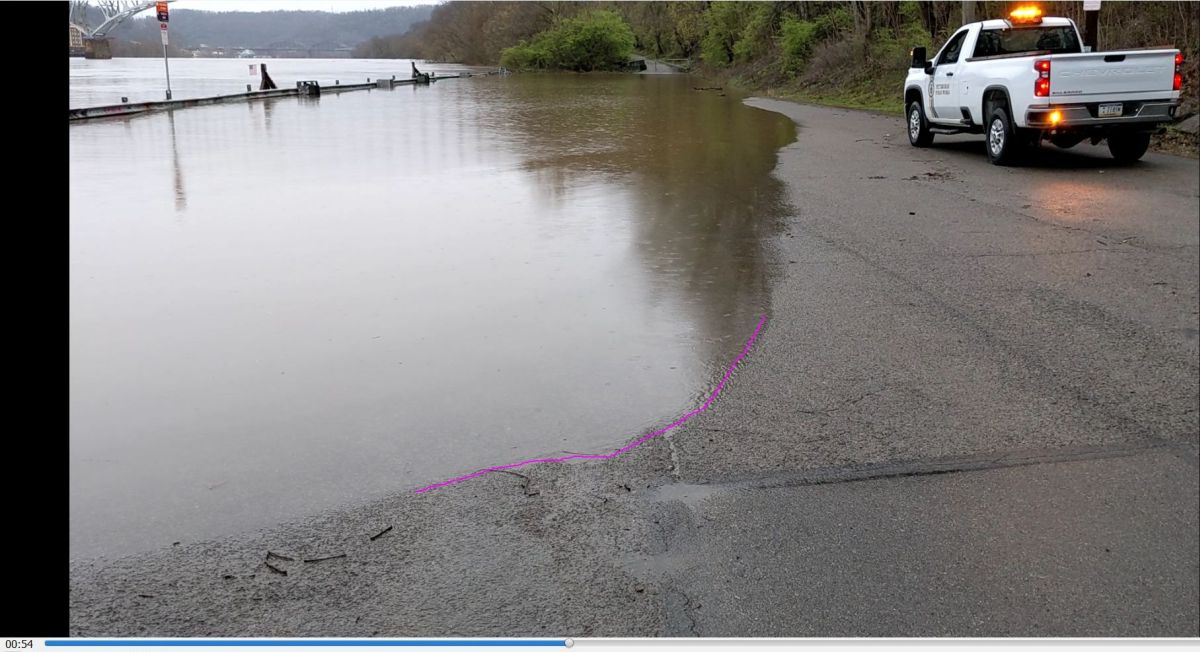
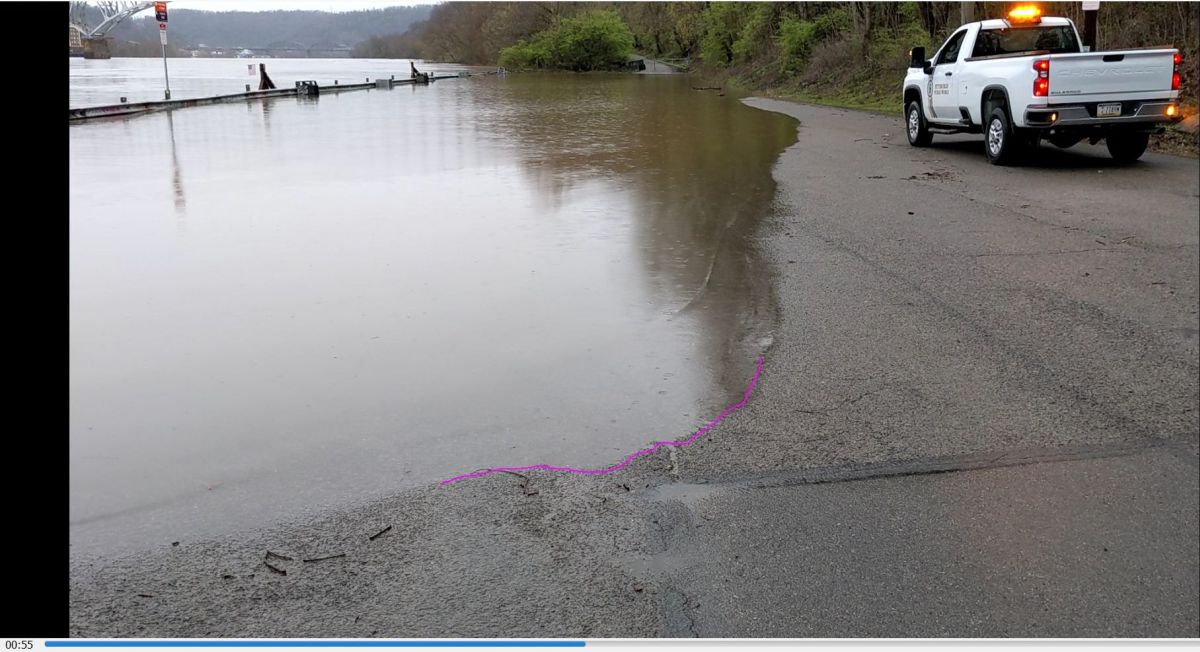
Was I there for the crest? I took a two minute video while the water was rising. See the pink line indicating the high water mark in these slides from my video.
As it turns out the river crested today at 4:00am EDT.
The National Weather Service says we’ve broken the record for the wettest start of any year in Pittsburgh since record-keeping began in 1871.
Do you think this year we have seen a lot of ???? in #Pittsburgh? If you said YES, you are correct! 13.71" is the wettest start to the year on record (1871-2024).
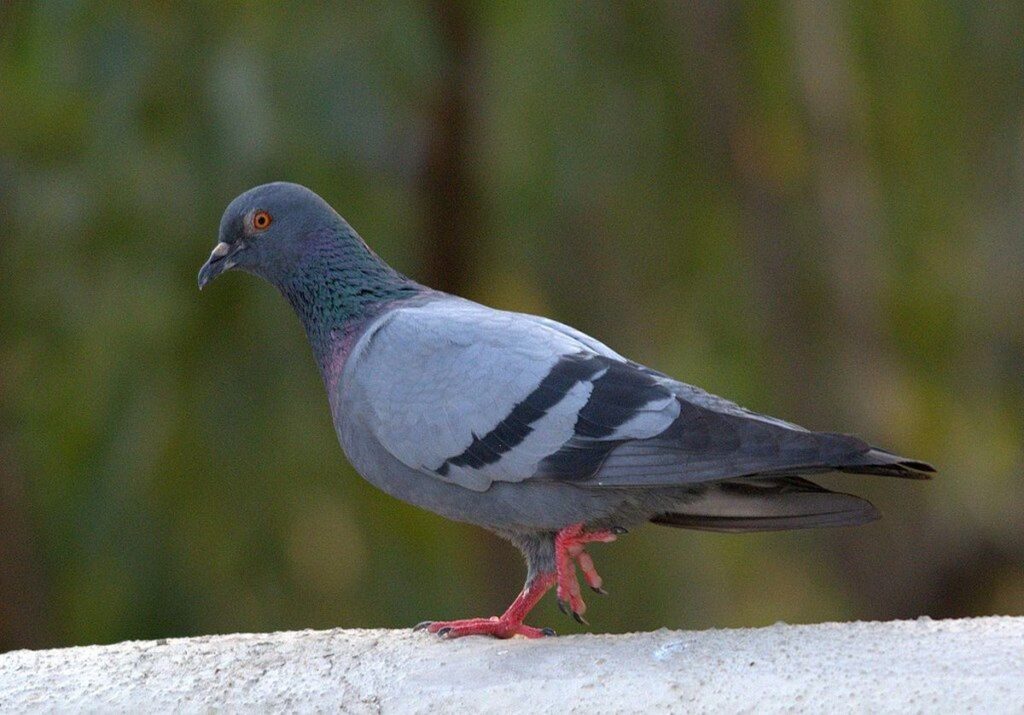
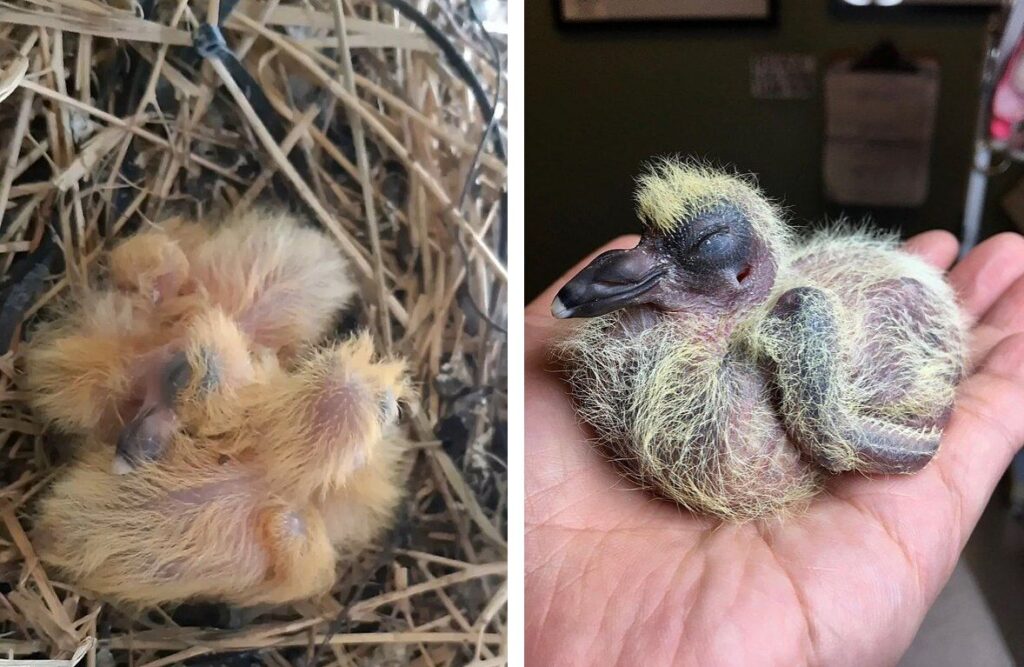
City folks often see pigeons but all the birds are adults. Have you ever seen a baby pigeon?
Rock pigeons nest on cliffs in the wild or in nooks on high buildings or bridges in feral settings. This puts their nests high above our field of view and, since the young won’t leave the nest until they can fly, they don’t look like babies anymore when we finally see them. They look like their parents.
Every once in a while a pair of pigeons will choose a balcony or window ledge where the resident can see the nest. This happened for @LostInTheWildCanadawho documented the pigeon family on YouTube.
Monongahela River flood at Duck Hollow, 10 Sept 2018 (photo by Kate St. John)
2 April 2024
CORRECTION (3 APRIL at 7am): When I first published this article, I didn’t realize I was using outdated maps so my analysis was wrong. NOAA changed to their mapping tool on 28 March; the new tool is much better. Maps, links and the flood assessment have been corrected.
Today (2 April 2024) it will be warm in Pittsburgh (71°F) but very wet with severe thunderstorms, 2-3 inches of rain, and up to 4 inches in localized downpours. There’s a Flood Watch through this evening for rivers, creeks, streams, and flood-prone locations.
It is unlikely that the Monongahela River will flood as much as it did in 2018, above in September, below in February. But it will reach flood stage.
The river is expected to rapidly rise Wednesday (3 April) and crest at 26.7 feet early Thursday (4 April), just below the moderate flood stage. As of Wednesday morning, it was over 21 feet.
The National Water Prediction Service provides a dynamic water prediction map for the entire U.S. updated with current conditions (circles) and water level predictions (squares around the circle). The colors on the 4/3/2024 at 9:00pm map below mean:
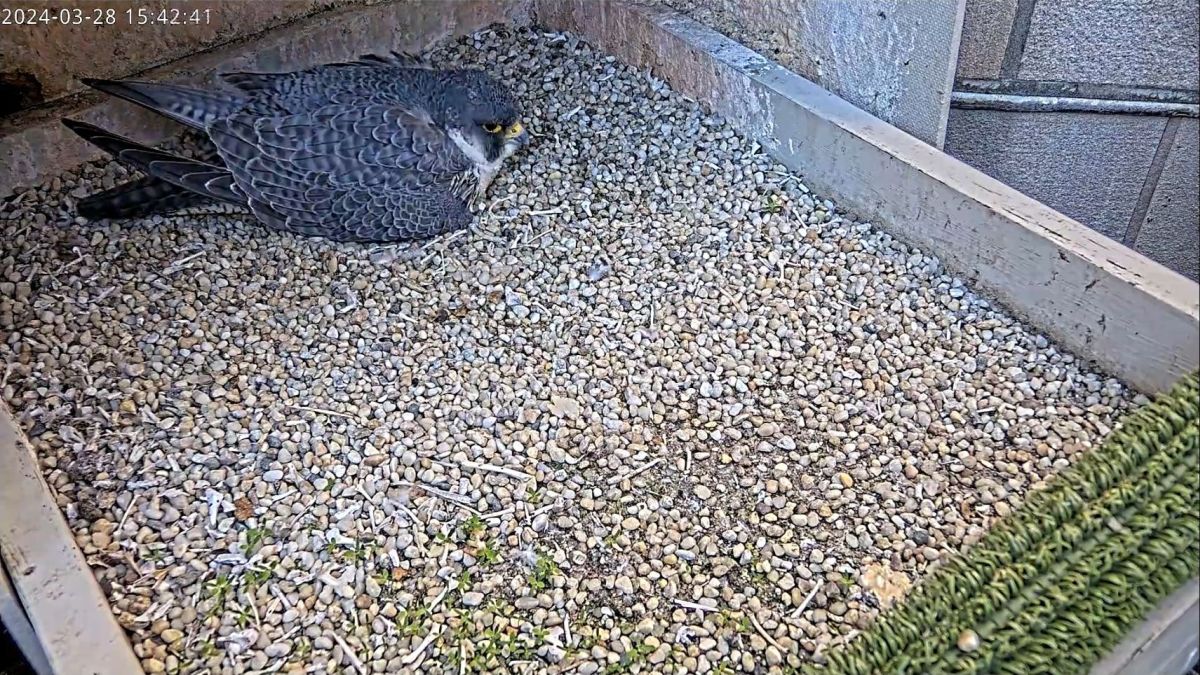
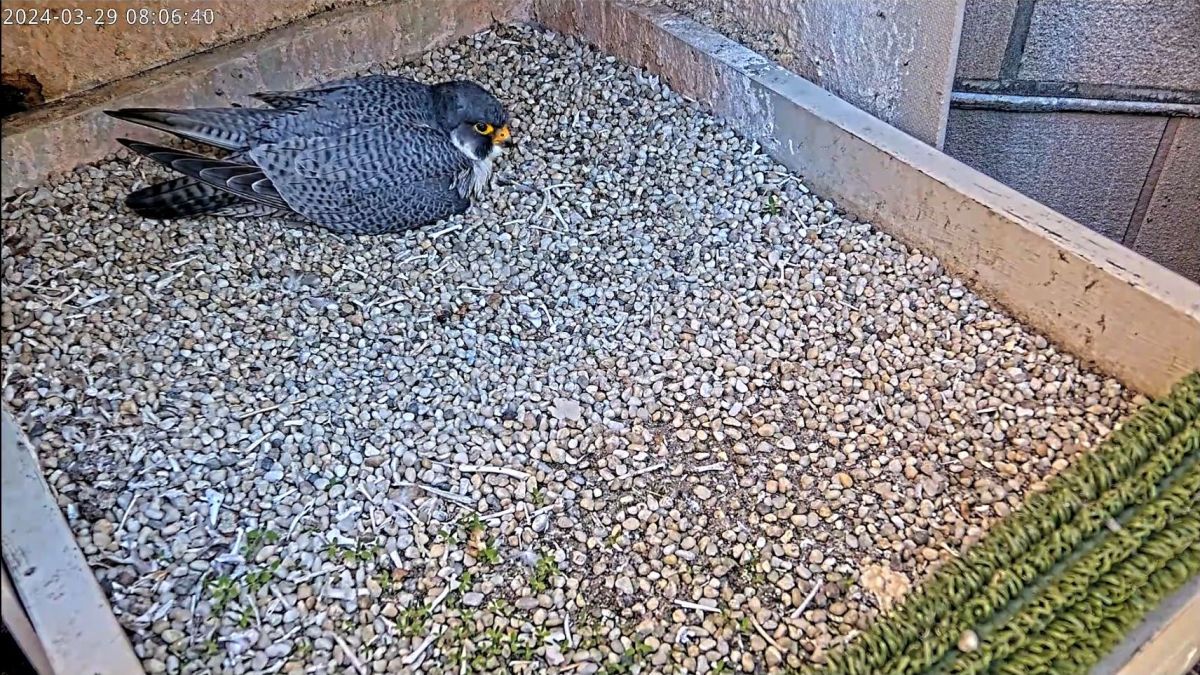
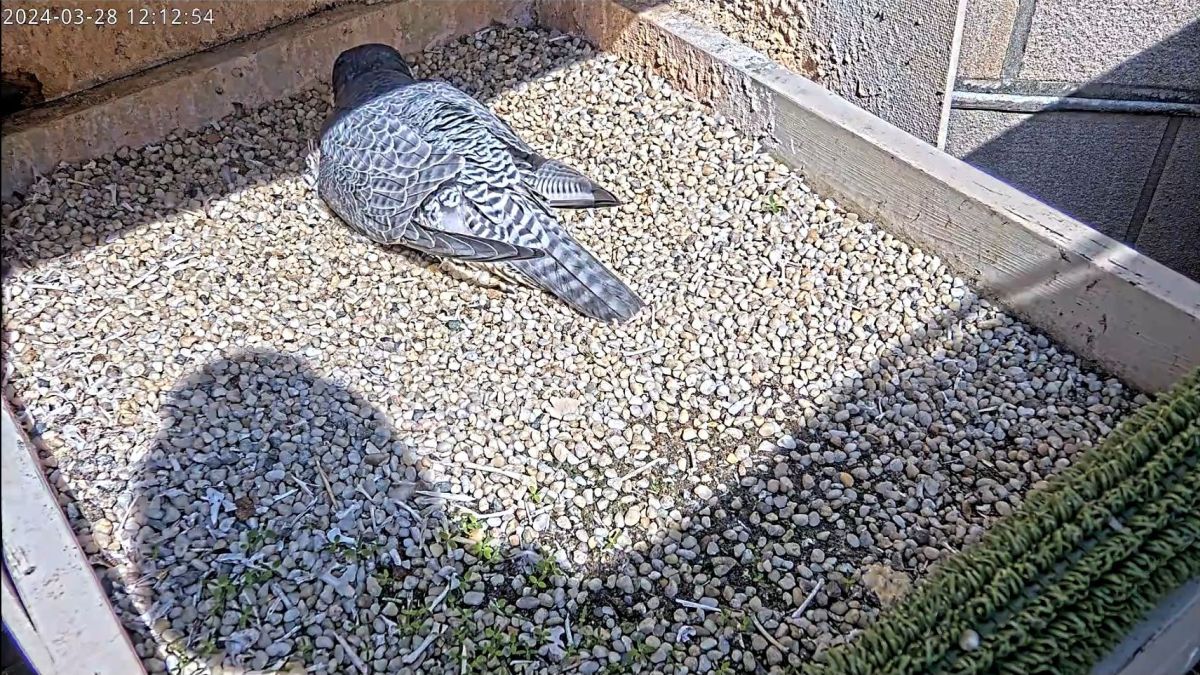
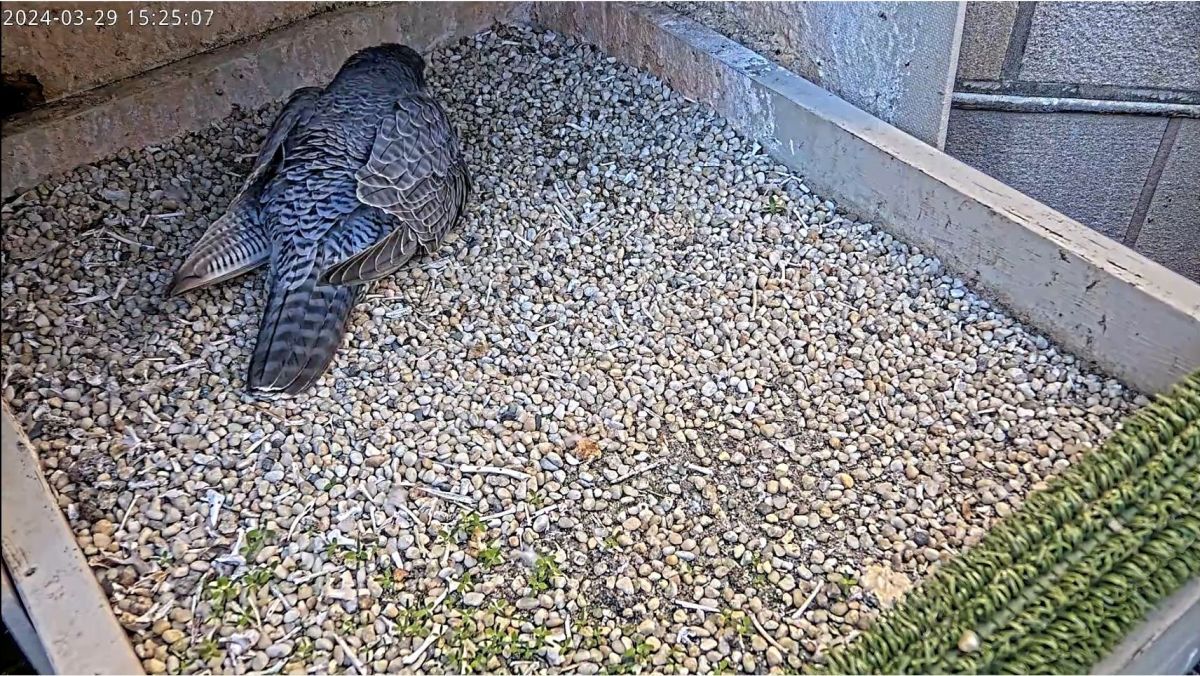
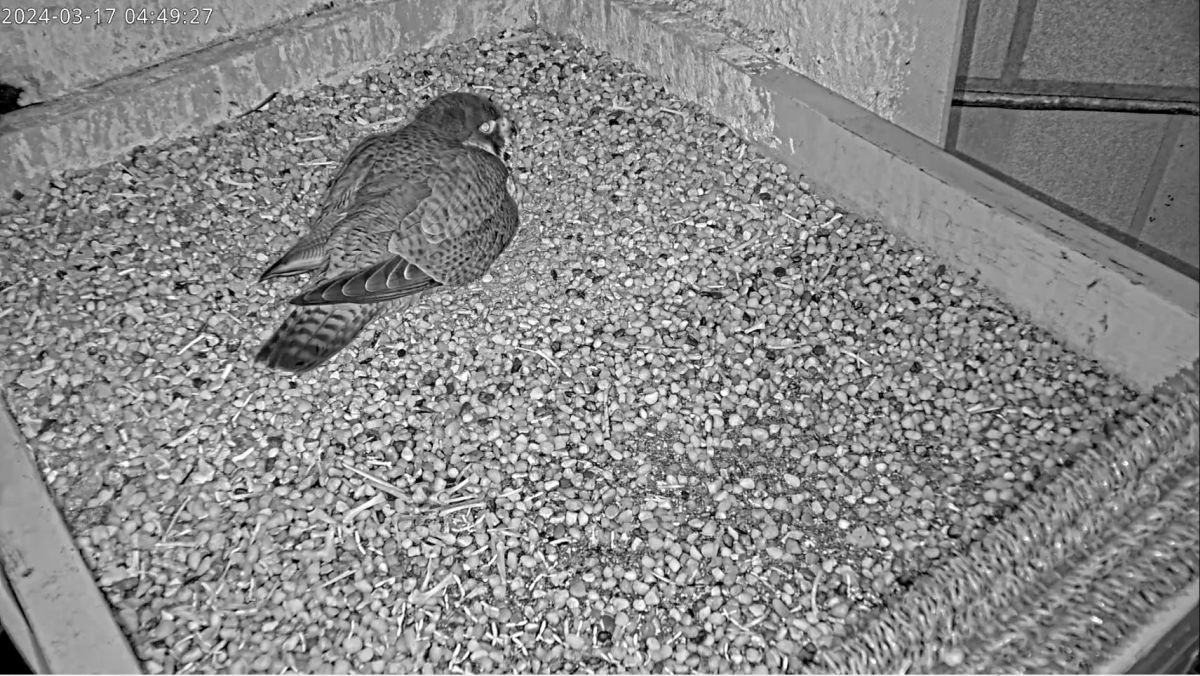
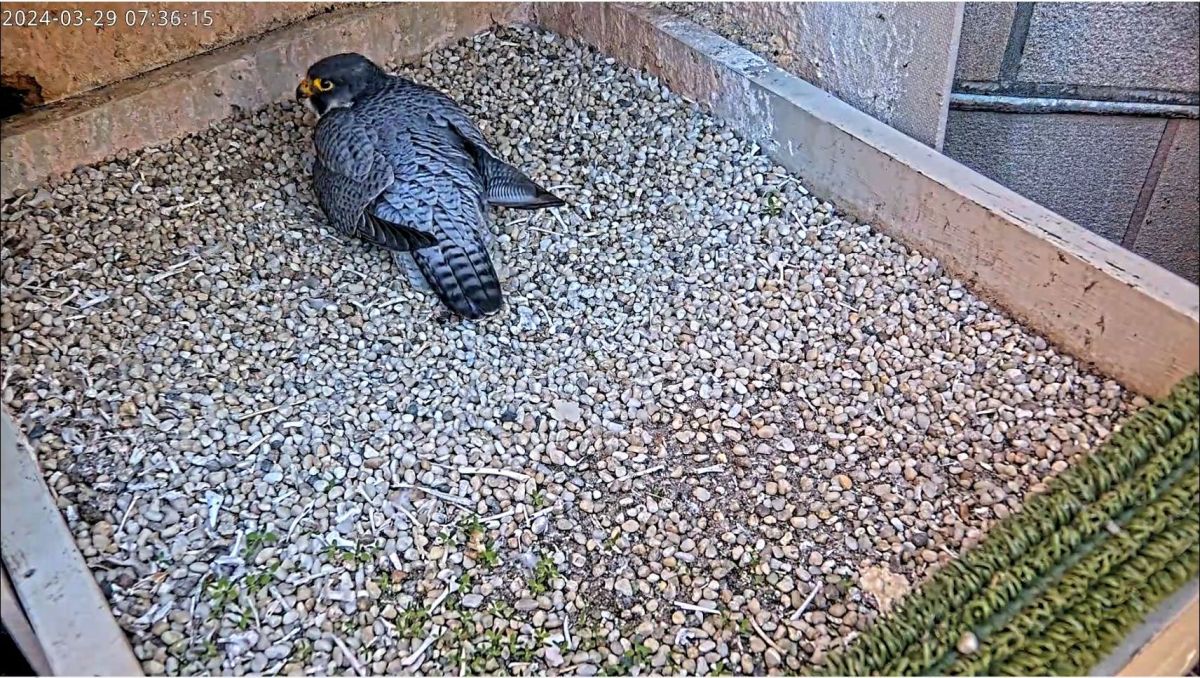
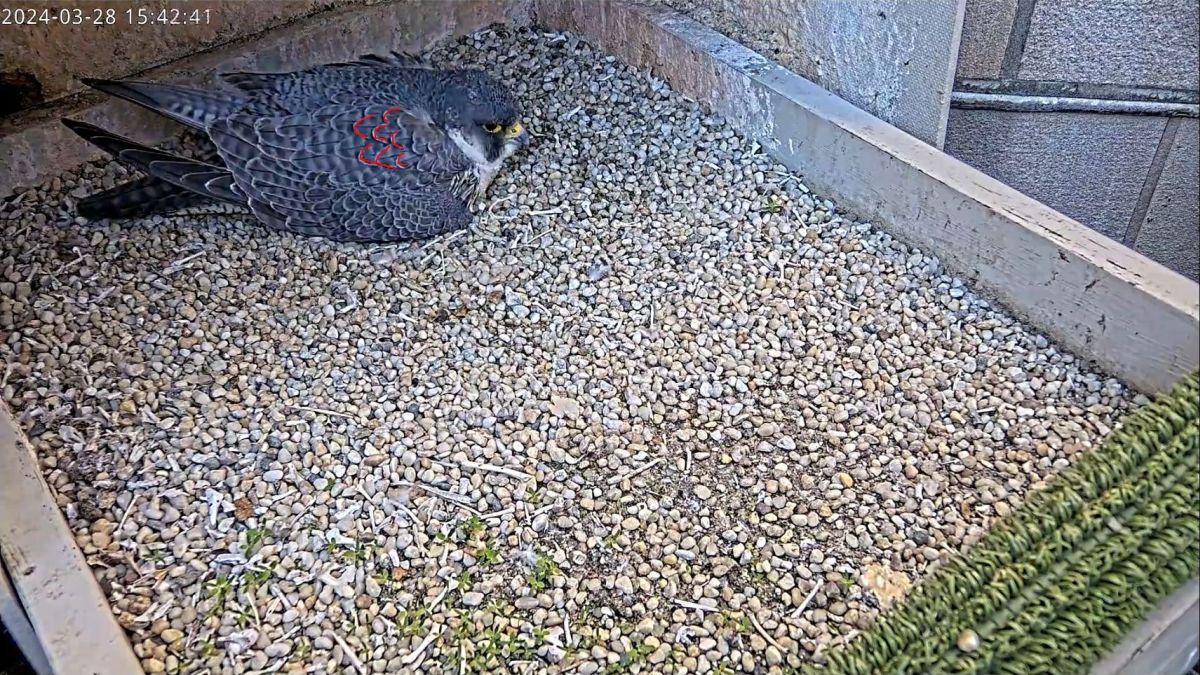
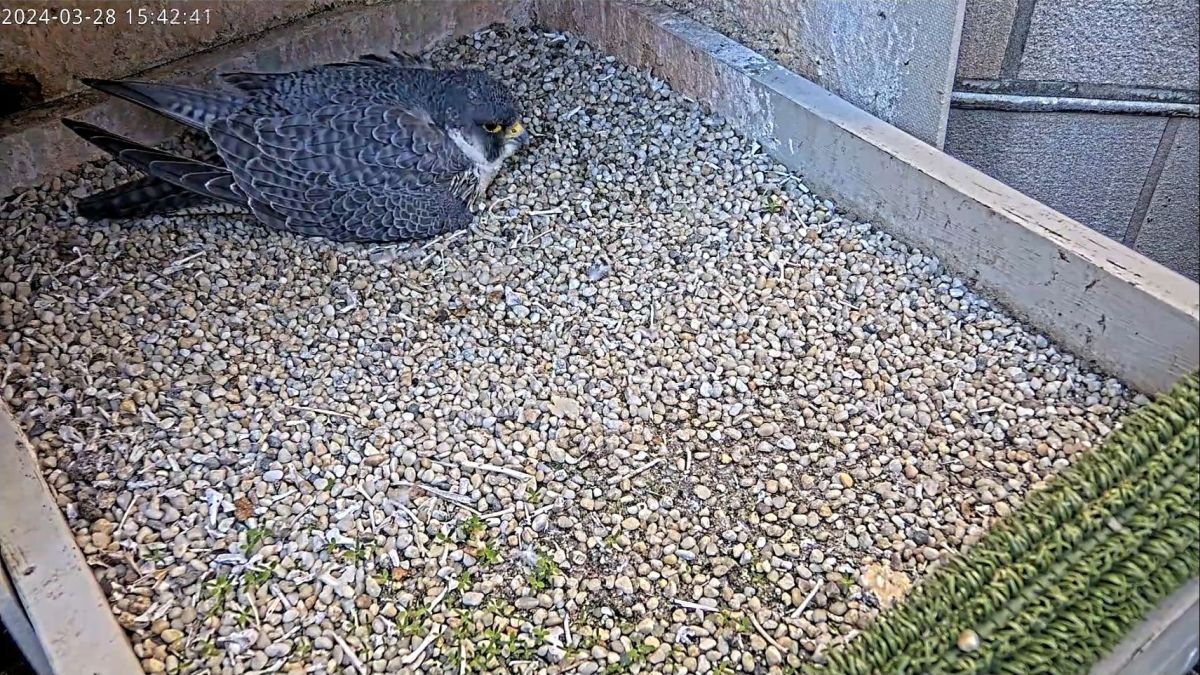
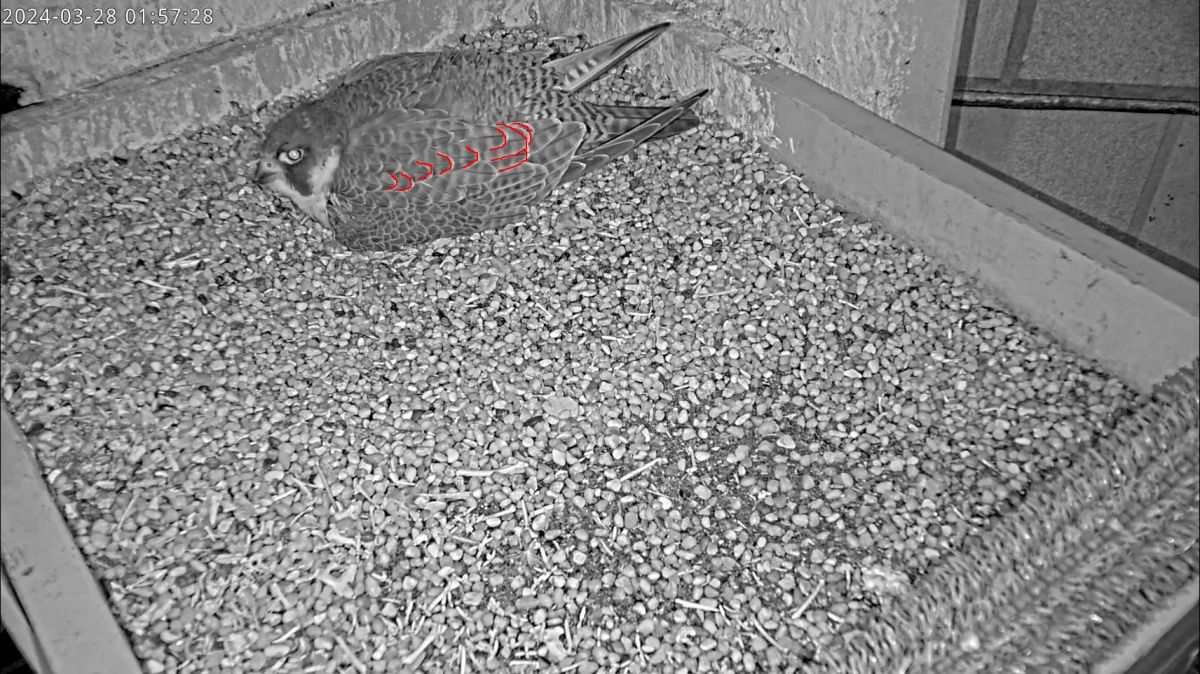
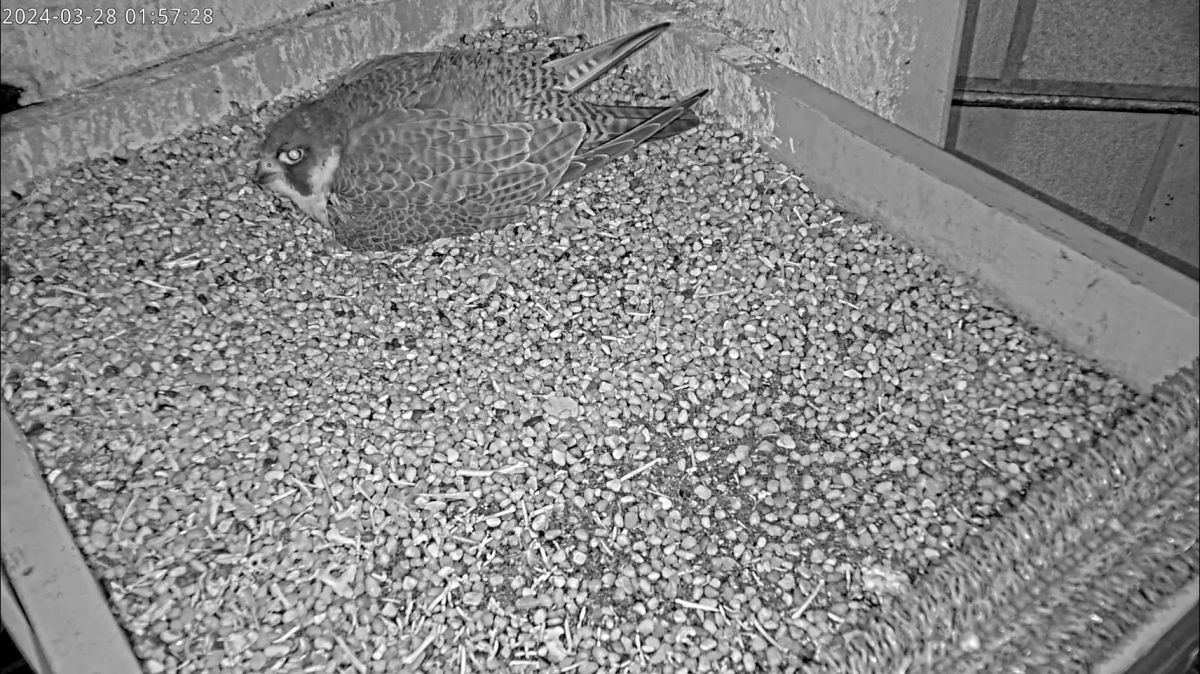
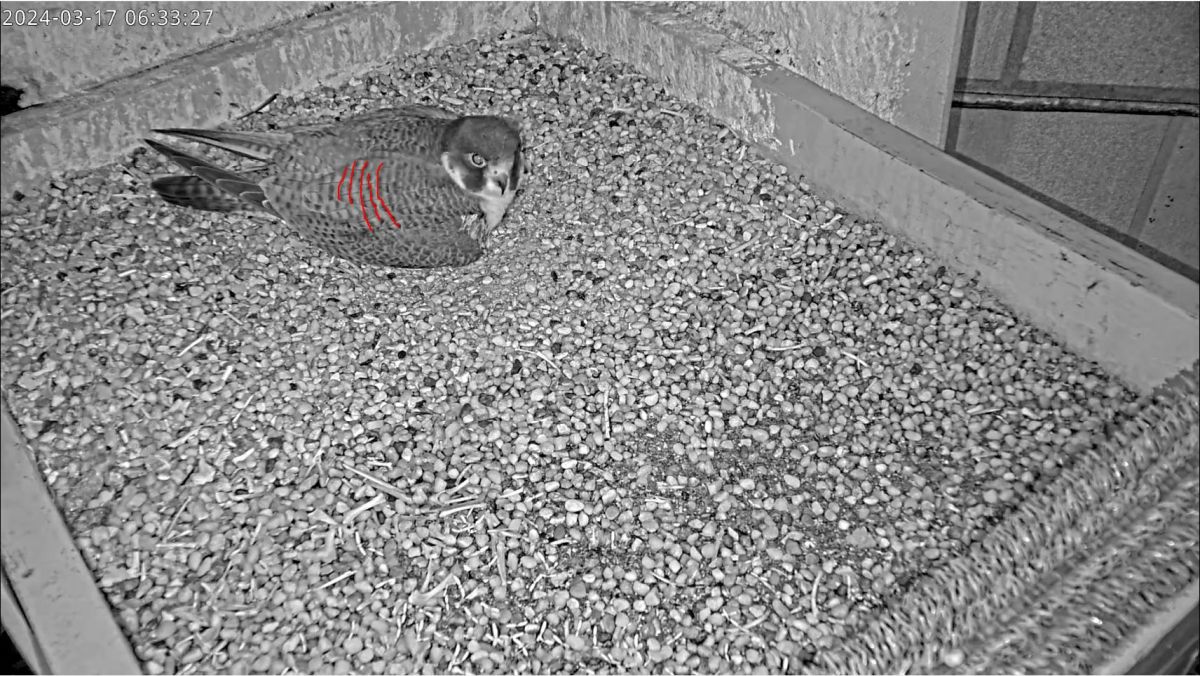
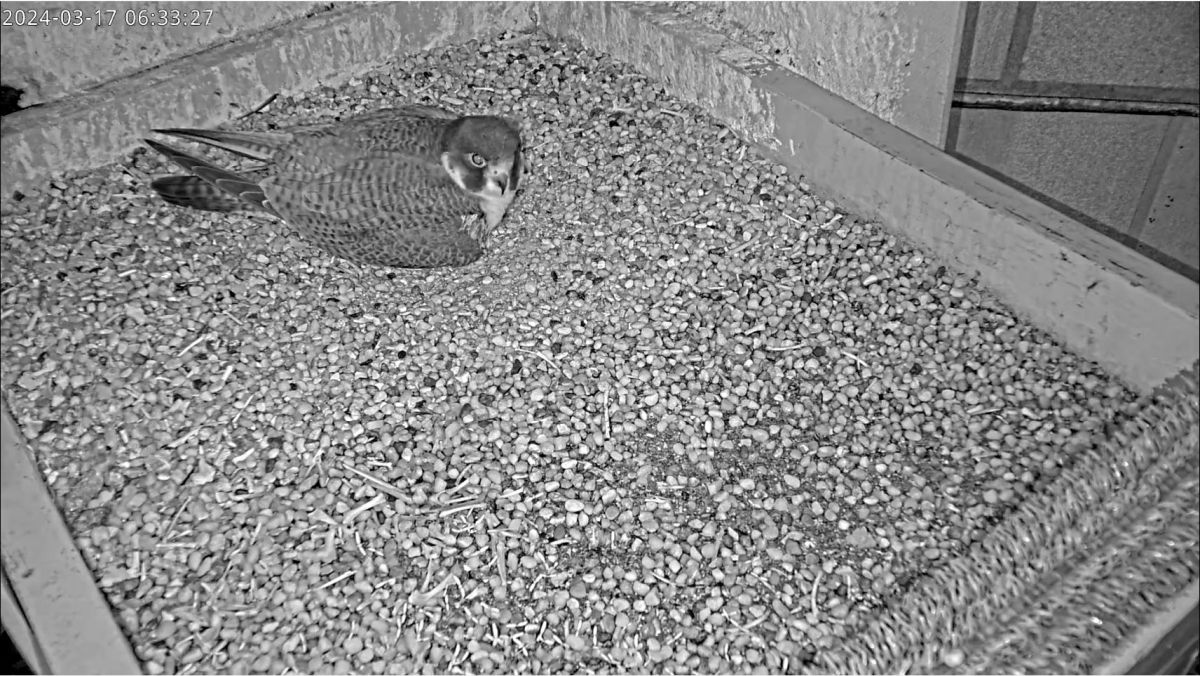
Carla and Ecco have completed nearly two weeks of incubation at the Pitt peregrine nest and have three more to go. As we watch them on the National Aviary falconcam it can be difficult to tell who’s on camera because their appearance is similar. Here are some tips for figuring out which bird is on the nest right now.
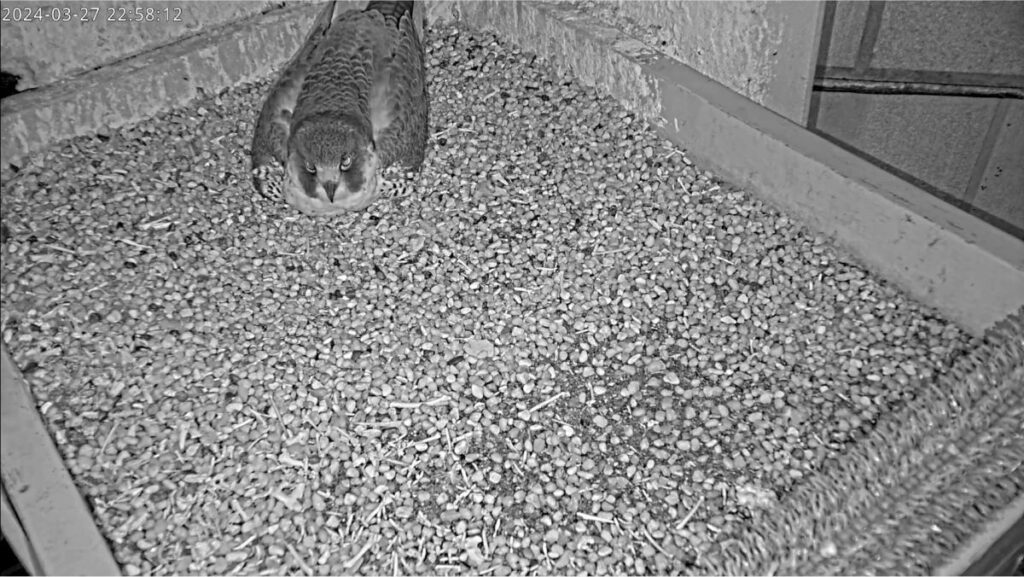
Nighttime incubation? It’s Carla except …
Carla incubating at night, 27 March 2024, 10:58pm
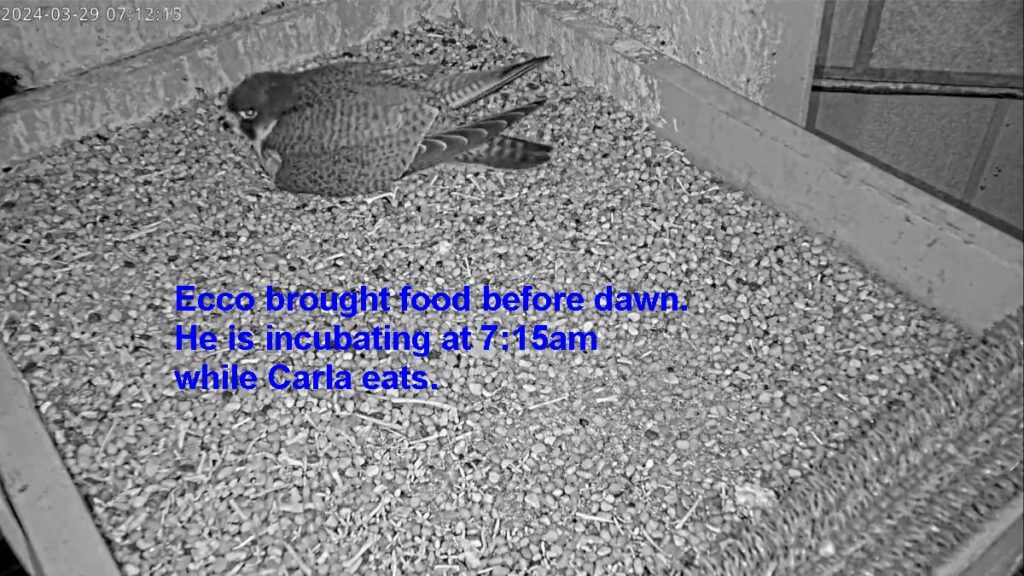
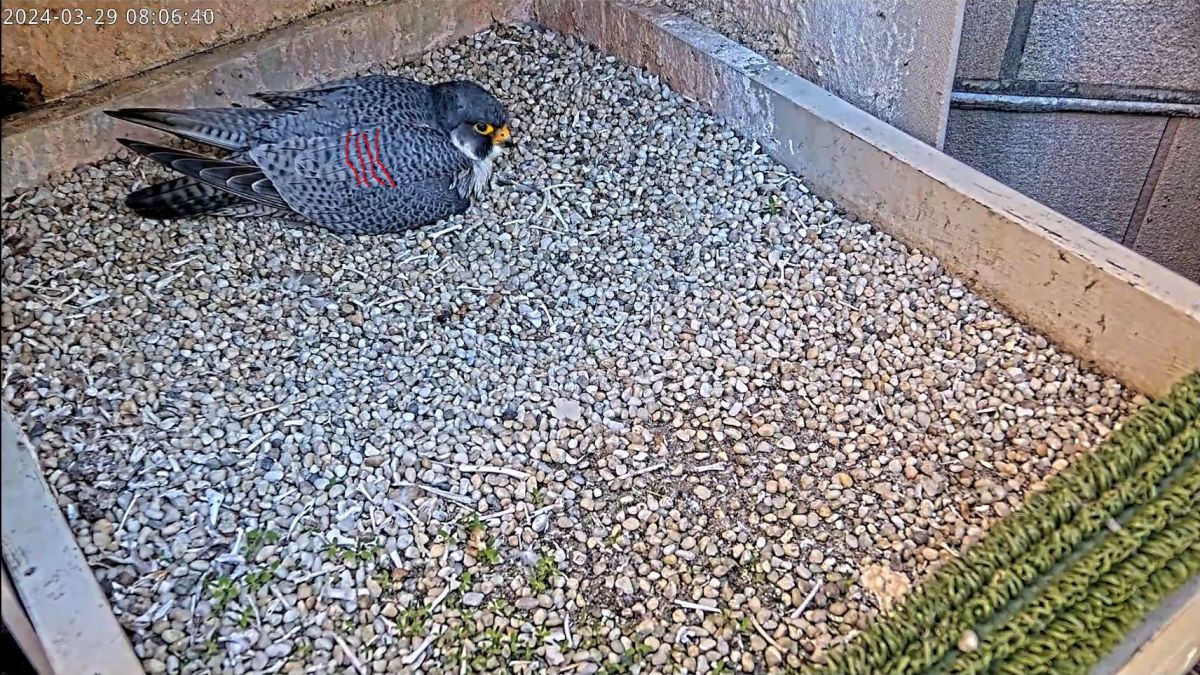
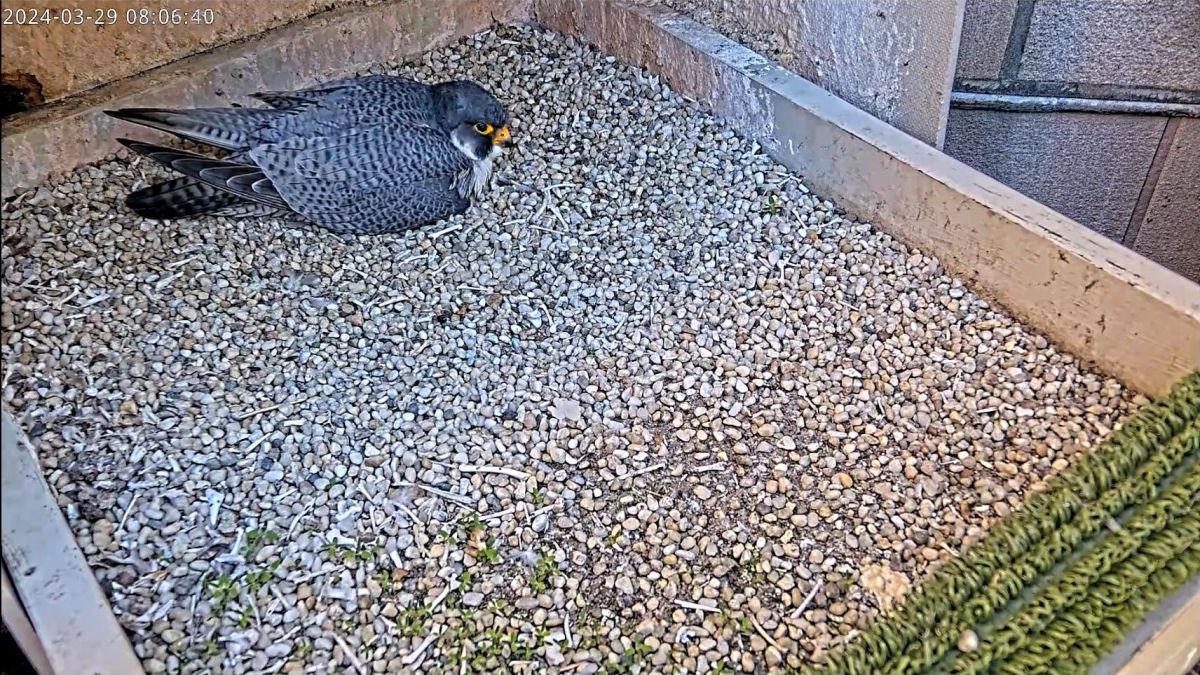
Ecco sometimes brings food before dawn so you may see him on the nest in the early morning while Carla eats.
Ecco on the nest before dawn, 29 March 2024, 7:15am
Whenever you’re in doubt, use these tips.
Size: Carla is larger
Male peregrines are one-third smaller than females so size is the obvious way to tell the difference between the Pitt peregrines (see slideshow at top). However, Carla is not an enormous female and at close quarters on the falconcam with her back turned I have a hard time identifying her by size. The difference is obvious in this slideshow but not when Carla is alone on camera.
Plumage: Carla is Scalloped, Ecco is Striped
This spring in fresh breeding plumage Carla’s feathers have white tips that make her appearance look scalloped. Ecco’s feathers do not have long white tips so he looks vertically striped with fine black lines. Note that this difference works right now but feathers are dynamic and will not look the same in a few months.
Quiz! Test your skills
Practice recognizing size and plumage differences in this short video that compresses 60 hours into 1:41 minutes. At this speed the size differences between Carla and Ecco are obvious but you’ll have to look at one spot on the screen to notice plumage. Stare at one place and think “Scalloped or Striped?”
Tulips on Easter morning in the Oakland neighborhood of Pittsburgh, 31 March 2024 (photo by Kate St. John)
31 March 2024
Easter is early and so is Spring. Tulips are blooming in my city neighborhood.
Tulips on Easter morning in Oakland, 31 March 2024 (photo by Kate St. John)Tulips on Easter morning in Oakland, 31 March 2024 (photo by Kate St. John)Tulips on Easter morning in Oakland, 31 March 2024 (photo by Kate St. John)
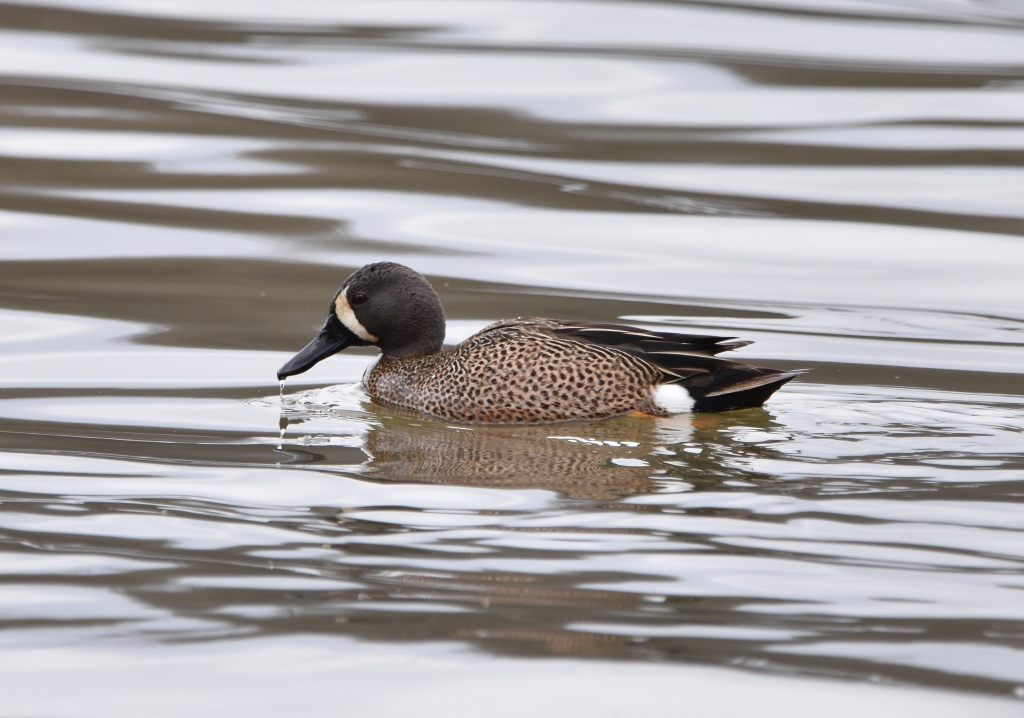
Blue-winged teal, Moraine State Park, 27 March 2024 (photo by Charity Kheshgi)
30 March 2024
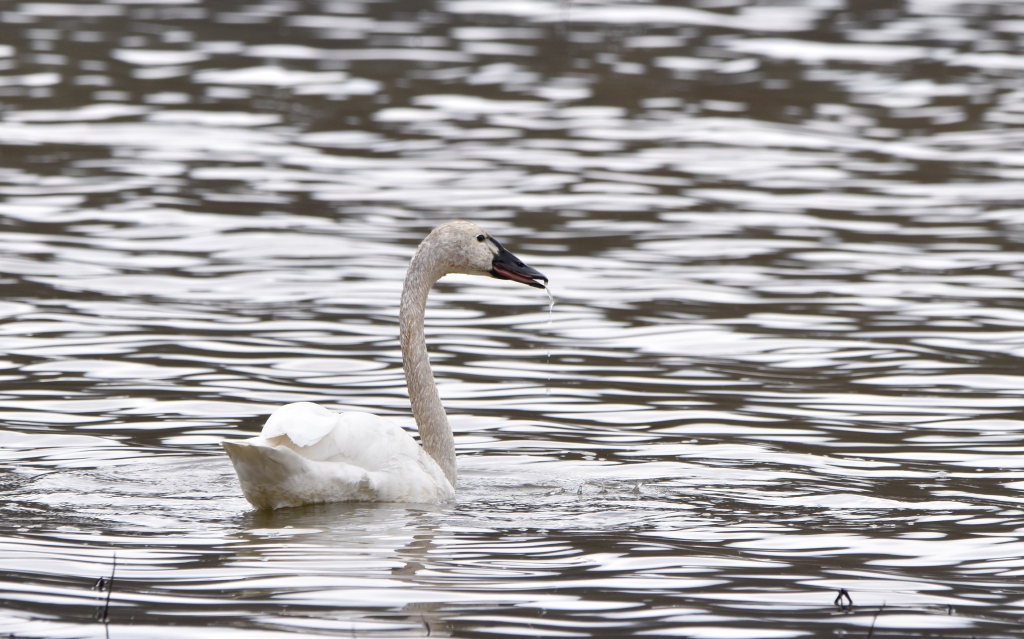
A Wednesday trip to Moraine State Park was cold and gray but quite worthwhile. We saw 300(!) red-breasted mergansers, many ring-necked ducks, blue-winged teal and a rare bird — a trumpeter swan. Charity Kheshgi’s photos show off the teal and swan.
Trumpeter swan, Moraine State Park, 27 March 2024 (photo by Charity Kheshgi)
Trumpeter swans (Cygnus buccinator) are “the heaviest living bird native to North America and the largest extant species of waterfowl.” They were nearly extinct in 1933 — only 70 remained in the wild — but several thousand were then found in Alaska. “Careful re-introductions by wildlife agencies and the Trumpeter Swan Society gradually restored the North American wild population to over 46,000 birds by 2010.” The trumpeter at Moraine is one of their descendants. (quotes from Wikipedia)
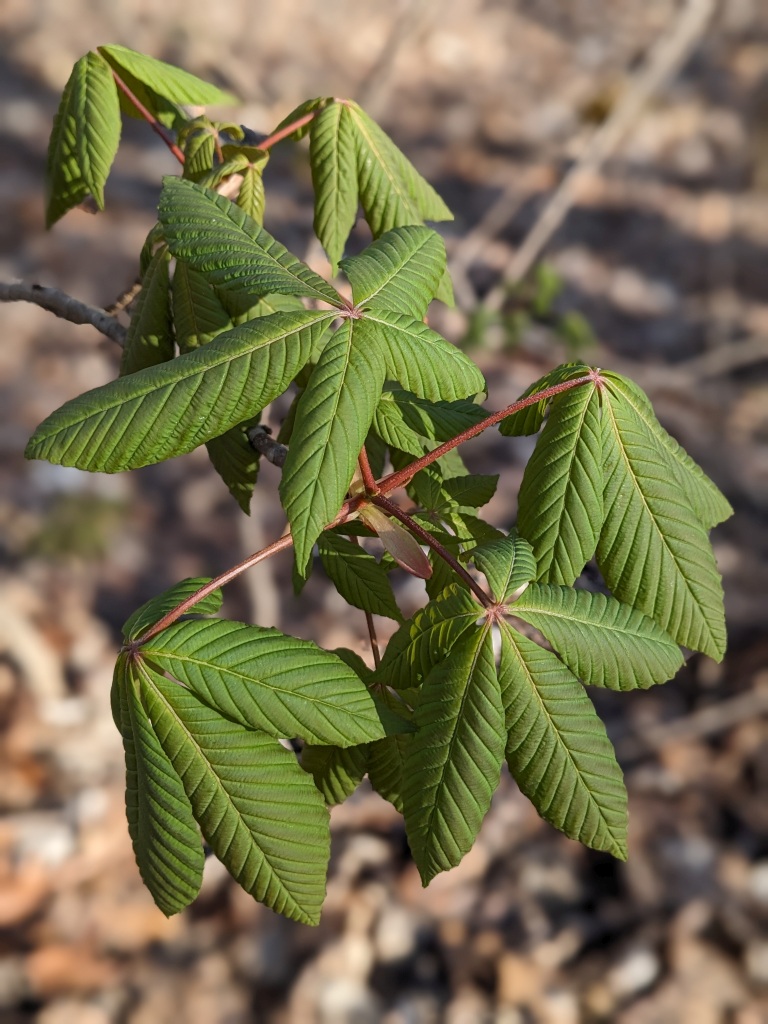
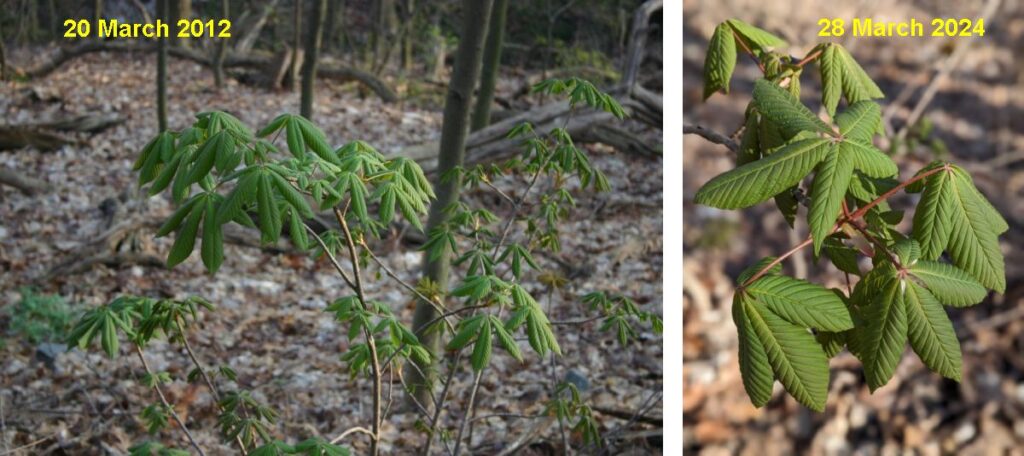
Comparing two springs, yellow buckeyes’ early leaf-out, Schenley, March 2012 and 2024 (photos by Kate St. John)
Early spring is the hungriest time of year for deer in Pennsylvania because they’ve already eaten all the easy-to-reach food. When the deer population is greater than the area’s carrying capacity they seek out food in unusual places. Thus I was amazed but not surprised to see a deer browsing the bushes next to our highrise at 5:30am. There is nothing to eat down there. There is nothing to eat anywhere near here.
A deer browses at a highrise in Pittsburgh, 5:30am 24 March 2024 (photo by Kate St. John)